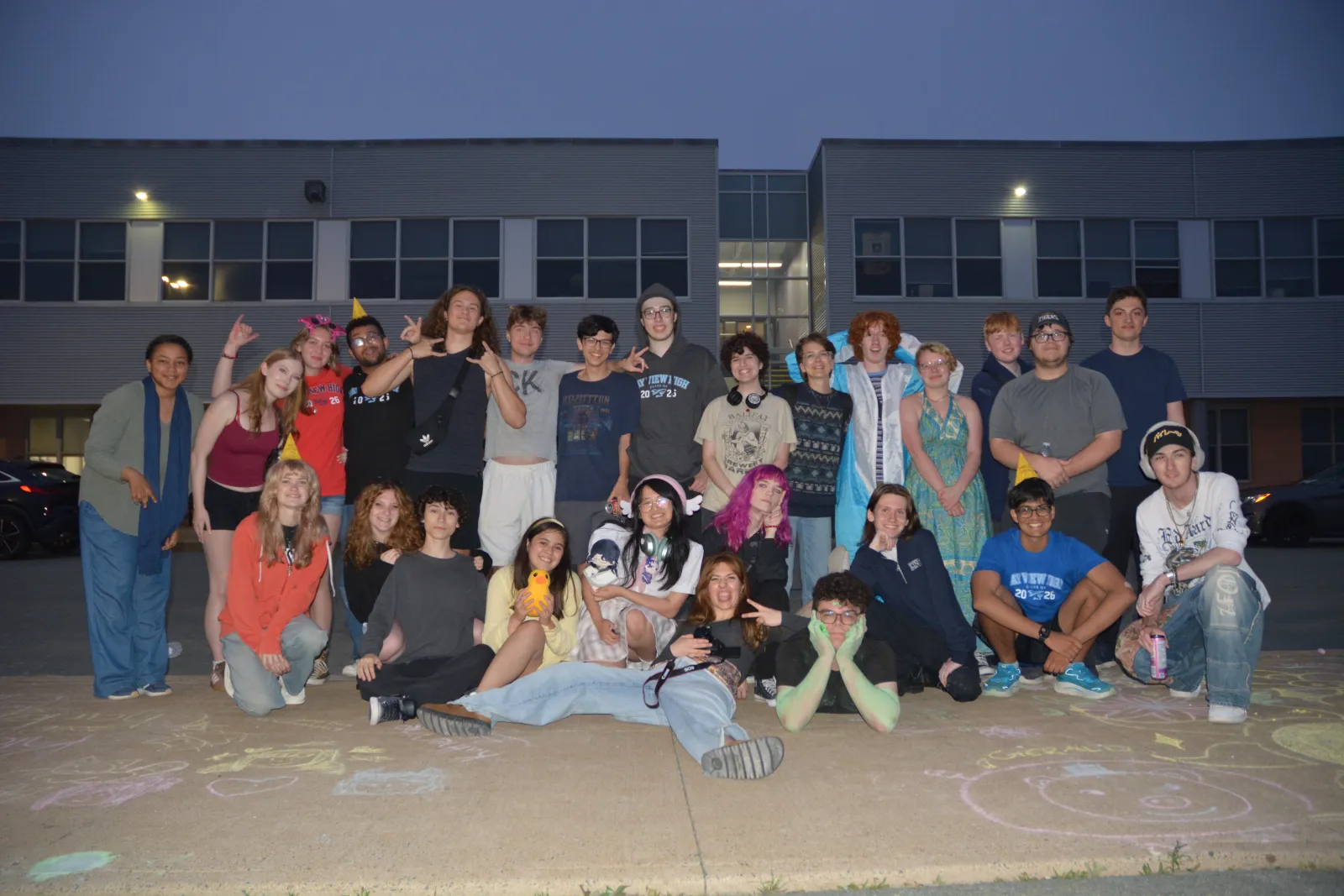
My amazing friend group!
Sooooooooooo.... I just graduated high school.
Writing about a three-year period of your life, and how it led you to the next one, has proven to be difficult in a way I didn't expect. It's easy to list what happened. It's much harder to explain how it felt, or why any of it mattered, or what I was thinking in the moments that turned out to matter most. Along the way I met some incredible people, took on things I didn't believe I could pull off when I first started high school, and somehow kept my grades intact through all of it.
All of that led me to the Software Engineering program at the University of Waterloo, one of the most sought-after technology programs in the country. But this post isn't primarily about that acceptance letter. It's as much about my thoughts and perspectives on my time in high school as it is about the steps I took to get there. Along the way, I stumbled into unexpected opportunities, some of which had nothing to do with technology at all.
If you just want the TLDR, here they are. Everything after this section is what the list doesn't capture.
Stats
Education
- High School: Bay View High School
- Province: Nova Scotia
- Graduation Year: 2026
- Curriculum: NS Diploma + AP Courses
- Applied & Accepted To: University of Waterloo (UWaterloo), Dalhousie University, University of British Columbia (UBC), McGill University, University of Toronto (UofT)
- Committed Program: Software Engineering @ University of Waterloo
Academics
- Top 6 Average: High 90s throughout high school
- AP Courses: AP Calculus AB, AP Chemistry, AP English Literature & Composition
Technical Background
- Coding Experience: 6 years (since 2020)
- Languages: Python, C++, JavaScript, HTML/CSS
- Projects: see homepage
Extracurriculars
- HRCE StAC Council Member: 2025-26
- Morning Announcer: 2025-26
- QSYS Fellow: Summer 2025
- Shad Fellow & Valedictorian: Summer 2025
- Stanford University Code in Place Section Lead: Spring 2025, Spring 2026
- NS Secondary School Students' Association PR Manager & IT Coordinator: 2024-26
- Peer Tutoring Member & Co-Lead: 2024-26
- Student Council Executive: 2024-26
- Summer Camp Counsellor in Training at Canada Games Centre: Summer 2024
- MSAC Council Member: 2024-25
- Tech Club President: 2023-26
- Competitive Improv: 2022-23
- Brazilian Jiu-Jitsu: 2021-26
Awards
- Scotiabank Software Engineering Entrance Scholarship (UWaterloo): 2026
- NS Power Emerging Leader Scholarship: 2026
- Schulich Leader Scholarship Winner (McGill): 2026
- Wolf Scholars Finalist (UofT): 2026
- CyberPatriot Gold Tier: 2025
- Lieutenant Governor's Education Medal: 2025
- Atlantic Canada AI Summit 2nd Place: 2025
- CYBERQUEST 3rd Place: 2025
- CCC Senior Distinction: 2025
- CCC Junior Distinction & Honour Rolls: 2024
- Various school and regional scholarships: 2023-26
Where I Started (Grade 9) - 2022/23
The CoinDeno Banner
My love for programming goes back further than high school. I got into web development during the COVID pandemic in 2020, the way a lot of bored, locked-down kids picked up hobbies that year. Before Grade 9, I'd already built a few small things: an early version of what would become CoinDeno, a cryptocurrency tracker, and a handful of Frontend Mentor challenges. It wasn't a plan. It was just something to do that happened to also be fun, and it slowly turned into the thing that would end up shaping most of what came after.
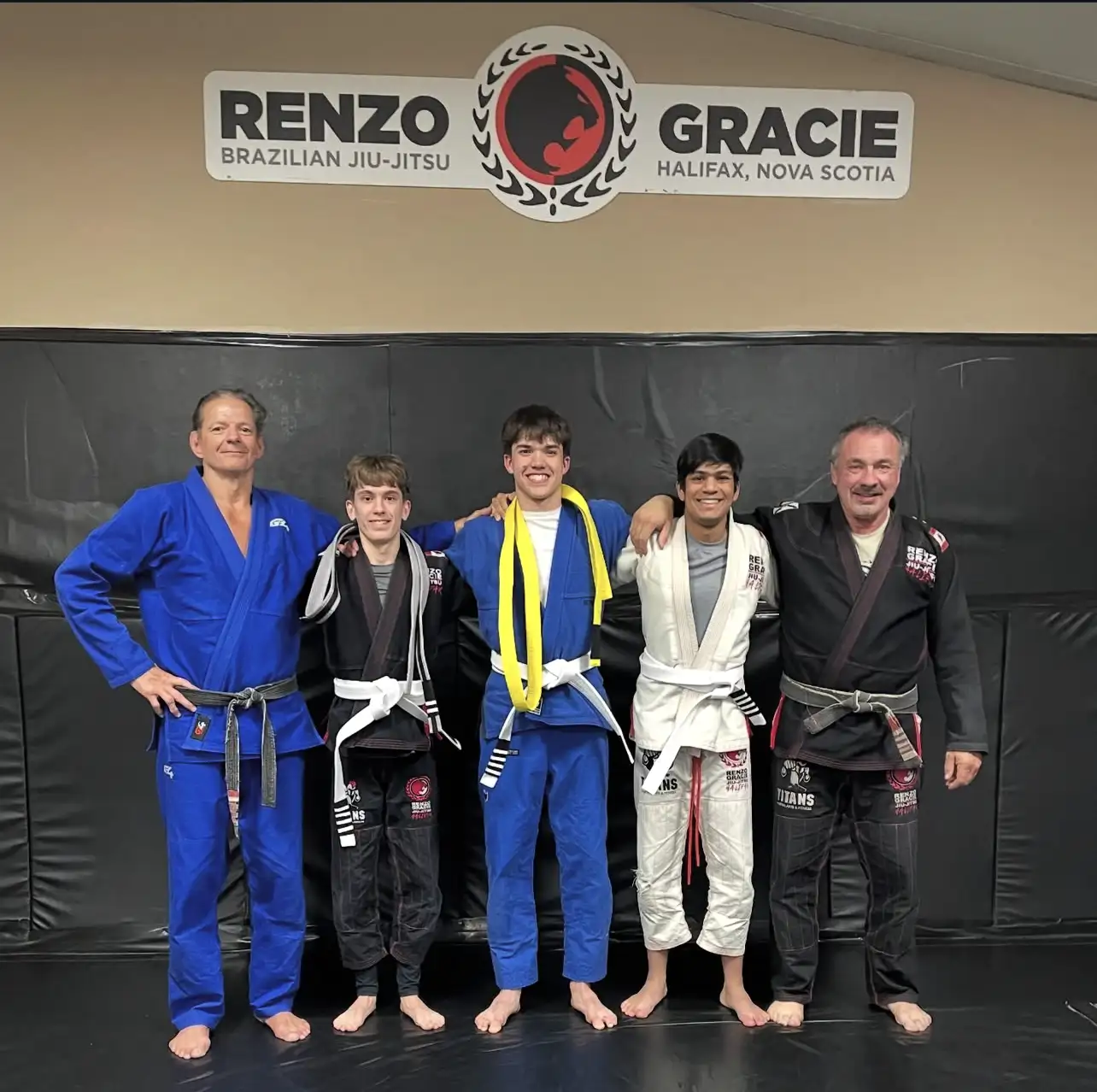
At our belt promotion with Kevin Taylor (far left) and Peter Martell (far right), the founding fathers of Brazilian Jiu-Jitsu and Mixed Martial Arts in Atlantic Canada
Most of my middle school years were swallowed by COVID and the lockdowns that came with it, so there weren't many initiatives to throw myself into early on. A lot of that time went into two very different things: Brazilian Jiu-Jitsu at my local gym, one of the only places that still felt normal, and playing Among Us with my friends for what felt like entire days at a stretch, about as far from productive as it gets. It made zero sense outside of a lockdown, but at the time it was exactly the kind of low-stakes thing that kept things feeling normal when nothing else did.
In Grade 9, I wasn't thinking about university at all. I went to school, studied, had fun, came home, played video games, tinkered with whatever project I was on. That was it. That was the whole plan, if you could call it one.
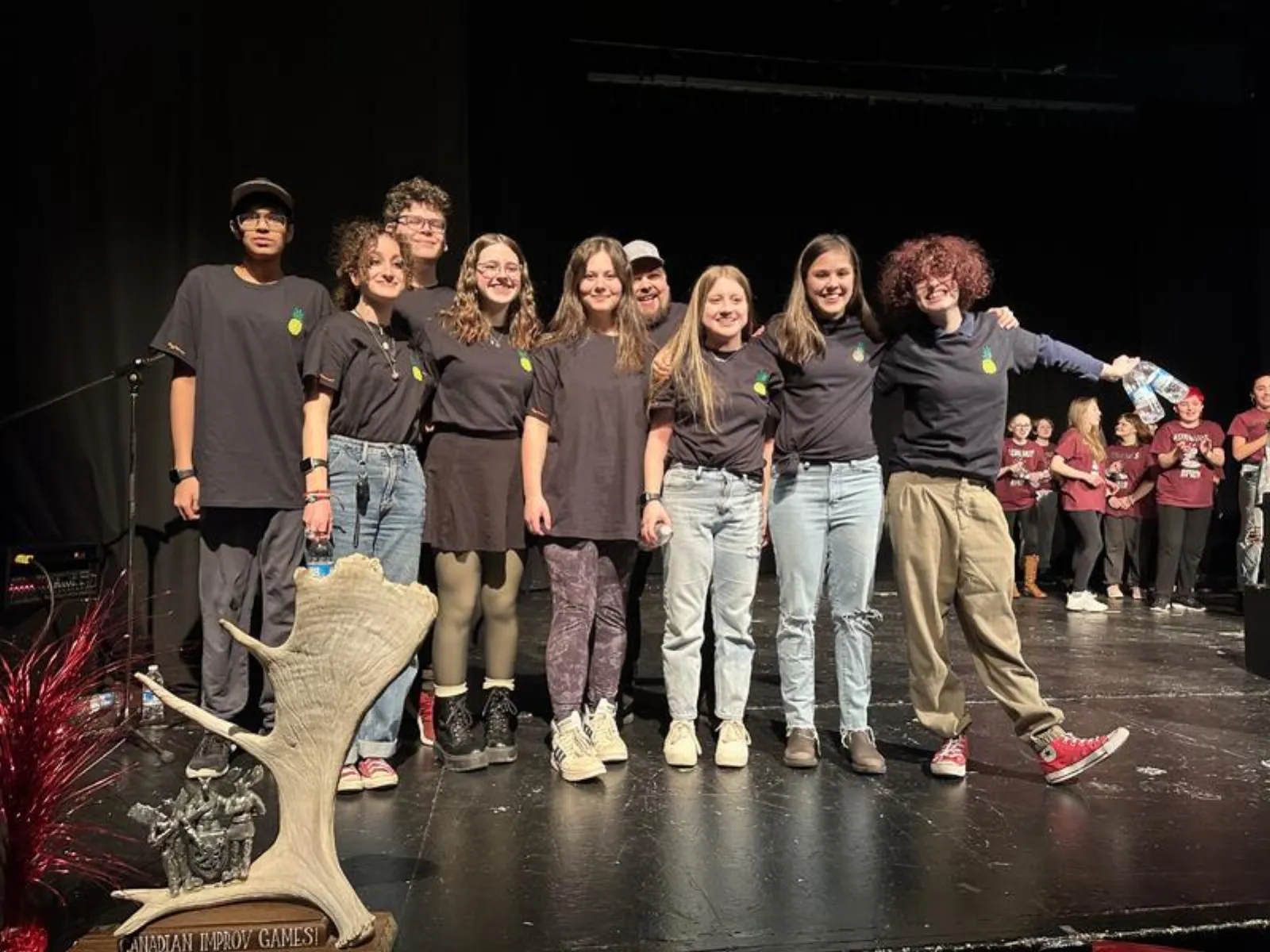
The Ridgecliff Pineapples' win at the HRM regional competition
That September, right at the start of the year, bored and looking for something new, I found something I was deeply reluctant to try: improv. Improv is acting without a script, which sounds fun until you realize it means being funny, or interesting, or at least not silent, in front of people, with zero preparation. I avoided public speaking at all costs before this. Every single meeting, I was nervous right up until the moment I had to perform in front of even a small crowd of my peers. But something about the low-stakes, playful chaos of it wore that fear down over time. By the end, I'd made the competitive team, and we won first place at the Halifax regional competition, one of my first clear wins at anything. Joining improv might be the single best decision I made in those years, not because of the trophy, but because of its influence on boosting my overall confidence. In the process I made some cool friends whom I'm still friends with to this day.
Then, sometime in the middle of the year, conversations started creeping in about what people wanted to do after high school, where they wanted to go, what they wanted to study. It felt abstract to me, almost like eavesdropping on a conversation meant for someone older, but it planted something. I started researching universities in Canada for Computer Science and Software Engineering, and a handful of names kept coming up: Dalhousie, McGill, UWaterloo, UofT, UBC.
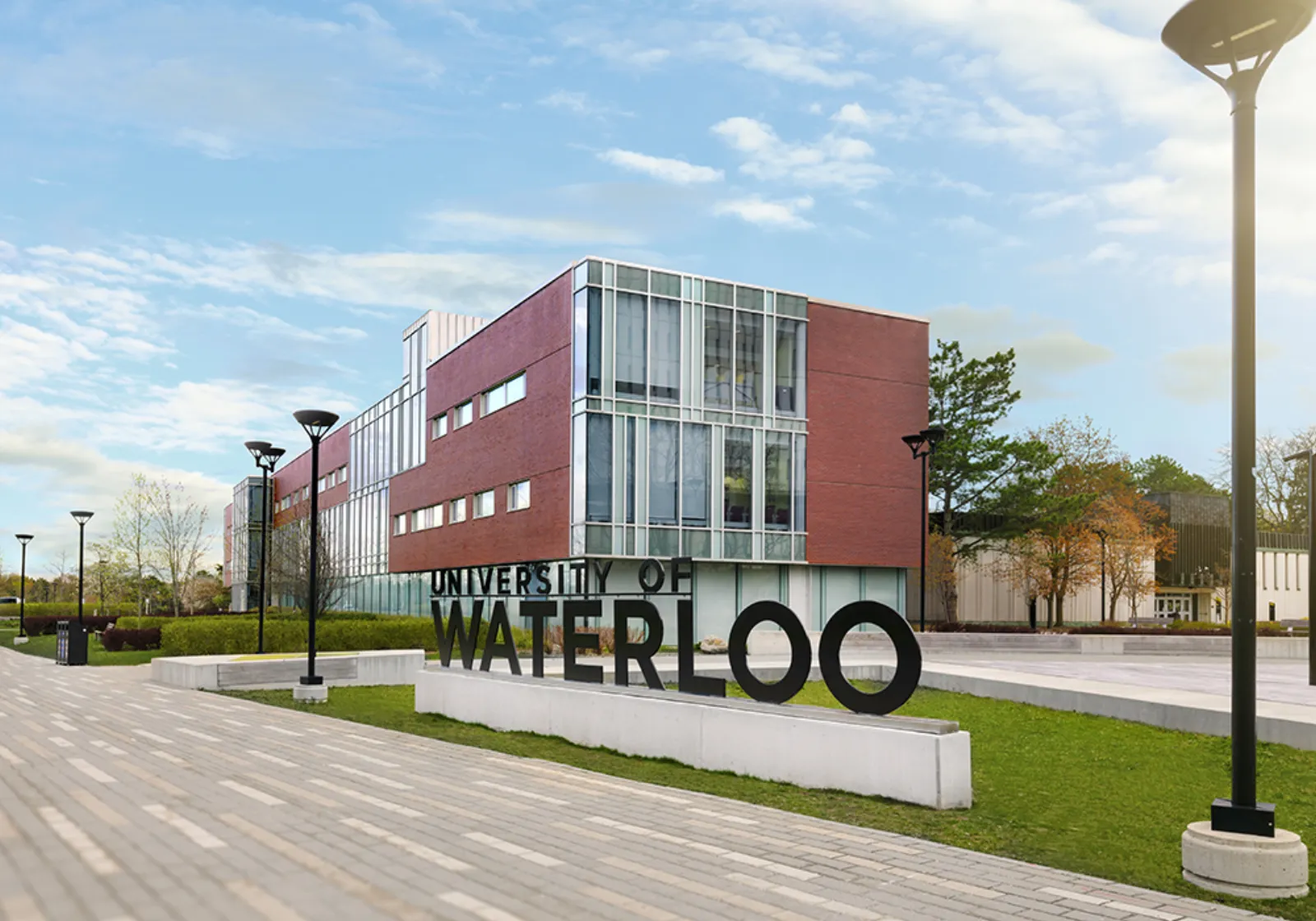
The University of Waterloo
UWaterloo stood out for one specific reason: its co-op program. At the time, I liked the idea of industry over research, and alternating between classes and paying jobs while still in school felt like exactly the kind of program built for someone like me. The challenge was that UWaterloo's CS and SWE programs weren't easy to get into. You needed good grades, demonstrated programming experience, and extracurriculars. At the time I had decent grades and a bit of programming experience. Extracurriculars, I had none.
So I started thinking, as early as Grade 9, about how to build toward this. I'm honestly not sure a 14-year-old is supposed to be thinking that strategically about anything, let alone a university application four years out, but at the time it felt less like ambition and more like the only thing I knew how to do with the uncertainty.
One of the more obvious first steps was UWaterloo's math contests, so I decided on writing the Pascal Contest in February 2023. I prepared for weeks, wrote it at my school, and came away with a score that was above average, but was somewhat underwhelming. I remember feeling a little deflated by it at the time. I'd put in serious hours, and it didn't feel like enough to show for it.
At the end of the year, I graduated middle school. I was proud of what I'd started to get involved in, but still had no clear sense of what I wanted high school to be. I just knew, standing at the edge of it, that I needed to make the next three years count.
Finding My Niche (Grade 10) - 2023/24
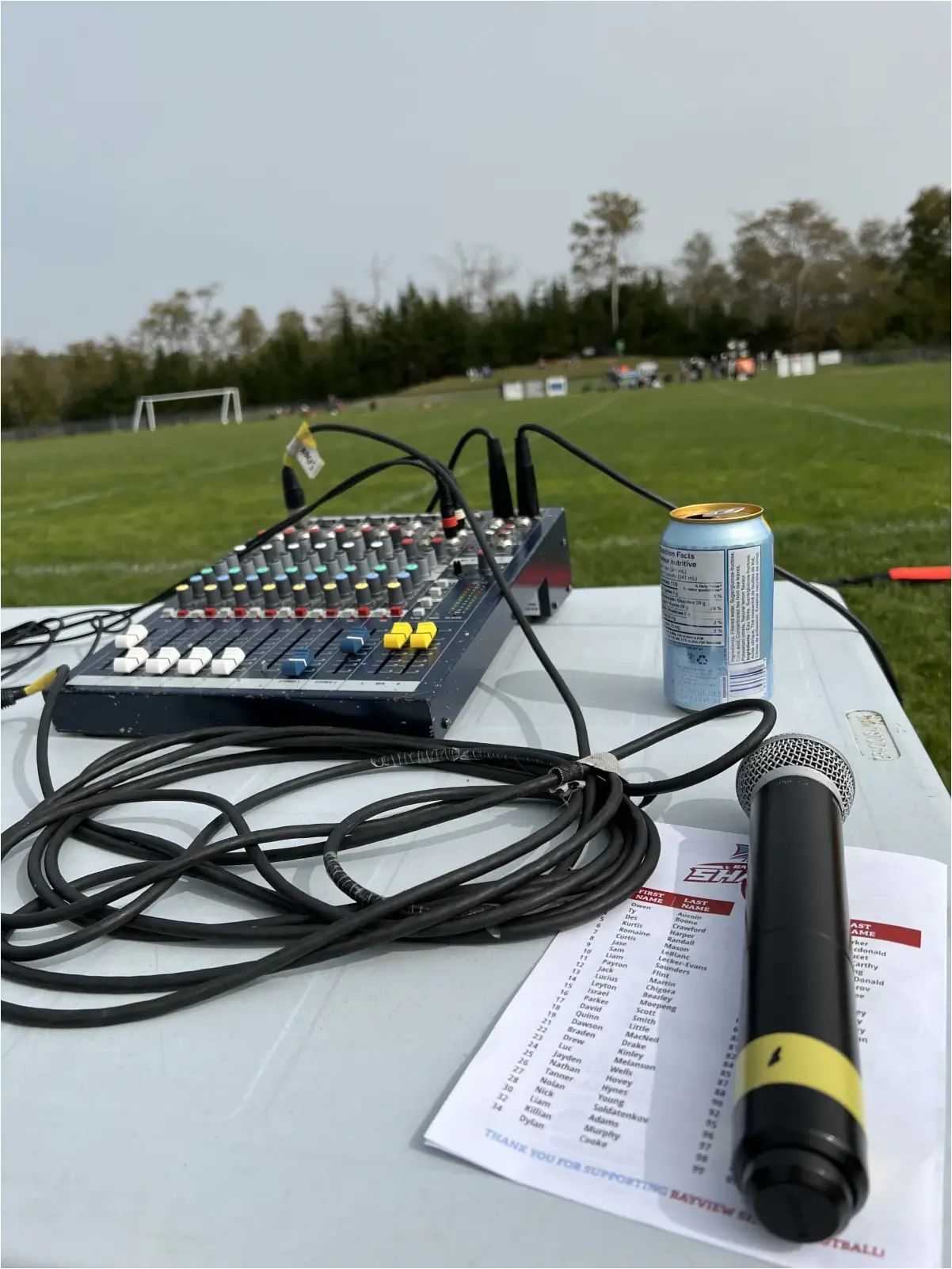
My first time announcing high school football games
That year's course load: Drama 10, English 10, Mathematics 10, Science 10, Yoga 11, Business Technology 11, and Communications Technology 11.
Before starting high school, I sat down and wrote myself a rough mental note of how I could work toward achieving the objectives I had set for myself:
- Math contests (Euclid, etc.)
- Coding contests
- Side projects (GitHub, open source)
- Regular coding
- High grades (95%+)
- Extracurriculars
- Strength across Math, English, Science, and Computer Science
Making that list felt like two things at once: exciting, because I finally had something resembling a plan, and overwhelming, because it was a lot.
I wasn't sure how I'd juggle all of it, and for those first few weeks, before Tech Club came along, I felt a little lost. That was also the year I realized coasting through tests without studying was no longer going to cut it, so I built myself a routine. Nothing complicated: pay attention in class, ask questions the moment something didn't click, grind through homework both at school and after school, and start studying at least a week ahead of every test. It helped that I wasn't yet juggling extracurriculars that ate into my evenings, so I had the room to practice this until it stuck.
On my first day of high school, in September 2023, I noticed Student Council putting out a call for help with events. I applied on the spot with a letter of intent, got in, and my advisor picked up on something in that letter: I'd leaned hard into my passion for technology. It turned out the school needed a Technology Club, and she thought I might be the one to start it.
I realized this was a chance to take something I genuinely loved and turn it into something useful for the people around me. But I hesitated. I had no experience running a meeting, let alone a club, and I let the idea sit for a couple of weeks, quietly second-guessing myself. I forced myself to start anyway, disorganized or not, because the alternative was never starting at all.
I settled on a simple mission statement:
"Exploring tech together, making it fun and accessible for everyone in our school"
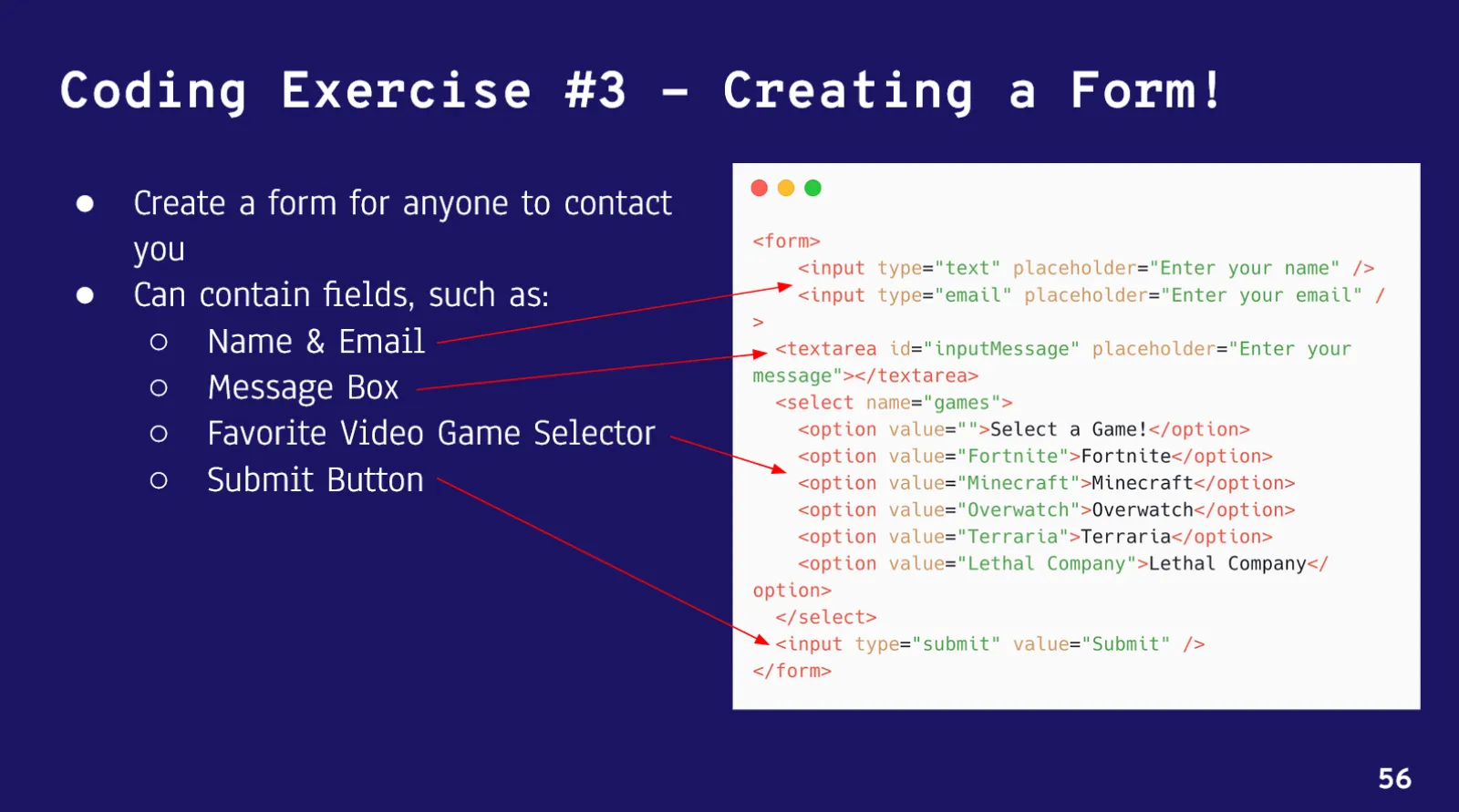
A slide from the Web Development section of Tech Club
We'd meet every Wednesday, explore a technical concept together, and get our hands dirty with something practical. Going into that first meeting, I was nervous nobody would show up. I'd spread the word to as many people as I could, including a handful of friends who promised they'd pull up no matter what, and they did, which meant the room wasn't empty even before anyone else walked in. For the first year I focused on web development, my first love, since it let people see the results of their work immediately instead of waiting weeks to feel like they'd built something real. Within a month, we had a consistent turnout of 30 people, which nobody at our school had ever seen from a club before. I remember being floored by it, standing at the front of a full classroom that I'd expected to be half-empty, and that surprise is what kept me teaching web development for the rest of the year.
Outside of Tech Club, my guidance counsellors ran a Google Classroom where job and volunteering opportunities were posted, and it was there that I first saw a form for the Nova Scotia Minister of Education's Student Advisory Council (MSAC), a group that would meet with the Minister every few months to talk through issues in the provincial education system. I applied almost on a whim, not expecting much, and a couple of months later I was accepted and invited to my first meeting, in February 2024.
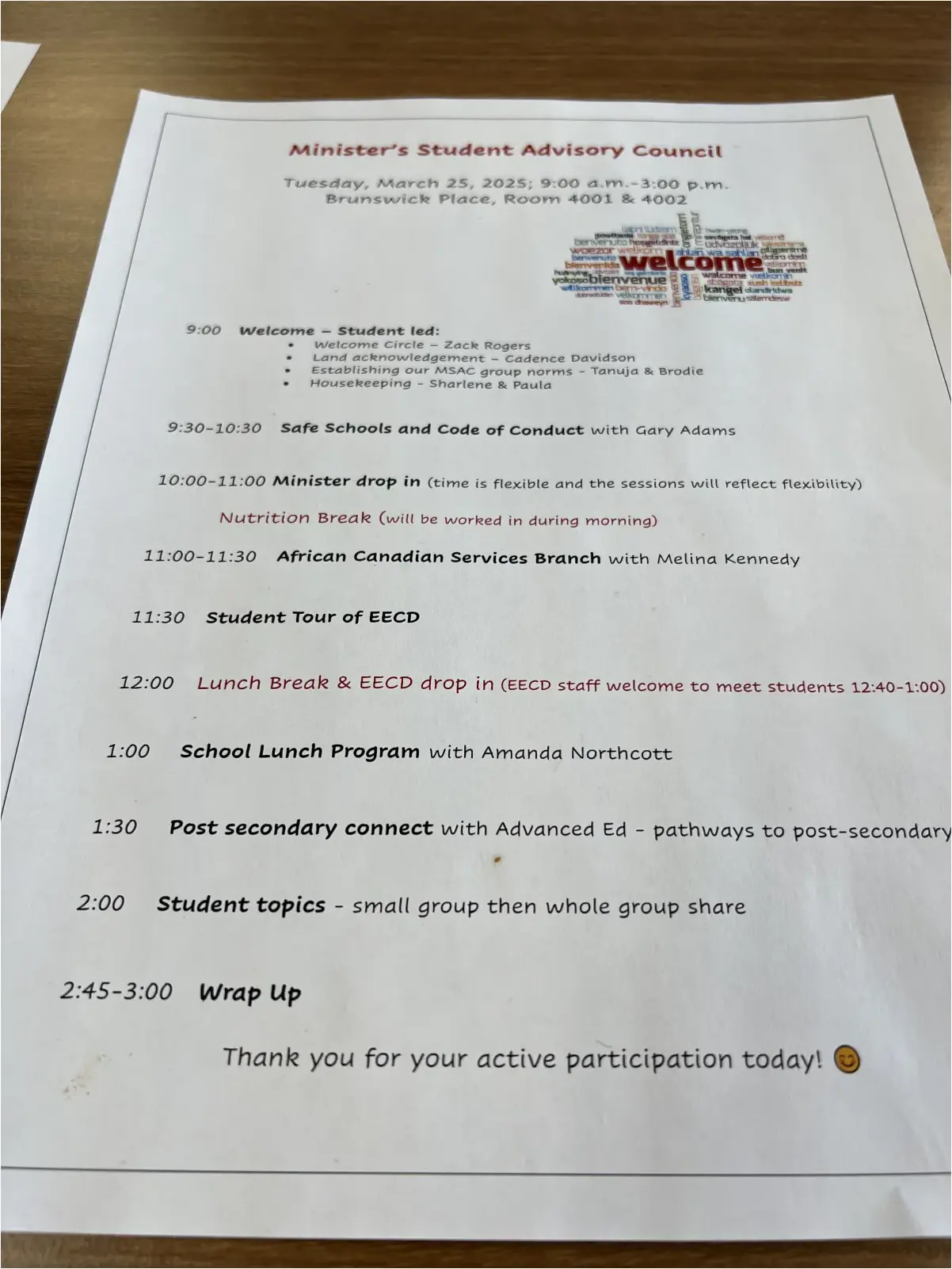
An agenda from a council meeting
That first meeting covered live policy questions: whether to ban cellphones during class time (implemented September 2024), whether a universal lunch program made sense provincially, whether the math curriculum needed changes, and how exam periods should be structured. Sitting at that table as a Grade 10 student, listening to people debate decisions that would affect thousands of students across the province, felt like a different scale of "getting involved" than I'd known before.
On the contest side that winter and spring, I wrote the Canadian Computing Competition (CCC) Junior Division and the Cayley, both in February 2024, then the Galois two months later in April. For CCC, I worked through past contests, got comfortable in Python, and simulated real test conditions when I practiced. For the math contests, I leaned into the last few questions specifically, since those test concepts you won't find anywhere in the standard curriculum. CCC went well, well enough that I received a Certificate of Distinction and was placed on Honour Rolls for the contest. Cayley and Galois were a different story. After weeks of prep for each, seeing results that didn't reflect the work I'd put in was disappointing both times. But I told myself that if I locked in harder the following year, I could do better, and left it at that.
In April 2024, near the end of the year, Student Council opened applications for executive roles. As a general member, I'd spent the year helping executives run event logistics. Being an executive meant more responsibility, and more freedom to make changes, which appealed to me a lot. One role in particular caught my eye: Tech Representative, responsible for production tech at assemblies, football games, musicals, and everything in between. Given the club I was already running and where my interests naturally sat, it felt almost too obvious. I applied, interviewed, and got the role for Grade 11.
That same spring, the club itself got its own moment of recognition. At the year-end club awards ceremony in May 2024, I was recognized for starting the Tech Club and its early success. It was a small thing, but after a year of not knowing whether the risk would pay off, it was proof that it had.
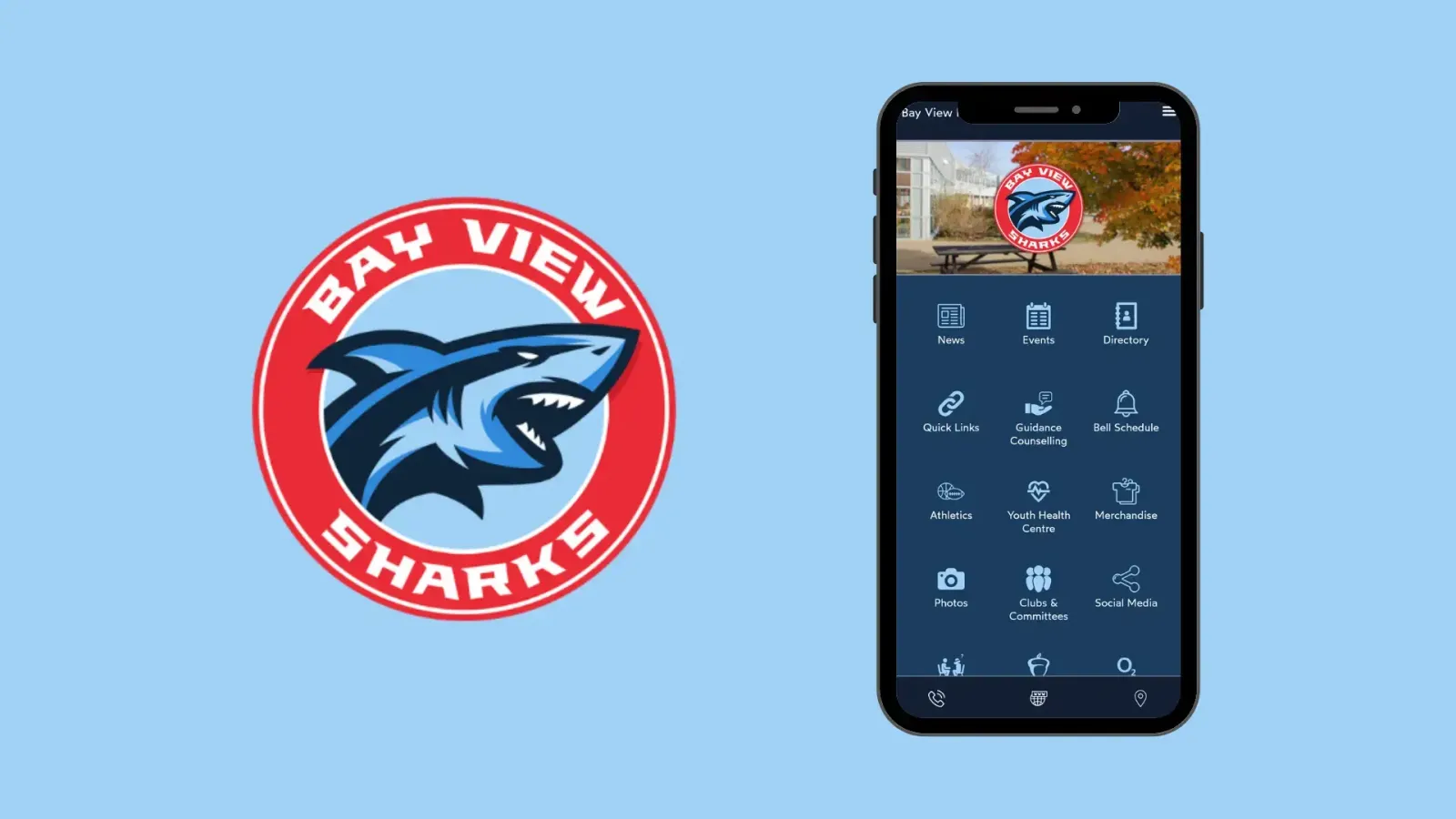
The Bay View High School mobile app
That summer, I got into a math camp at Dalhousie, where I got a small glimpse into what university life would look like while learning advanced mathematical concepts such as Topology, Calculus, and Probability. I also took a volunteer camp counsellor position at the Canada Games Centre, and completed Harvard's CS50x, building a mobile app for my school as the final project.
Looking back, none of those things felt like a turning point on their own, but together they were the year I found a sense of direction, even if I didn't fully realize it at the time. Grade 11 is where the grind accelerates, and where balancing academics, extracurriculars, and a social life stops being optional and starts being a skill you have to build on purpose.
Building Momentum (Grade 11) - 2024/25

The one time I got to see the Northern Lights, from the back of my school
That year's courses: Advanced Biology 11, Advanced English 11, Advanced Physics 11, Canadian History 11, Chemistry 11, Electrotechnologies 11, Mathematics 11, and Pre-Calculus 11.
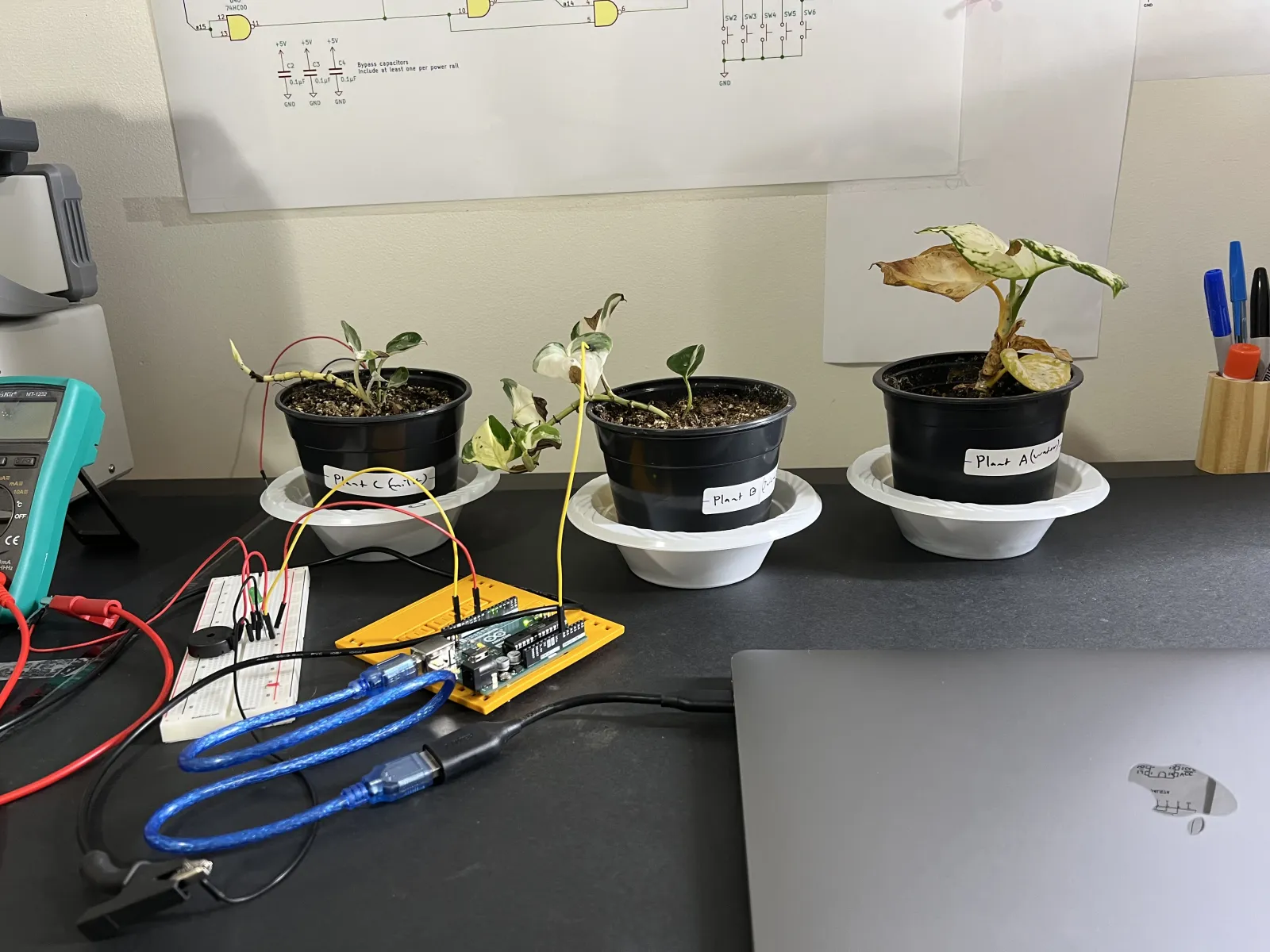
A project for Advanced Biology, an Arduino powered electrical activity measurement device
Grade 11 hit differently from day one. Suddenly I went from one science course to three, all running simultaneously: physics, biology, and chemistry, on top of pre-calculus, English, and electives. The course load alone would have been enough of an adjustment. It wasn't the only one. Between clubs, competitions, and a rapidly growing list of commitments, this was the year everything started running in parallel instead of one thing at a time.
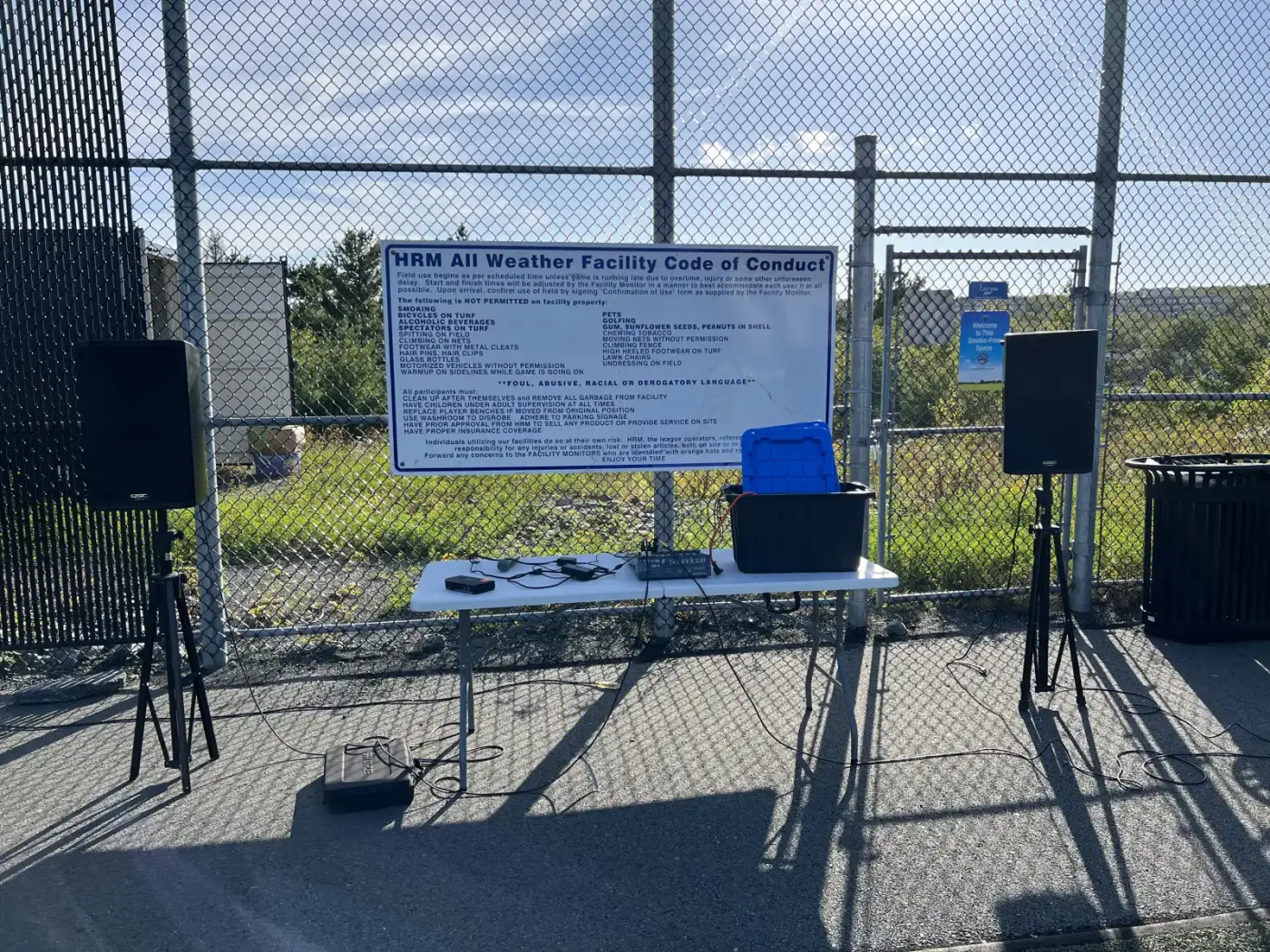
What a typical football game setup looks like
The Tech Representative role also had me handling production tech at school events that year: assemblies, musicals, and football games. Football games ended up being the most entertaining part of it, since a few of us from Tech Club also got roped into co-announcing them, despite having no idea how football actually works. I still don't. I'd call touchdowns that very clearly weren't touchdowns, mix up basic rules mid-sentence, and generally just make things up with total confidence. Somehow that made it one of the more fun, lighthearted roles I had all year. There's something oddly enjoyable about being whimsically bad at your job.
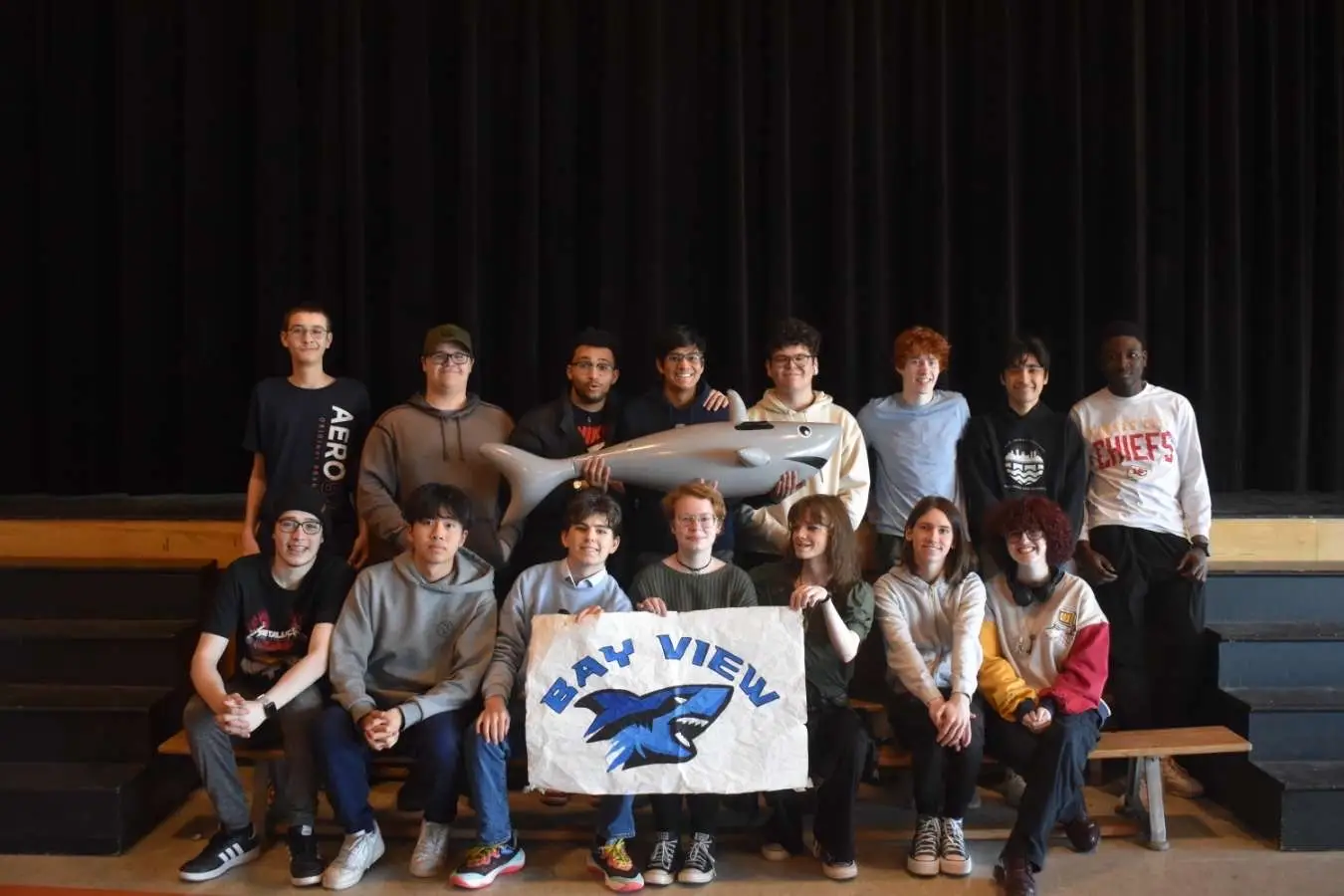
The Tech Club for the 2024-25 school year
But the bulk of my year still ran through Tech Club. It had a strong first year, and I wanted to do more than just sustain that. I wanted to build on it, run our own events, grow it into something bigger. But almost immediately I ran into a wall: I couldn't do it alone anymore. Between the academic load ahead of me and the scale of what I was trying to build, carrying the whole thing on my own effort just wasn't sustainable. So, in September 2024, I created an executive team, people who could share the load with me. When I opened applications, the response surprised me. There were people who wanted to help run things, not just show up and watch. Some of the closest friendships I made in high school came out of that team, some of them through just being around each other constantly, but a lot of them through the shared chaos of scrambling to fix something twenty minutes before an event started. That team changed everything. Setup time for events dropped from 30 minutes to 10 minutes with extra hands on deck. More people meant more ideas, more varied workshops, more of the club feeling like it belonged to everyone rather than just me.
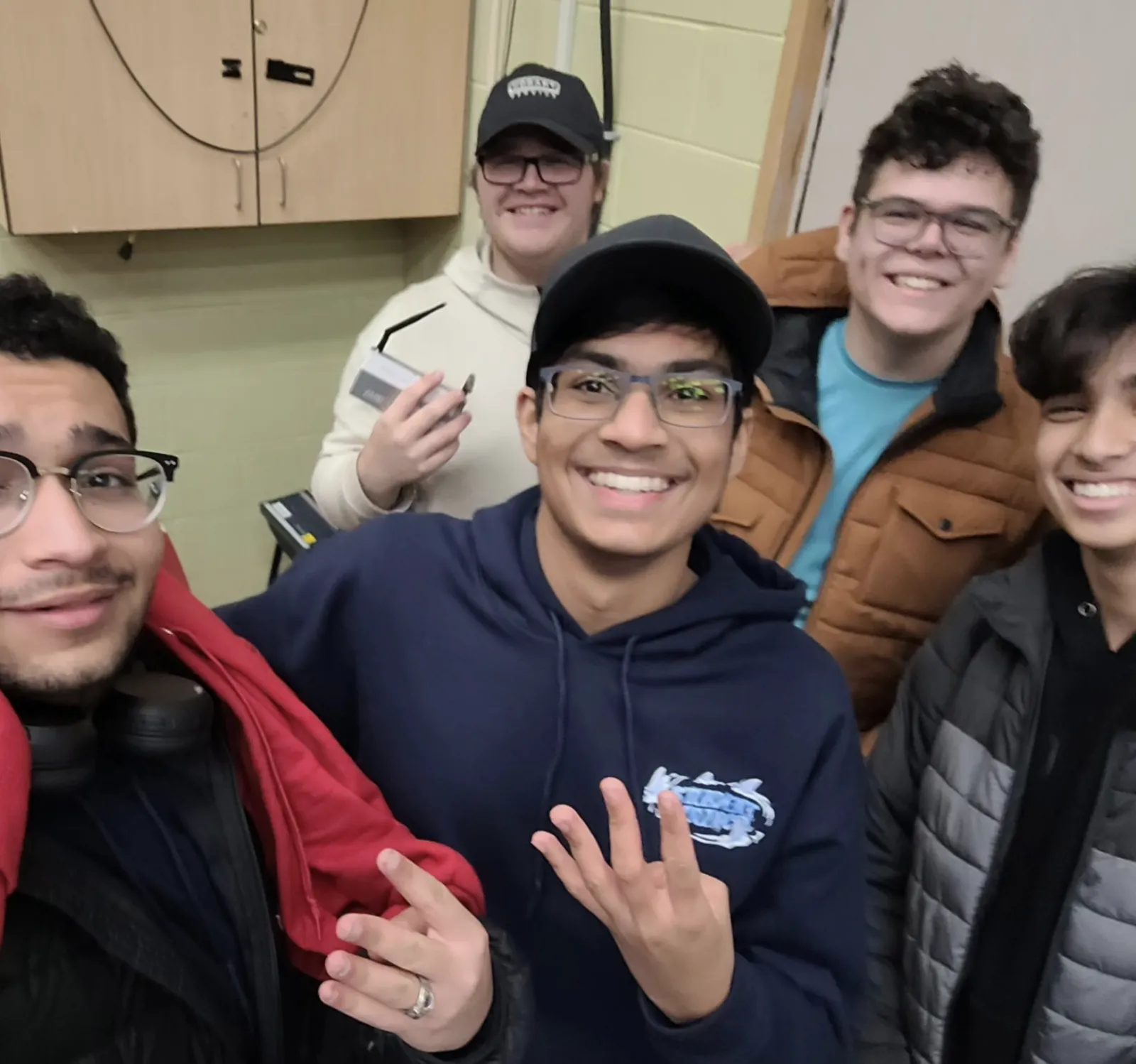
The tech team setting up for a Polar Express movie night
Running events with a team of mostly inexperienced students meant leaning on process, not just enthusiasm. My rough process looked something like this: pick an event, lock in a date at least three weeks out, let people choose the roles they want (food, advertising, whatever), finish the logistics five days ahead, have a plan for setup and teardown on the day itself, and afterward sit down and reflect on what worked and what didn't. It never went exactly to plan. People get busy, things slip, and that's fine, as long as the framework keeps things from fully falling apart.
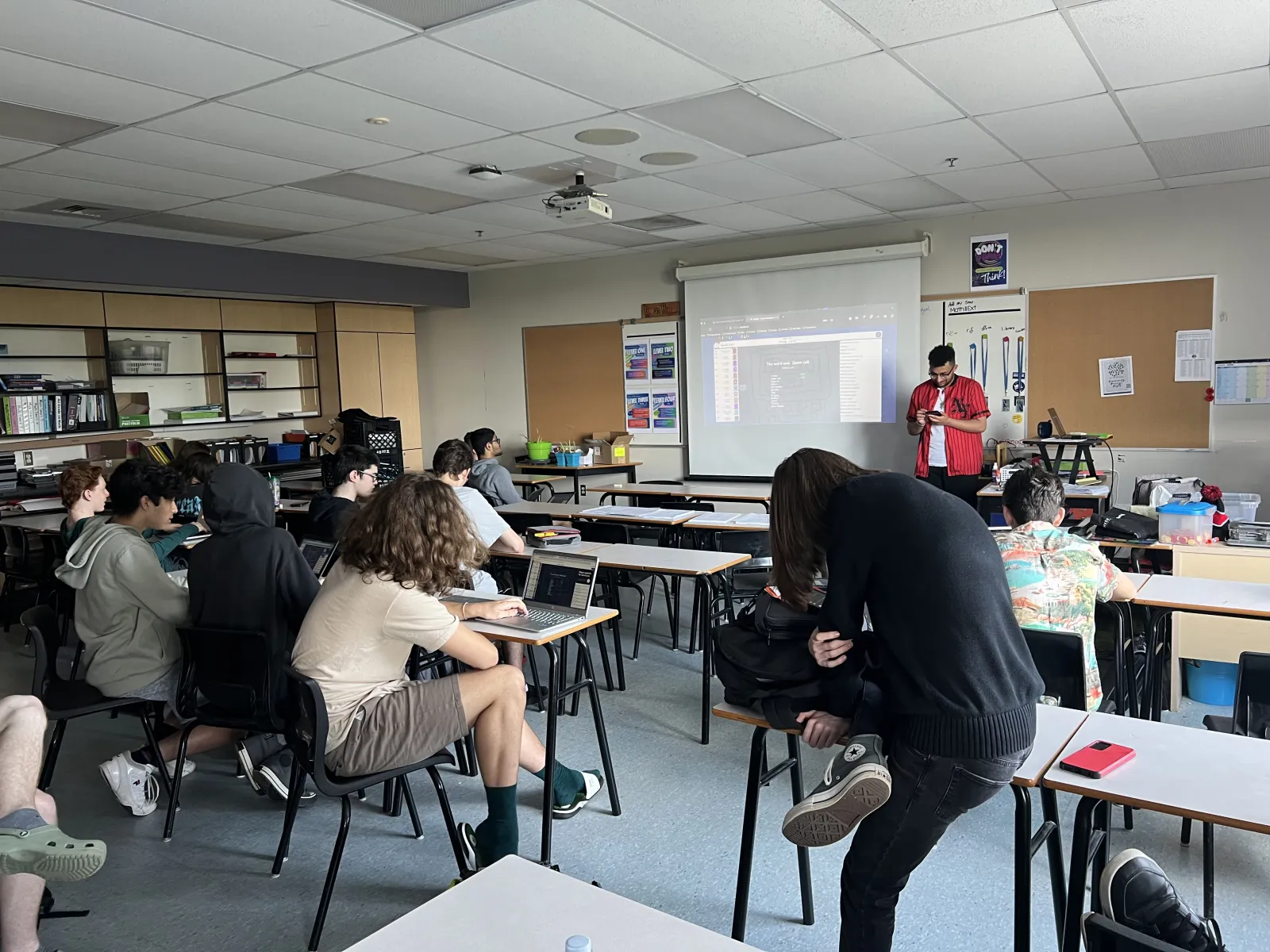
A Tech Club meeting where we played competitive rounds of Skribbl.io
Content-wise, club meetings that year leaned further into web development, Python, and cybersecurity through PicoCTF (now CyLab Security Academy). Unlike our first year, when the novelty alone was enough to pull people in, attendance held steady all the way through this time. That was the real proof the club could last.
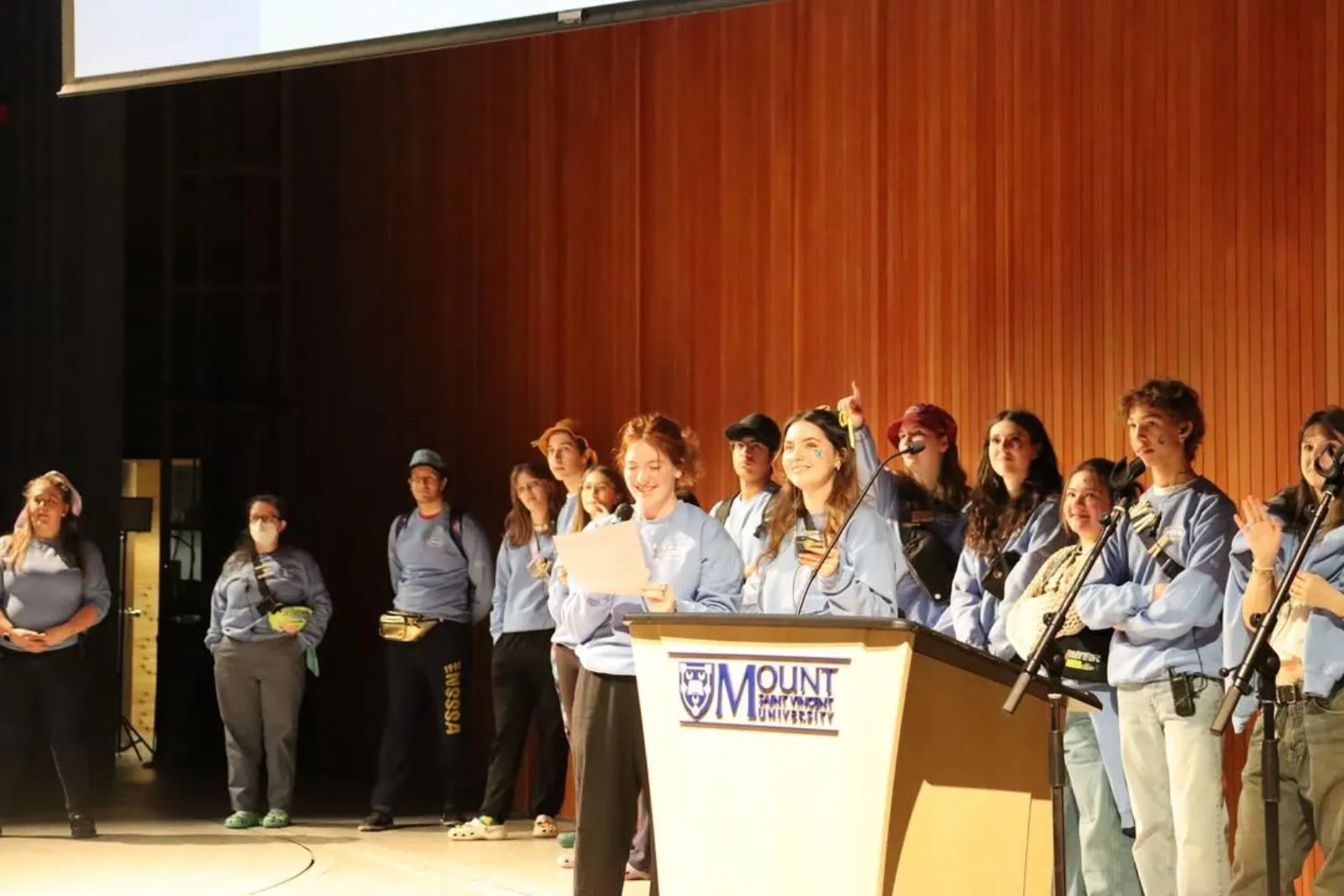
The NSSSA Metro Cabinet at PIRATE '25
Outside of Tech Club, I found myself pulled into an entirely different kind of work that year. In September 2024, I joined the Nova Scotia Secondary School Students' Association (NSSSA) as Public Relations Manager for the Halifax region, a non-profit, student-led organization that runs leadership conferences across the province. I had no background in outreach, and it turned out the job mostly meant cold emailing companies at volume for sponsorships, an effort that ran from September through January. It was a slow, unglamorous grind, and I learned most of what I know about persistence from it. First you find companies worth emailing, using whatever tools you can (AI, the internet, whatever works). Then you send the emails and get ignored, or rejected, over and over, at a rate that would discourage most people. I'd email a dozen companies and maybe hear back from one or two. I didn't think a handful of sponsorship emails would lead anywhere close to what they eventually did, and that's stuck with me since: you rarely know in advance which reach-out is going to be the one that goes somewhere. By January, it clicked, and we secured enough sponsorship to run a full conference. That role also led to a referral for IT Coordinator the following year, managing Azure infrastructure and support tickets, territory I already knew well.
In October 2024, I also joined Peer Tutoring, a club where students are available daily to tutor their peers on everything from math to the arts. I wanted to sharpen my own tutoring skills, so I dedicated time throughout the year to helping students with math and science. It turned out to be deeply fulfilling, not just for the students I worked with, but for my own understanding of the material.
The Codeforces logo
On the contest side, I also wrote the senior division of CCC that February. The jump in difficulty from junior was significant, so I drilled through old problem sets again and this time added Codeforces contests into the mix for their notoriously hard problems that require mathematical intuition. I scored above average with the contest, receiving a Certificate of Distinction.
Away from contests, I went to my first ever Mascot Showdown, a Halifax tradition where mascots from rival schools face off while their students cheer them on, and the school with the loudest crowd effectively wins. I went just as a spectator, not expecting much out of it. Bay View won that year, and I ended up having a great time watching the whole chaotic thing unfold, enough that it stuck with me as one of my favourite nights of the year, and enough that I'd end up chasing that feeling again from the other side of it the following year.
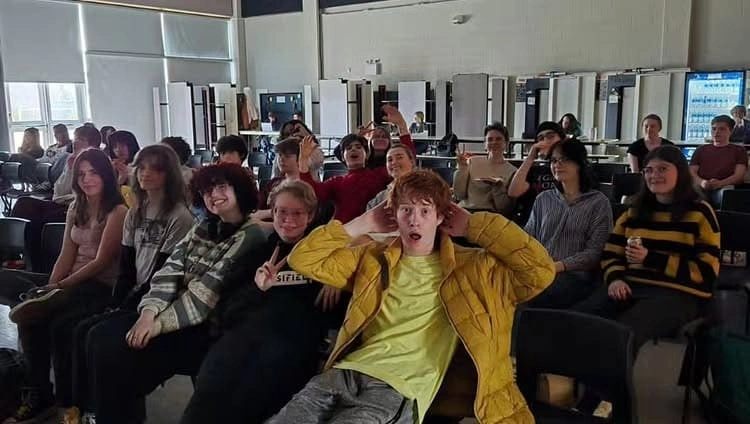
Our receptive audience at Hamilton Night
In March, Tech Club's biggest event of that year was Hamilton Night, an after-school movie night where we invited the whole school to watch the musical. Over 40 people showed up, we raised some money for the club, and somewhere in the middle of it I found myself watching a room full of my classmates belting out songs from a musical I'd never seen before that night. It's a strange, specific kind of joy, watching people you know lose themselves in something together. That night is one of my favourite memories from the whole club.
That same spring, I ended up on the other side of a classroom in a different way, this time as a teacher. I applied for and was selected as a Section Leader for Stanford University's Code in Place, a free six-week Python course. I led weekly one-hour sessions with a cohort of about 15 students, walking them through variables, functions, data structures, and the usual early Python fundamentals. I met some sharp people through it, and my own understanding of the material sharpened right alongside theirs.
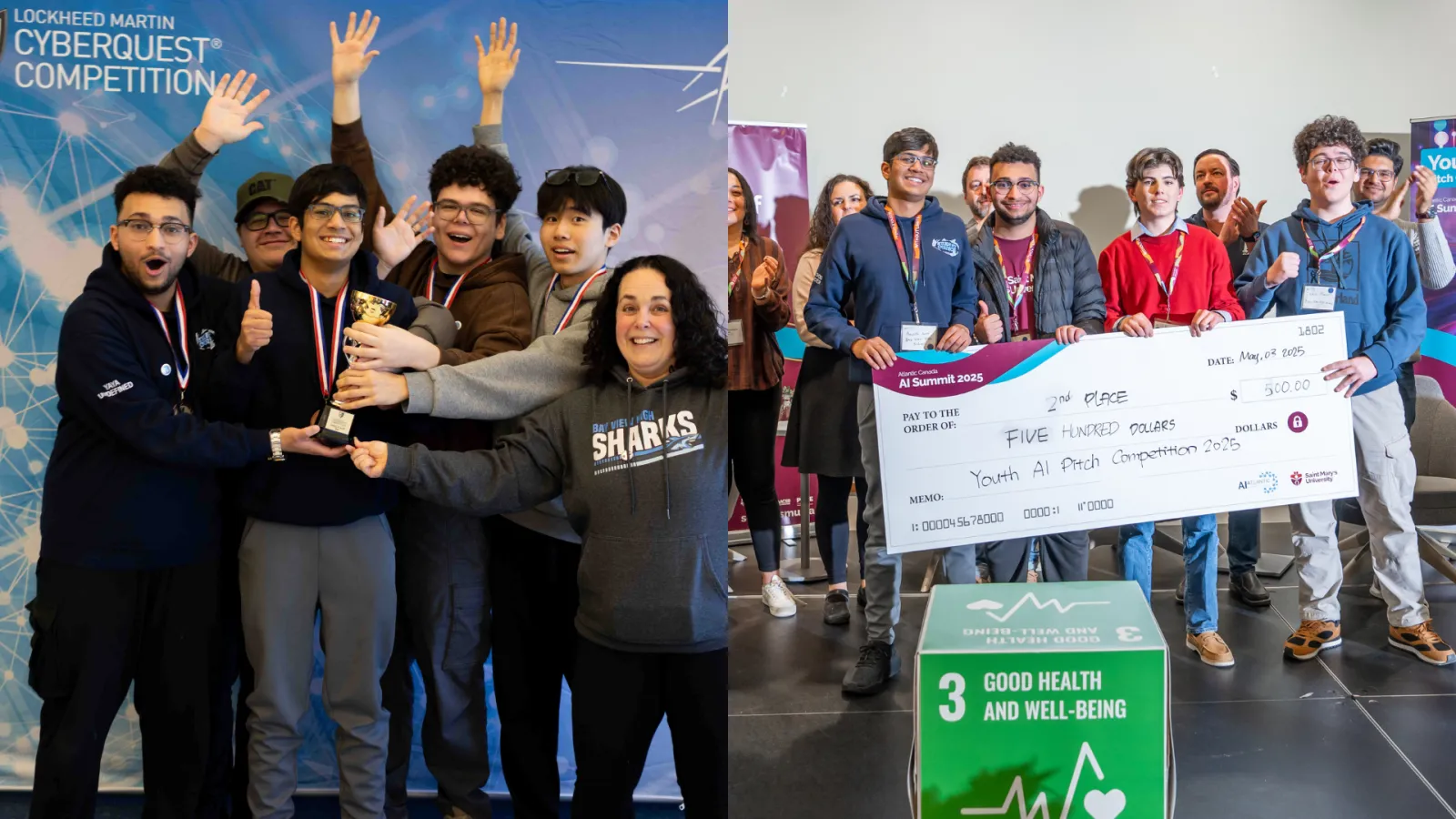
Our two remarkable wins at CYBERQUEST and the Youth AI Pitch Competition
Back with Tech Club, we decided to compete outside our own walls for the first time, entering the Lockheed Martin CYBERQUEST cybersecurity competition, a Capture the Flag event where teams work through hacking challenges against the clock. None of us had ever competed in anything like this before, and we went in without really knowing what to expect. We placed 3rd, a result that caught all of us off guard. Two months later, in May 2025, that same instinct carried us into the Atlantic Canada AI Summit Youth AI Pitch Competition, where our team designed and pitched an AI concept to improve the experience of families at the IWK hospital's Emergency Department, placing 2nd. I wrote separate blog posts on both if you want the full story of how we got there.
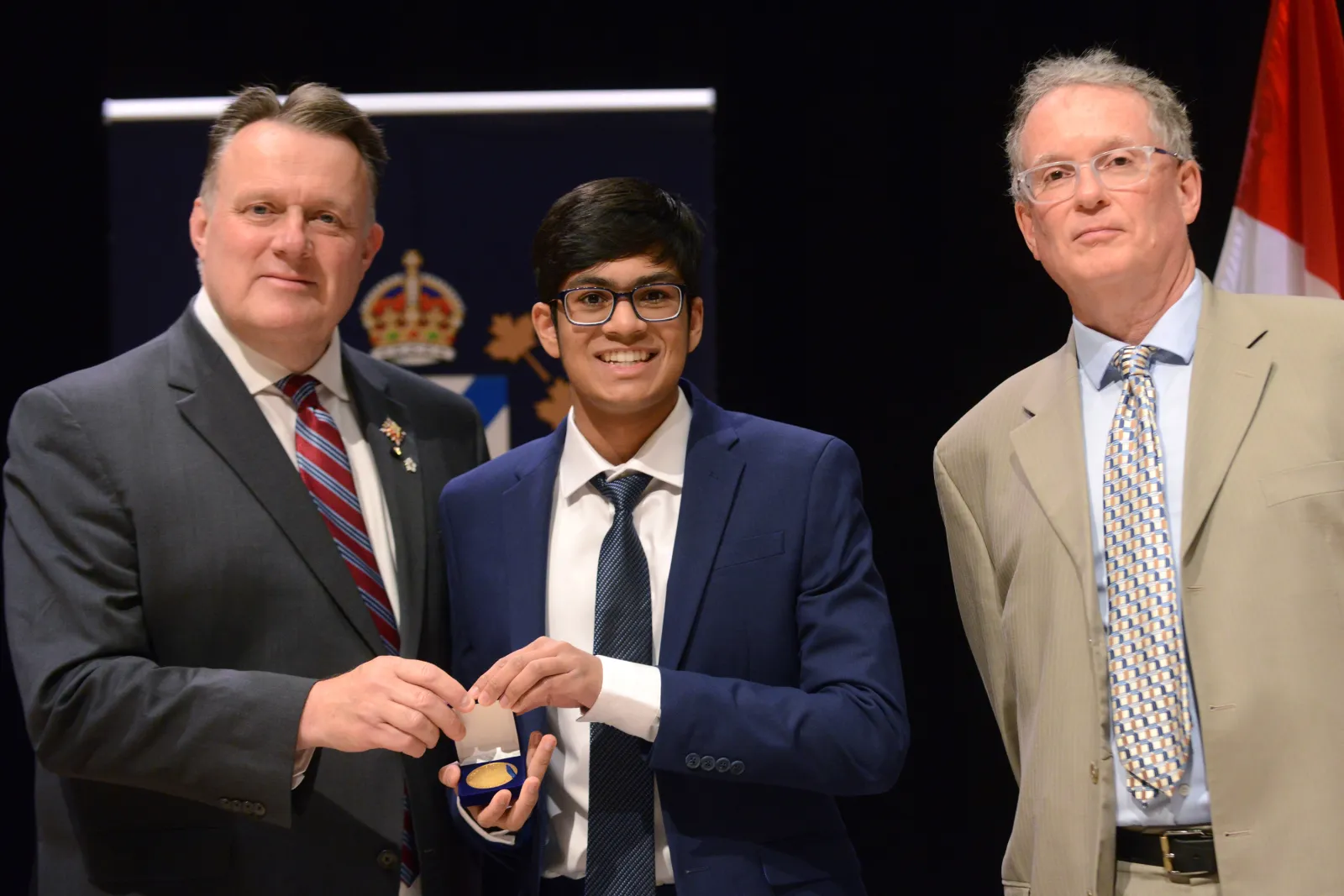
Receiving the Lieutenant Governor's Education Medal
Some of that effort circled back in a way I didn't see coming. I was awarded the Nova Scotia Lieutenant Governor's Education Medal, given to two Grade 11 students per school for leadership, academic excellence, and community service. The application was fairly simple on paper (applicant details, an essay, a resume), but getting the news back felt like something bigger than the process suggested. It landed like validation, proof that everything I'd been building toward meant something to someone outside my own head. I met the Honourable Mike Savage, Lieutenant Governor of Nova Scotia, at the ceremony in May 2025, along with his staff.
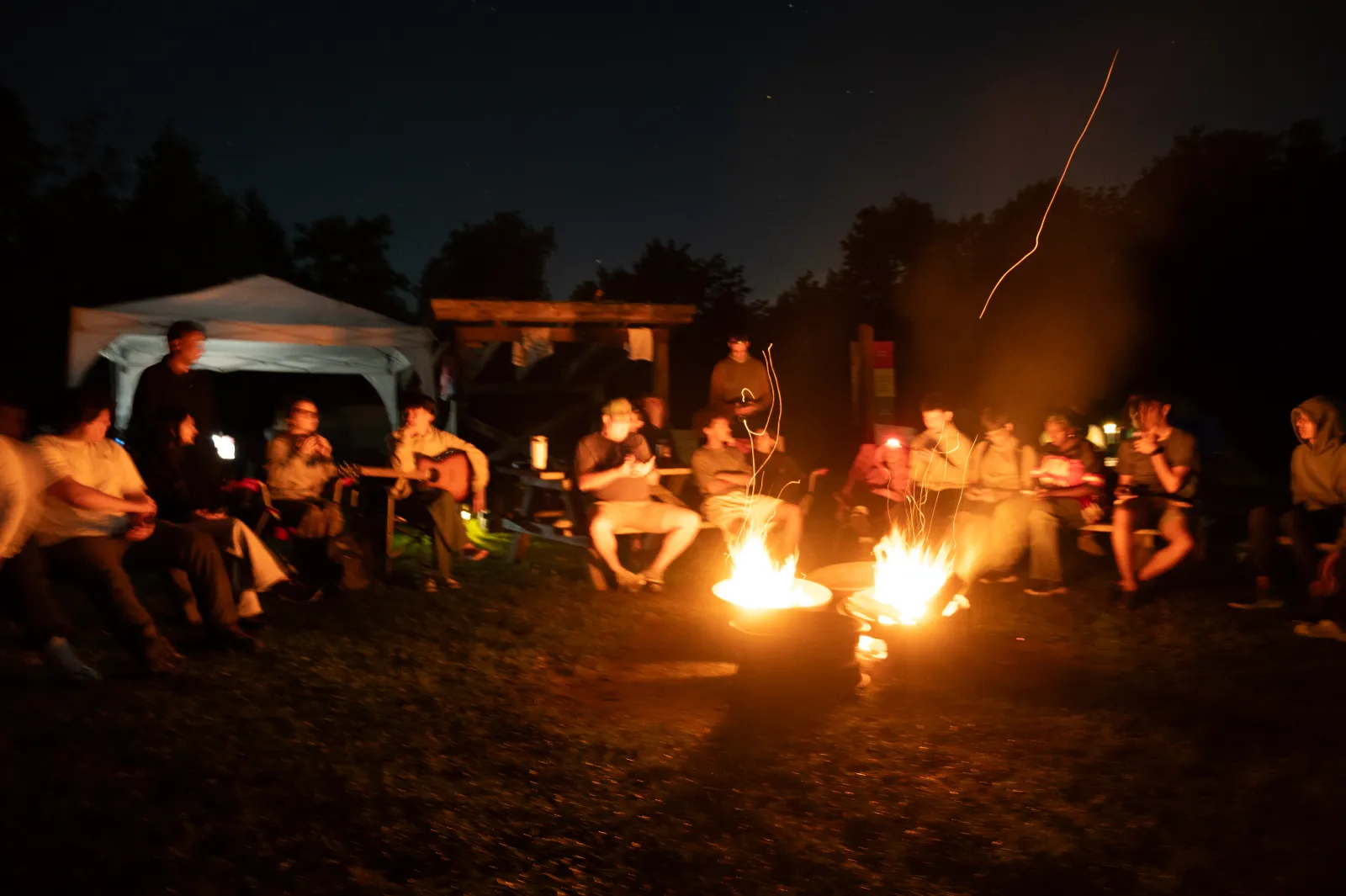
A bunch of us sitting around a campfire, maybe singing campfire songs
That momentum carried straight into the summer. I applied for and got into Shad, a month-long STEAM and entrepreneurship enrichment program hosted at universities across the country. I spent it living on campus with a team of strangers, working through a real-world design and entrepreneurship problem alongside people from all over Canada. This was my second time gaining insight into university life, and I believe it prepared me immensely for my future studies. I won't go into the full experience here, since I wrote about it separately, but it was one of the more formative months of my life.
The QSYS logo
Before leaving home for Shad, I also got into the Quantum School for Young Students (QSYS), a nine-day program with the Institute for Quantum Computing, held virtually that year. I was one of 200 students selected nationwide, learning concepts like quantum entanglement and cryptography that were actually hard to wrap my head around. The material fought back, but the staff and the peers around me made it worth pushing through anyway.
By the time August rolled around, the summer shifted toward something more serious: getting ready for the university applications. Some schools publish their supplementary questions online; some don't. UWaterloo does, both the Admission Information Form (AIF) questions and their engineering interview questions, and having access to those ahead of time was an enormous help in understanding what they were looking for. I started drafting responses right away. Were those early drafts any good? Not really. But having something on the page, however rough, gave me a foundation heading into the school year instead of walking in blind.
I also mapped out the major national scholarships I planned to apply for: Loran, TD Scholarships for Community Leadership, Schulich Leader, and Terry Fox. These were, without exaggeration, some of the most competitive undergraduate scholarships in the country, each demanding its own extensive application. Knowing what was coming, I made a deliberate point of resting that summer, so I'd have something left in the tank for what September was about to throw at me.
Putting It All Together (Grade 12) - 2025/26
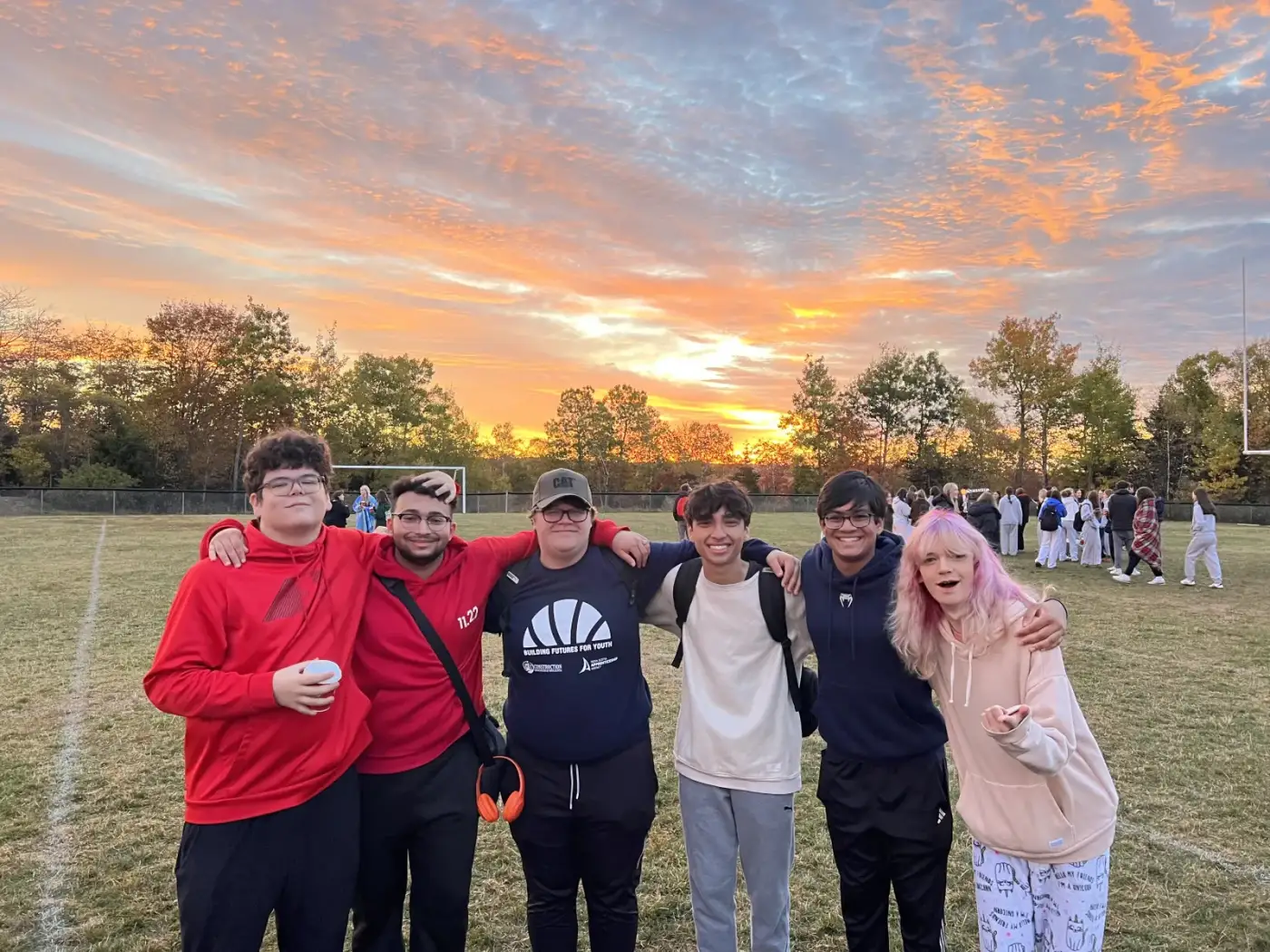
My friend group at Senior Sunrise
That year's courses: Advanced Physics 12, AP Calculus 12, AP Chemistry 12, AP English 12, Biology 12, Computer Programming 12, Global Geography 12, and Pre-Calculus 12.
September
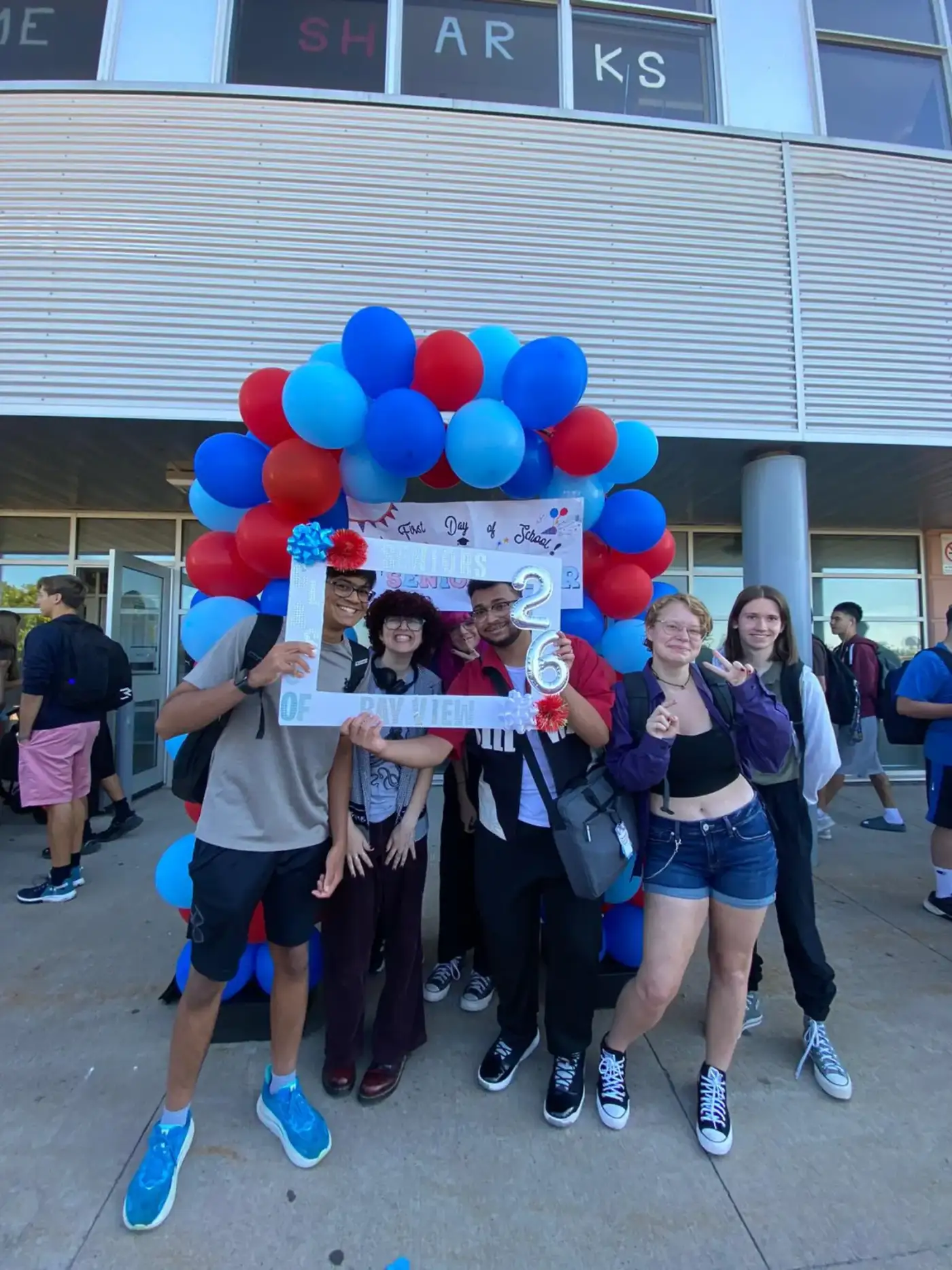
My friend group at the last first day of school
This was the most important year of the whole plan, and easily the hardest academically. Three AP courses stacked on top of a full slate of advanced courses. My first semester alone had me juggling AP Chemistry and AP Literature at the same time.
I carefully managed my extracurricular load that year, knowing academics needed more of my attention than in any previous year, but I still stayed meaningfully involved rather than stepping back entirely.
The first surprise of the year was that national scholarships opened before university applications did. Loran opened in early September, and it was entirely on me to track when things opened and closed. University applications followed in mid-to-late September. I ended up applying to Dalhousie, UBC, McGill, UWaterloo, and UofT, more or less the same five schools that had first come up in my research back in Grade 9. For Ontario specifically, that meant going through the Ontario Universities' Application Centre (OUAC) rather than applying to schools directly. My best advice from that whole process is simple: check your email regularly, because that's where almost everything happens.
When it came to the AIF, and honestly any application essay, my approach stayed the same throughout: answer the question, use the full word count, and resist the urge to guess what sounds impressive. There isn't one right topic, and no topic is inherently more impressive than another. The best advice I've heard, and the advice I'll pass on, is to just be yourself. You're the main character of your story and you know your own story better than any admissions strategy ever will, and it's on you to connect your own experiences to the questions in a way that represents you. It's tempting to chase what you think admissions officers (and their AI) want to see. Resist that. Write what's true, and just make sure it answers the question fully within the word count.
One more thing I'd recommend to anyone applying: go to UWaterloo's info sessions. They cover everything from first-year life to co-op to residence, usually run in the evenings, and they're a far better way to get to know the university than just researching it from a distance.
October
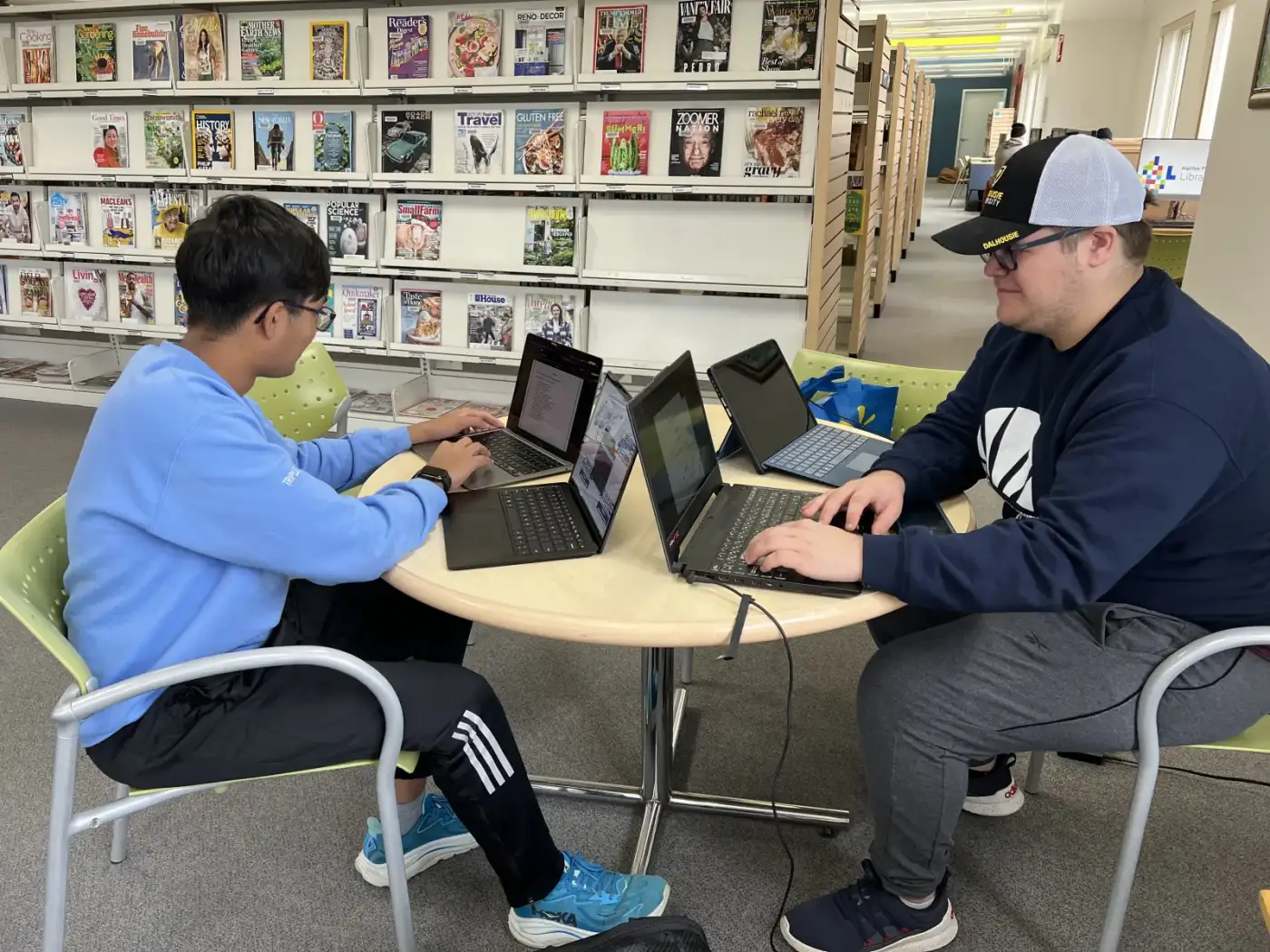
Tech Club competing at CyberPatriot
Back at school, Tech Club stayed just as central to my year as ever. I wanted it to keep competing in my final year, so I signed us up for CyberPatriot, where teams act as IT professionals defending simulated networks against real vulnerabilities. From October to December, my team and I met monthly at a library to run Windows and Linux virtual machines and defend them: turning on firewalls, adjusting user permissions, removing unnecessary programs, and answering networking questions on Cisco. The competition got noticeably harder as the months went on, and we didn't qualify for the state round. Still, we earned Gold Tier, the first time our school had ever competed at all, not bad for a team building this from nothing.
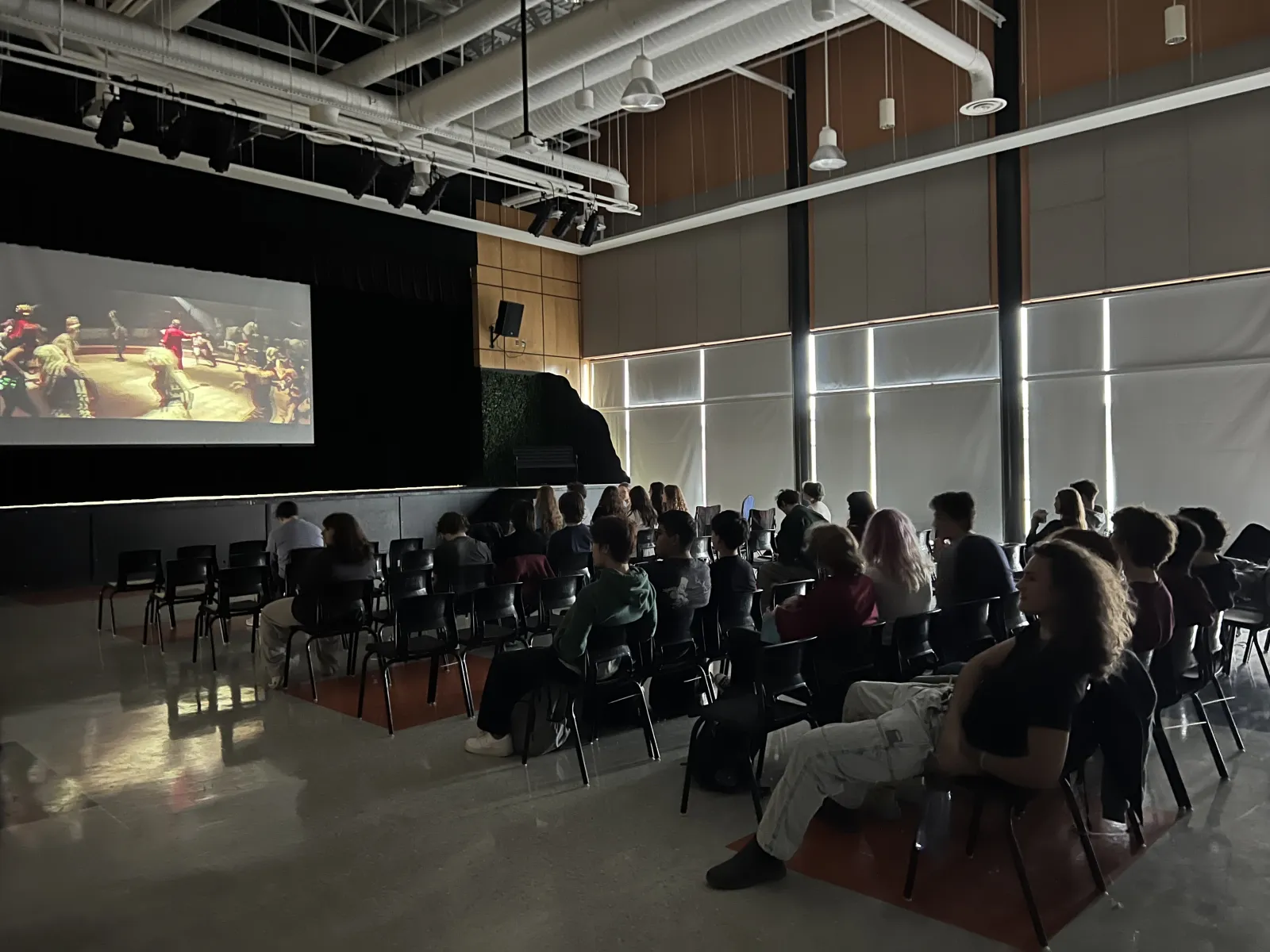
Our intrigued audience at The Greatest Showman Movie Night
Outside of Tech Club, I picked up a couple of other roles that pulled me in different directions. In October, Peer Tutoring needed new leadership and ran an election for four co-lead positions. I ran, and was elected. My focus became increasing our visibility, in person and online, and building an executive team the same way I had for Tech Club: applications, interest, interviews, a proper structure underneath the effort. It worked. That year became the most active in the program's history, with over 100 students attending our study nights and our social presence stronger than it had ever been.
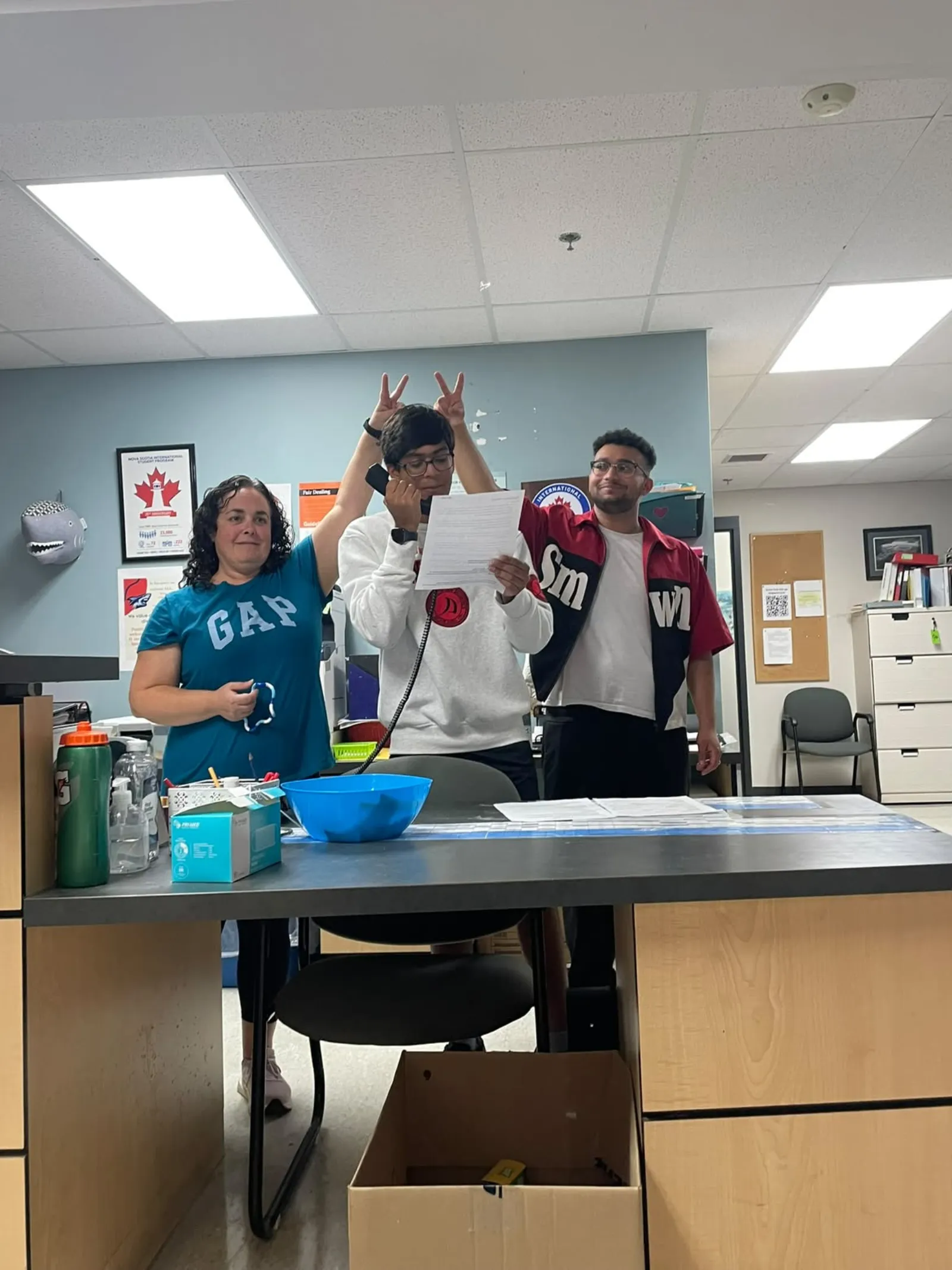
Conducting the morning announcements with tremendous support
I also took on the mostly-for-fun role of morning announcer, reading the day's announcements over the intercom to every classroom in the school. Part of it was genuine enjoyment. Part of it was a deliberate push to keep working on public speaking, which still needed the reps. If you want a sense of what that sounded like, here's a clip of my very last announcements before I handed the intercom off for good.
To end off the month, my first university acceptance came in, from Dalhousie.
November
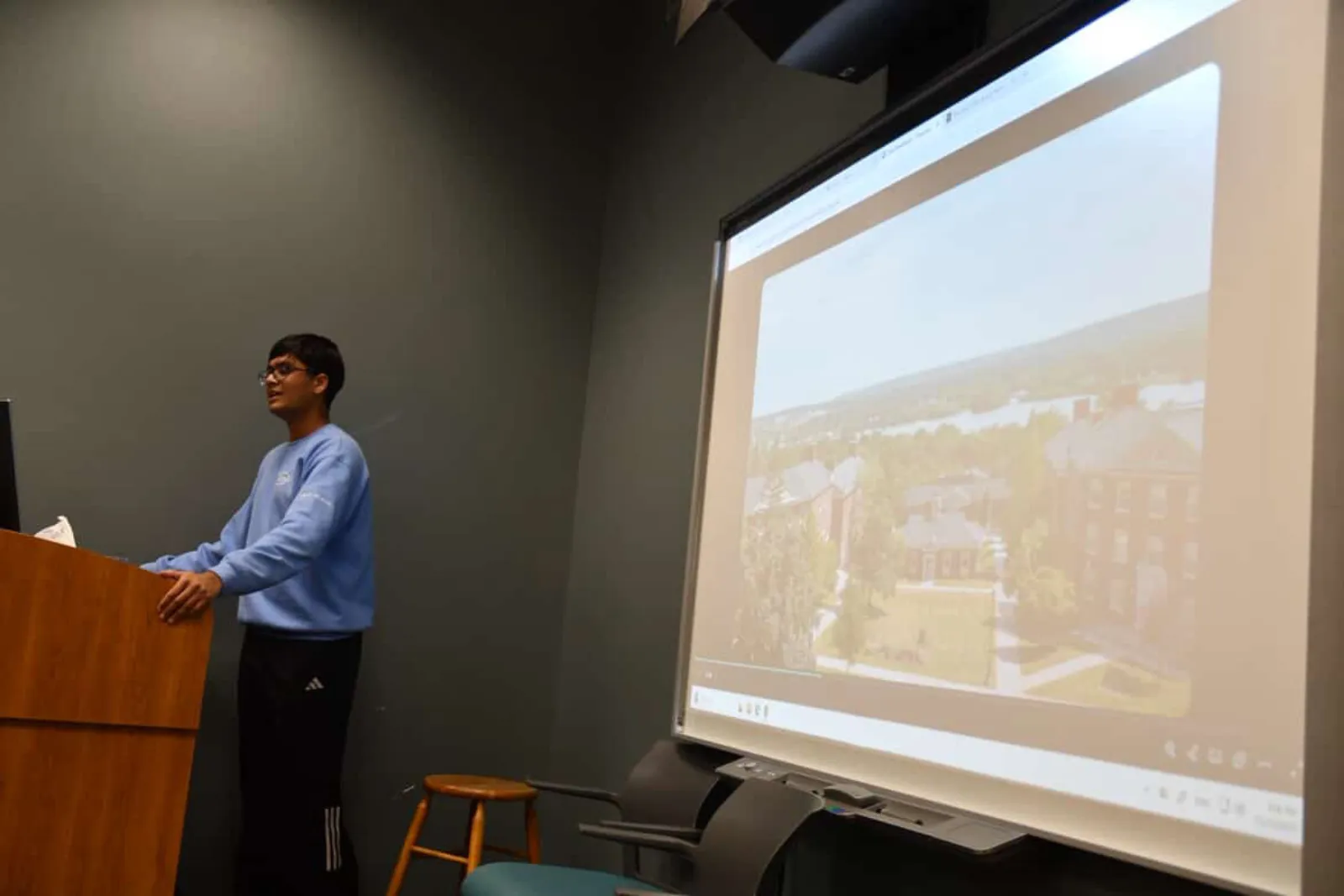
Presenting Shad to a group of delegates at ORBIT '25
That November, I joined my school board's Regional Student Advisory Council (StAC) with the HRCE, structured similarly to MSAC: one student per school, meeting with the Regional Executive Director. It only ran to two meetings that year, but the conversations, around social media safety and how the board handled snow days, were substantive ones.
Meanwhile, on the scholarship front, things were about to get a lot more interesting. I was nominated for the Schulich Leader Scholarship that year, a nomination capped at one student per school. It had been on my radar for a long time, so even the nomination alone felt exciting in its own right, before I had any idea how it would turn out.

The Wolf Scholars logo
Another opportunity on that same front turned into one of the most memorable stretches of senior year, even if, in the end, it wasn't the moment that decided anything for me. I found it on Reddit, of all places, about a week before the deadline. The Wolf Scholars Program is a fully funded, four-year undergraduate cohort at the University of Toronto's Faculty of Arts & Science, covering tuition, a living stipend, and leadership training through the Munk School of Global Affairs & Public Policy. It's open to high school seniors with a 90% average and strong community impact. The odds were brutal: roughly 1,100 applicants narrowed to 92 interviewees, then 32 finalists, then 16 winners. I was eligible because I'd applied to Computer Science at UofT, and with a week left on the clock and nothing to lose, I applied anyway.
The written application itself was one of the more thoughtfully built ones I encountered all year, an interface that was, unexpectedly, pleasant to use, and questions that skipped the usual scholarship script entirely. If you're applying to something like this yourself, my honest advice is to reflect on who you are, the experiences that shaped you, and how you let that personality come through on the page, not just your credentials.
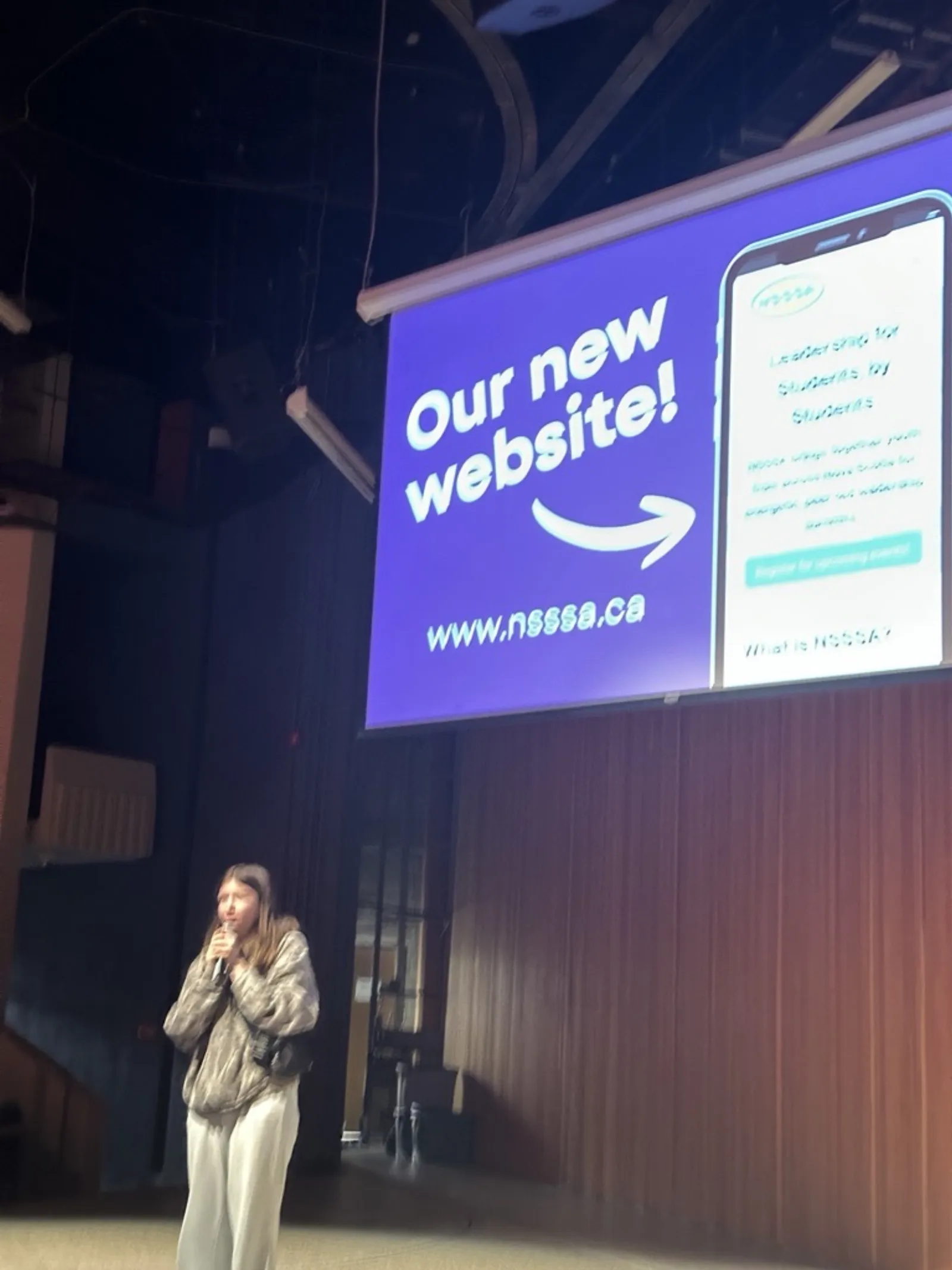
The announcement of the new NSSSA website at ORBIT '25
The other major thread that year ran through NSSSA. Early in the year, I began my duties as IT Coordinator: support tickets, permission updates, training members on Microsoft 365. When I started hearing that people thought the old NSSSA website felt outdated, and that there was appetite to rebuild it, I volunteered for the job. The leadership team was thrilled at the idea, so I spent the better part of two months building it out, at school and at home, on WordPress, a tool I hadn't used before despite having written website code for years. I redesigned it to feel warmer, more organized, splitting what used to be one cluttered page into a proper multi-page site with clear structure. Hearing from the leadership team about how excited people were when it launched at a regional conference is one of those quiet, deeply rewarding moments that doesn't show up on a resume but stuck with me anyway.
December - February
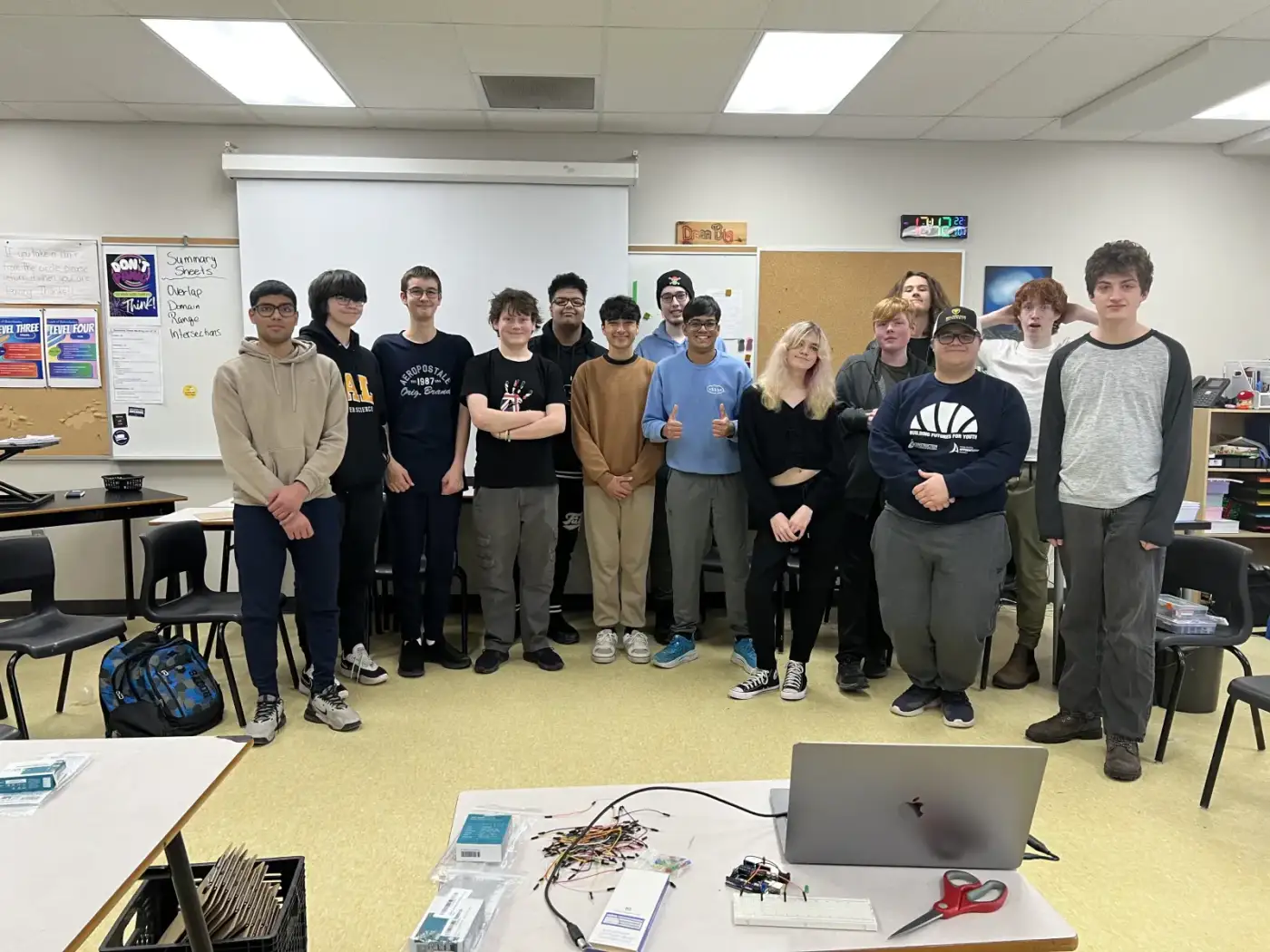
The Tech Club for the 2025-26 school year
Around this time, Tech Club started losing steam. I'd leaned into lighter topics like Scratch game development early in the year, thinking it would widen our appeal, and it backfired. Attendance dropped, and I had to sit with why. Software had gotten boring to people. Hardware hadn't. So over winter break, I built out a set of Arduino projects: a traffic light system, binary counters, a small sound system. When the club came back in January, it was an instant turnaround, our highest attendance yet. I started recording highlights and posting them to our Instagram, @bvhstechclub, if you want to see what those meetings looked like.
The first week of January 2026 brought the second acceptance, this time from McGill.
At the same time, I was shortlisted for interviews with the Wolf Scholars team. I spent part of winter break practicing since this was the highest-stakes interview I'd had to that point, and then had an absolute blast once I got there. It felt more like a conversation than an evaluation, ranging from my own application to actual geopolitics.
Most university applications closed around that time too, which marked the end of the first phase of senior year. What followed was the longer, quieter part: waiting, on both fronts at once.
At the end of January, UBC and UofT both said yes on the same day, a good note to end the month on.
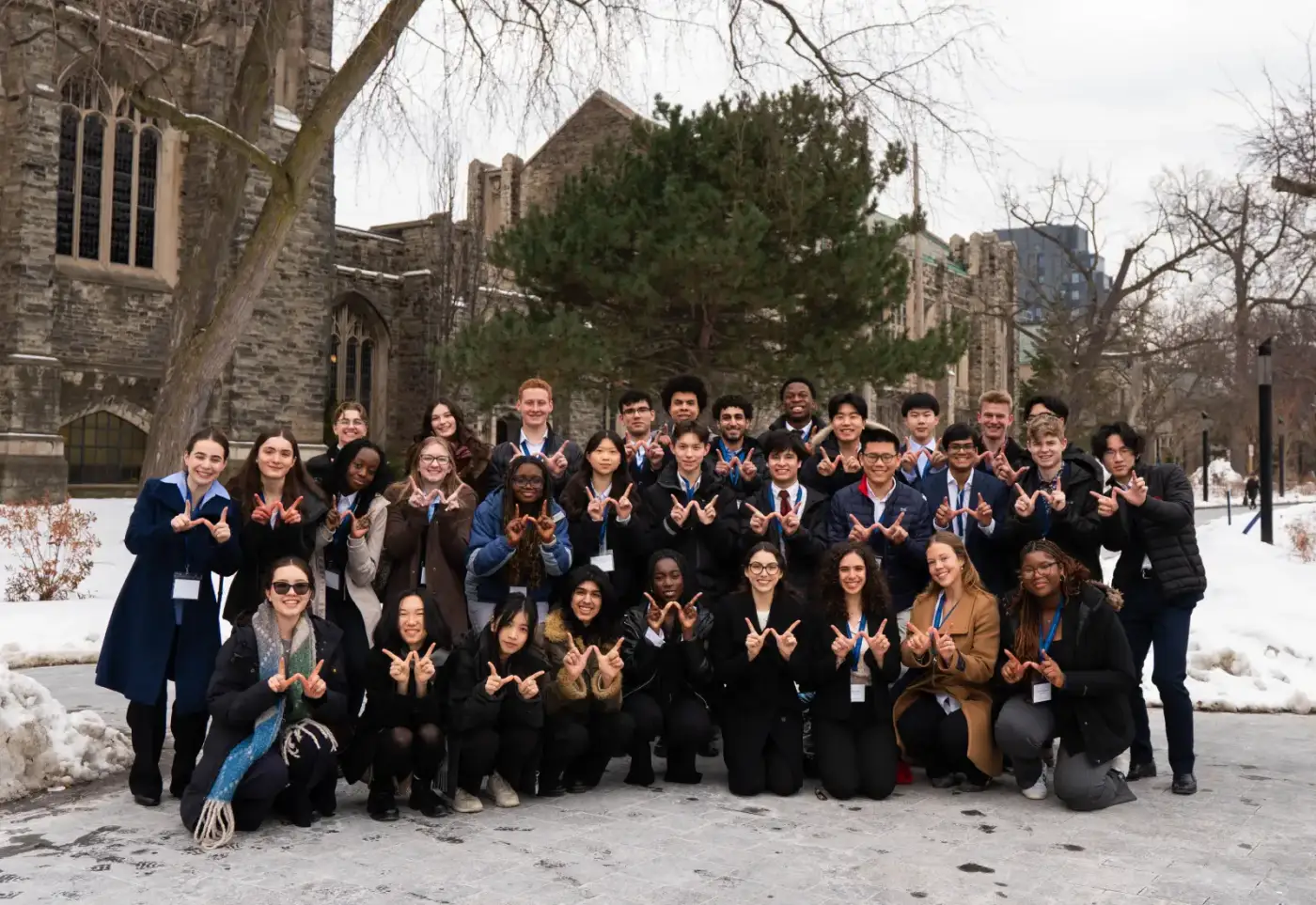
The finalists for the inaugural Wolf Scholars program
The scholarship front resolved next. I was selected as a Wolf Scholars finalist. I hadn't expected to make it that far, and the shock of it carried me into a few days in Toronto at the end of February: touring the university, meeting experts in nuclear technology, global affairs, and psychology, wandering the city, and building lasting connections with people I'd likely never have met otherwise. One more day of interviews followed the same advice as before: be authentic, reflect. I didn't win, and for a few days afterward, that stung more than I expected, especially having made it that far. But I met 31 other impressive finalists, walked away with a far broader view of where things are headed globally, and felt the disappointment fade within a few days.
March - April
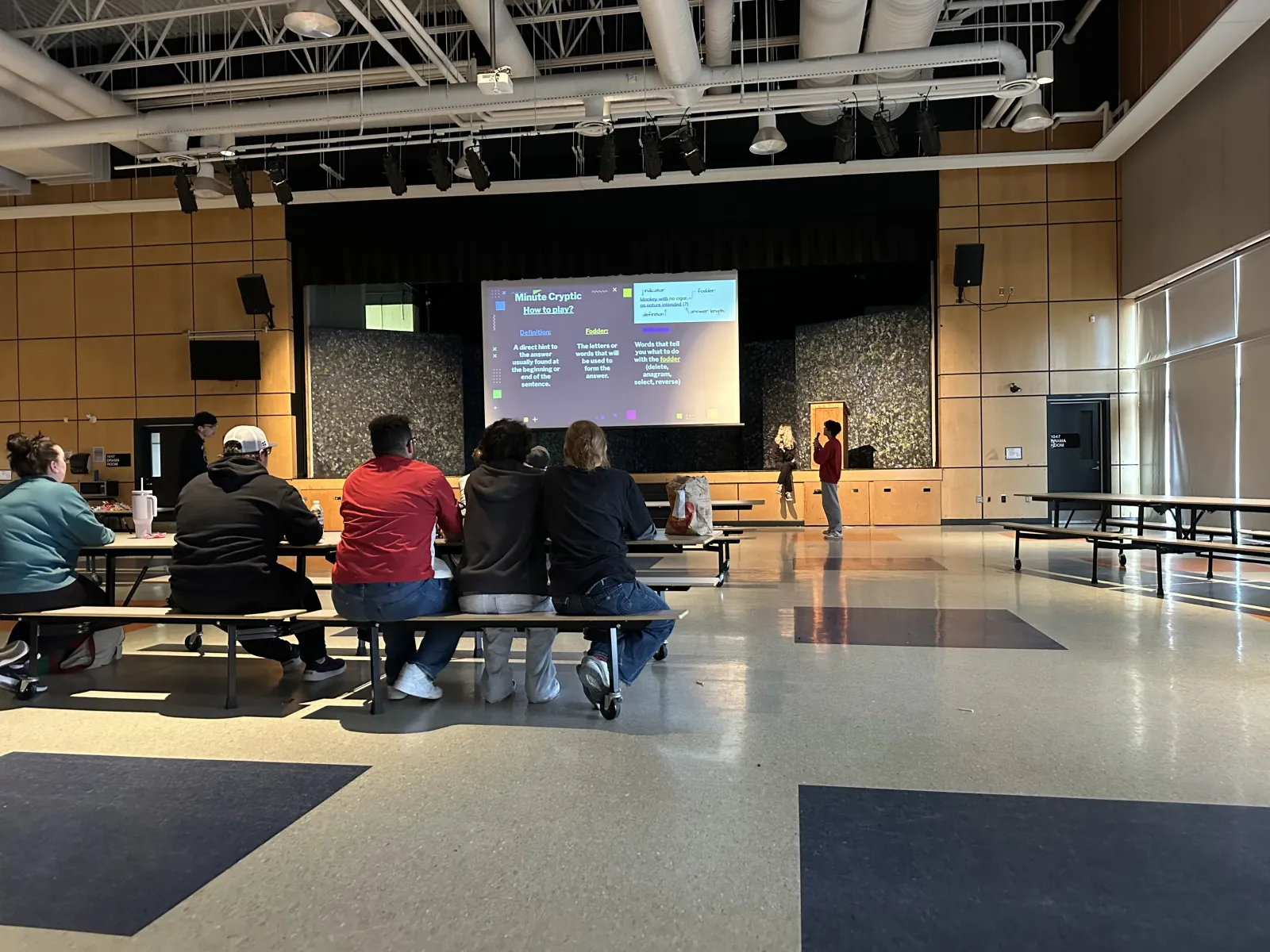
Tech Club's Trivia Night, our last event of the year (and my last for good)
By the beginning of March, the acute stress of applications had faded into something quieter: the slow, sinking realization that my days left in this school were numbered, and shrinking fast. Classes kept their normal rhythm, but I finally found something like balance between coursework, extracurriculars, and a social life.

Hello, Warrior! Banner
Then, in late March, during lunch hour, sitting in one of my own classrooms, I logged into the application portal the way I had a dozen times before, and saw the "Hello, Warrior!" banner: I'd been accepted into the CS program, with SWE following shortly after. There was no dramatic build-up to it, just me and a laptop during lunch, but the second it registered, it hit me all at once: three years of hard work had paid off. I sat there for a minute, thinking about how strange it was that a thousand small decisions, opportunities, and conversations had all somehow led to that exact moment.
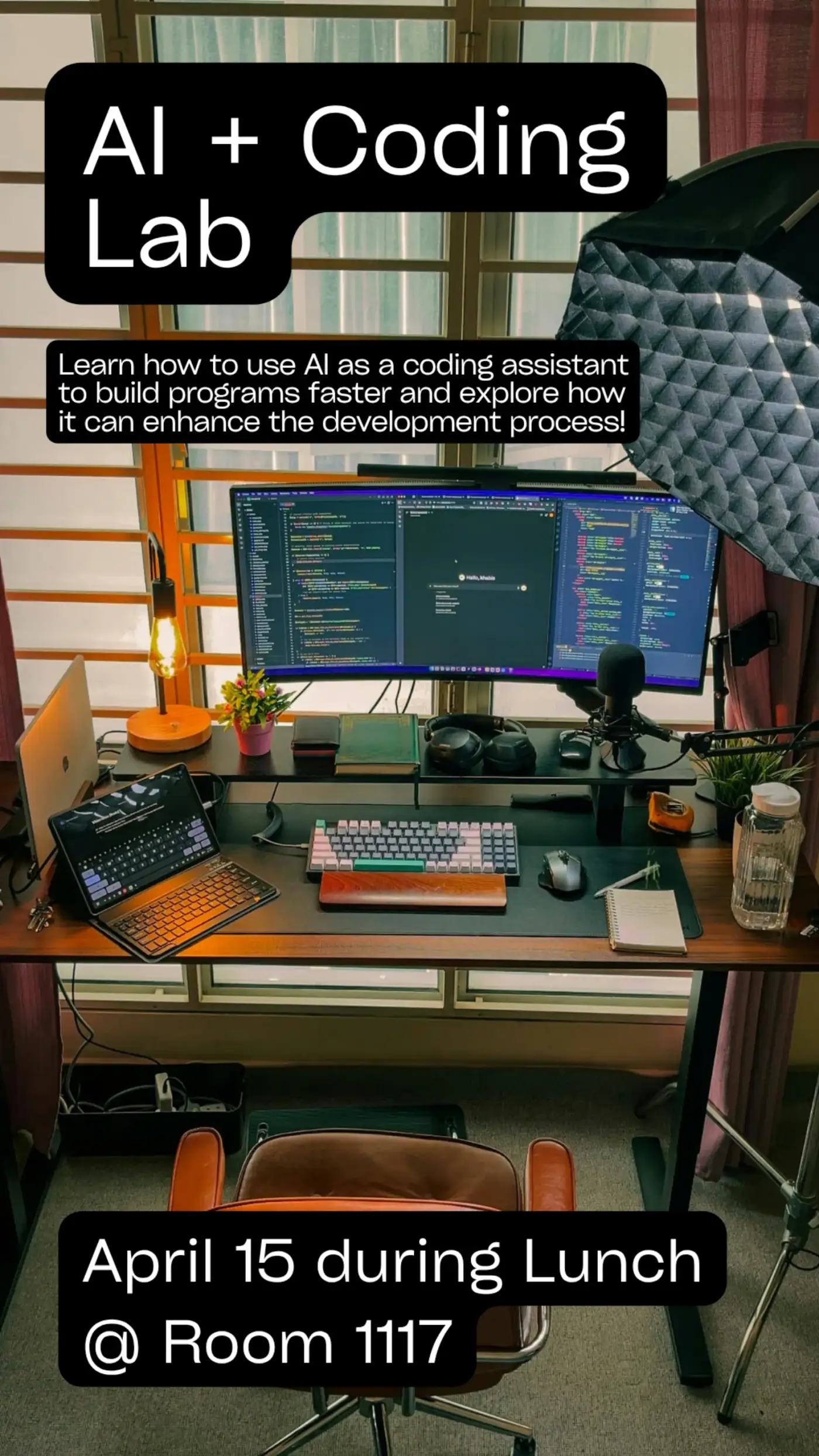
A poster for our AI and Coding meeting
With that settled, the rest of senior year started to feel lighter, more like enjoying what remained instead of chasing what came next. In Tech Club, we moved from Arduino to Artificial Intelligence: its uses, its ethical questions, building a basic model together in Python and Jupyter Notebooks. Members were sharply split on whether they even wanted to engage with AI given the concerns around it, which felt like exactly the right note to end the club's run on, considering everything happening in the field right now.
On the contest side, I wrote the Euclid contest, which is recommended in your final year since it can help with both admissions and scholarships. My results were underwhelming but this was the last contest I would write before graduating, so it felt like a significant milestone for that reason.
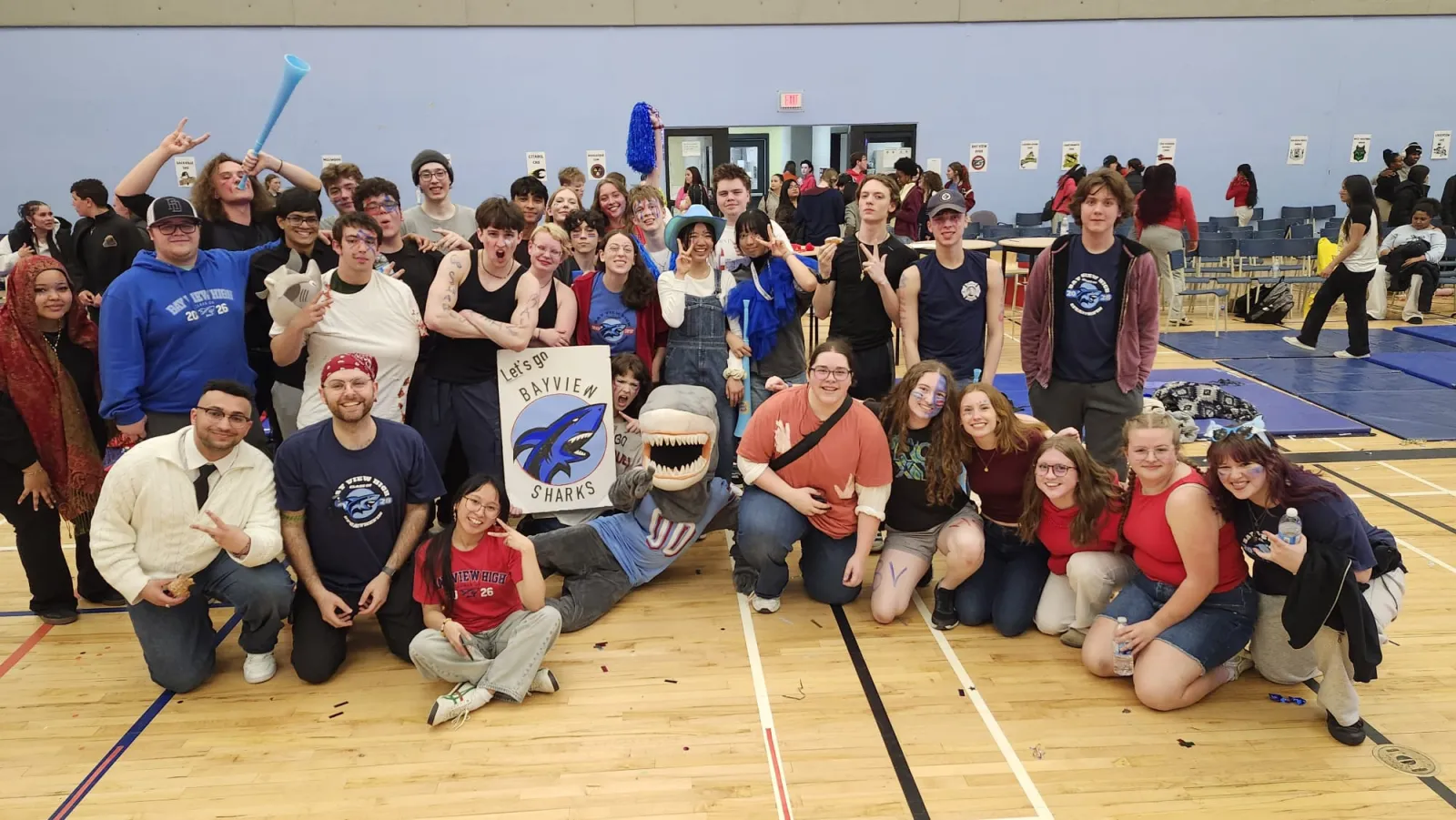
Bay View High School at Mascot Showdown 2026
Away from contests, I returned to Mascot Showdown that spring, this time from the other side of it. Instead of just watching from the crowd like the year before, I was recruited to run stand-up comedy during the judges' deliberation period, and leaned hard into the corniest school-specific jokes I could come up with on the spot.
Around the beginning of April 2026, I led Code in Place one more time that spring, another six weeks teaching Python fundamentals to a new cohort.
Towards the end of April, I received news about the Schulich Leader: I'd won it, tied to my earlier McGill acceptance. It was an incredible offer, one of the best things that happened to me all year, and turning it down wasn't an easy call in the moment but it felt like the right one, at least for me. It was the same day I formally committed to UWaterloo's Software Engineering program.
May - June
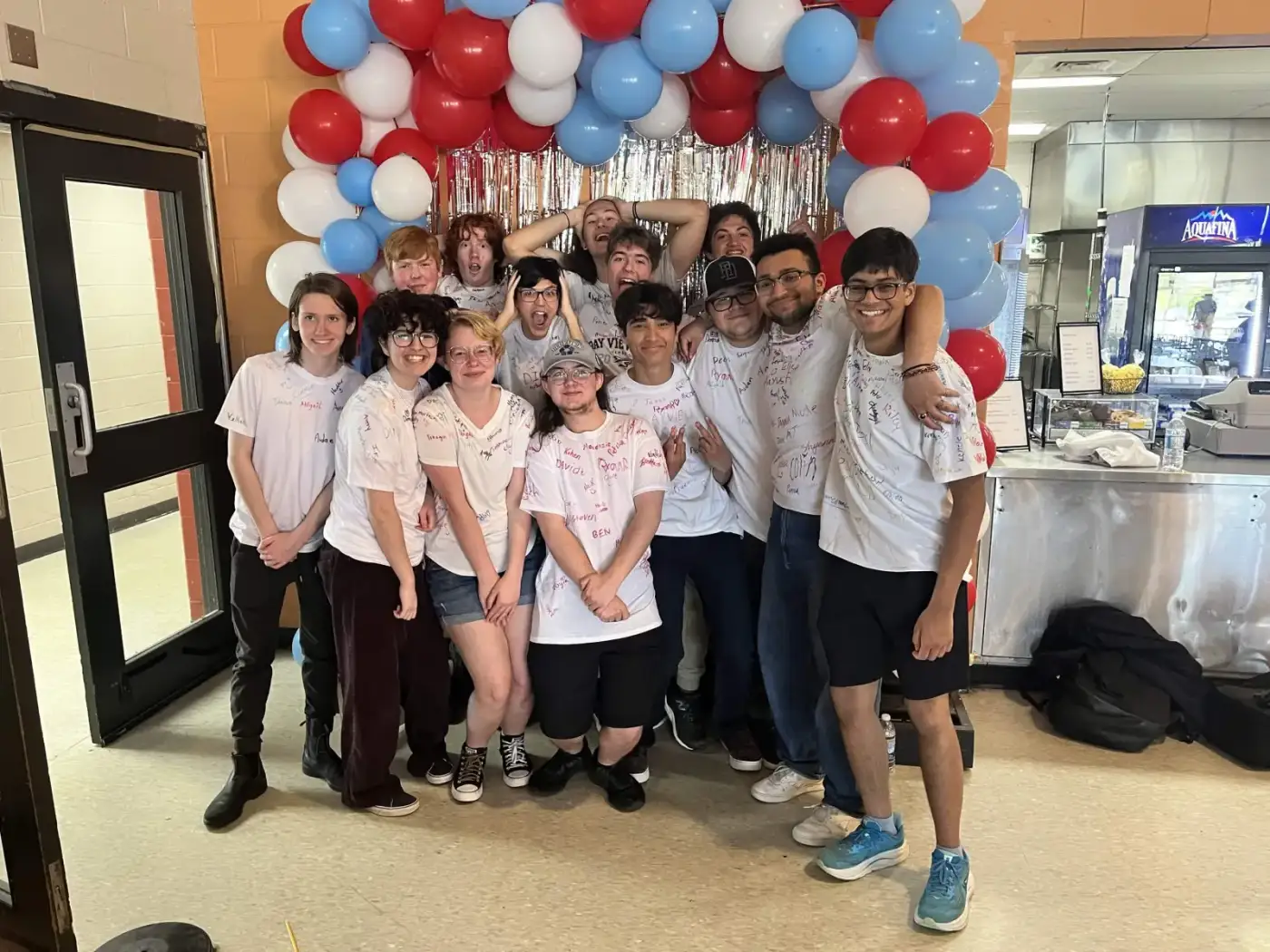
My friend group on Walking Yearbook Day
By May, though, lightness gave way to something else entirely. The reality of graduating had settled over the whole class, and going out of province made it hit differently for me than for most people around me. I'd spent 13 years surrounded by the same people, and a lot of the closest bonds among them came from two different places: the ordinary stuff of just hanging around each other for years, but also the kind of friendship you don't plan for, the kind that comes out of being thrown into the same mess together and figuring it out side by side. The idea of no longer sharing a building with any of them the way I had for over a decade felt strange in a way I hadn't fully sat with until then. That realization made me deliberate about spending time with the people I cared about most in those final months, because I knew I wouldn't get that time back.
In June, we held our last Tech Club meeting, looking back at how we started, everything in between, and where we'd ended up. Having led the club for three straight years, watching it close was quietly emotional in a way I wasn't fully prepared for. I handed leadership off to a new team before we wrapped for good.
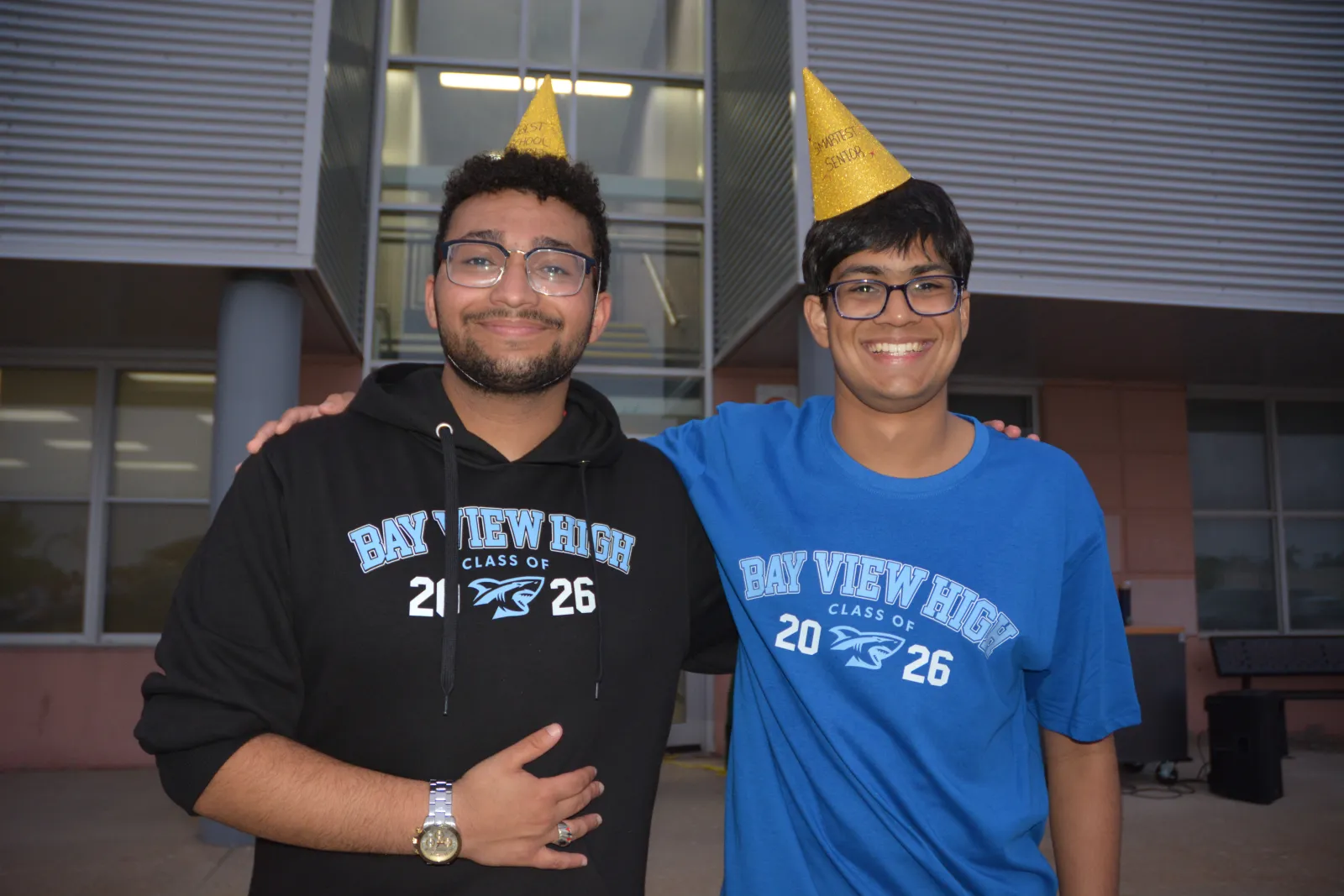
With my ride-or-die, Yaya, at Senior Sunset
The rest of the year unfolded in the usual senior traditions: Senior Spirit Week, Prom, and Senior Sunset, which might be the one I remember most clearly out of all of them. We didn't do anything structured that night, just sat around as a group, talked, and took an absurd number of photos, which ended up being the only real evidence any of us have that we were even there. A fitting, slightly chaotic way to close out a few years that never slowed down.
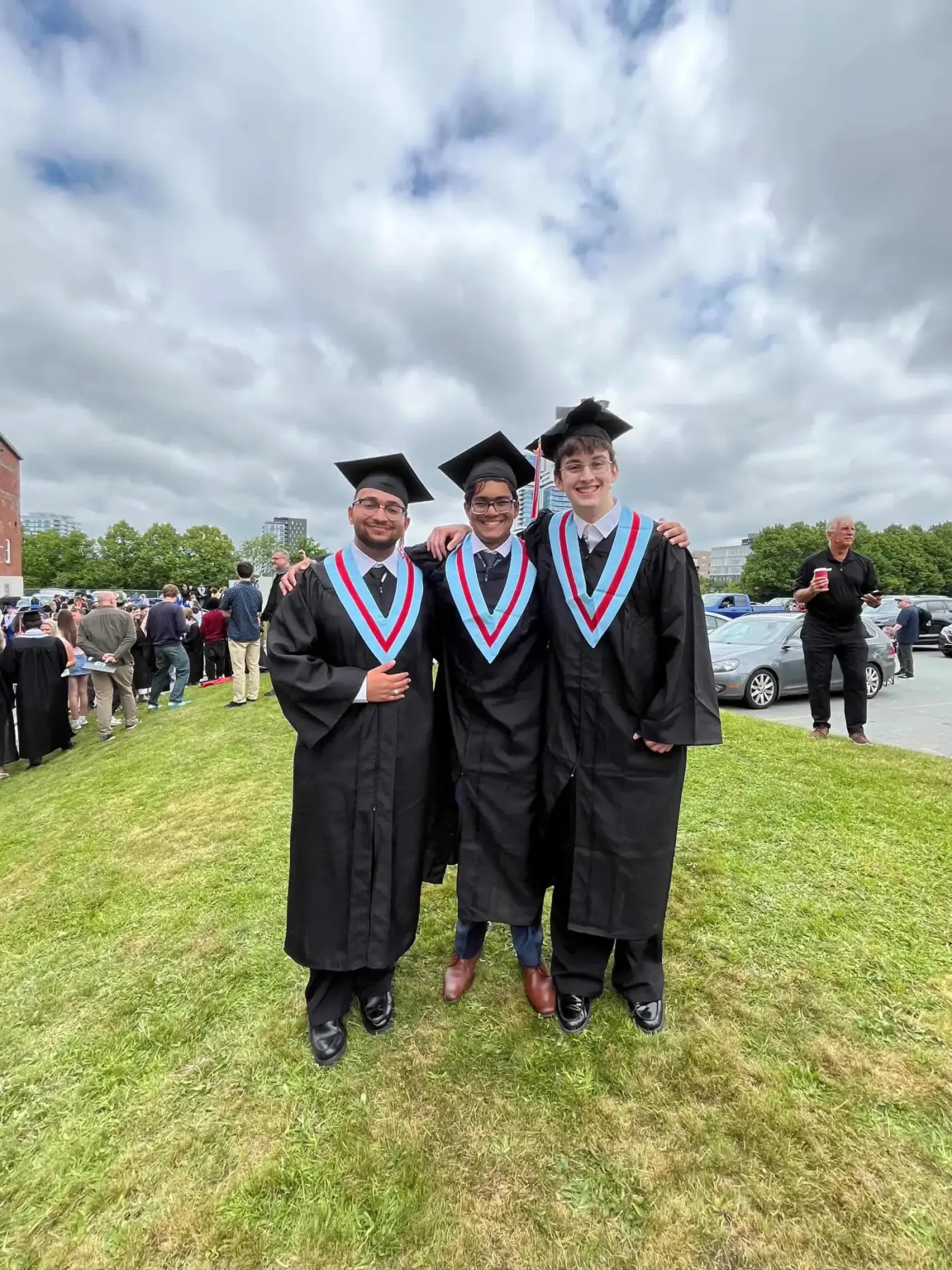
We made it to the end!
And then I graduated on a random Tuesday. Afterward, everyone congregated out in the parking lot the way you do, nobody quite ready to leave yet. But slowly, in twos and threes, people started leaving, and I remember just standing there watching it happen, realizing I probably wouldn't see most of these people again. That was the moment it actually hit me, more than the ceremony itself, more than the diploma. Just a parking lot, emptying out one person at a time. That was really it.
Comments & Advice
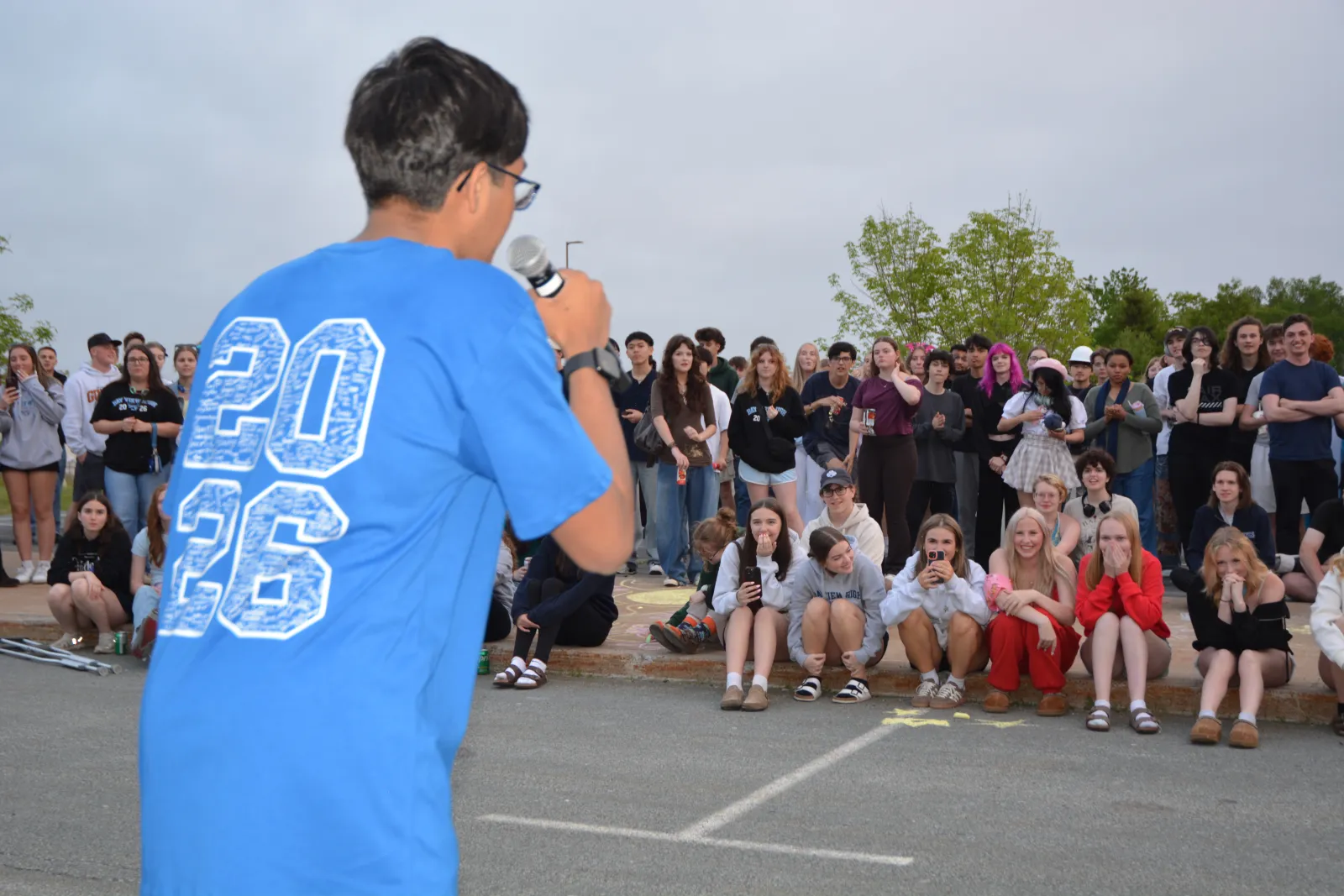
Yelling at my peers for the final time at Senior Sunset
You'll probably notice this post doesn't spell out a formula for getting into a competitive program like UWaterloo's. That's intentional. There isn't one fixed path, and there's no single extracurricular that makes an application. If I had to boil down what helped: be kind to people and try to lift them up when you can, work hard at whatever you commit to, and stay curious even when it's inconvenient. That combination helps, but it's not a guarantee, and I want to be honest about that. UWaterloo Software Engineering has around 125 seats and had a little over 1,000 applicants last year, which means plenty of strong, talented people get turned away through no fault of their own. I'm not saying that to discourage you. Apply anyway. Just make sure whatever you send in sounds like you, and not like a version of you built to impress someone you've never met.
Beyond the advice, I also wrote this to reflect on my time in high school, not just document it for the sake of a scholarship file or university application. I can honestly say the last three years have been the best of my life so far, even though not everything went right along the way. What made it worth it was the people I met, the things I got to build with my own hands, and the opportunities I never imagined I'd be part of when I was that Grade 9 student who just wanted to get home and tinker with something.
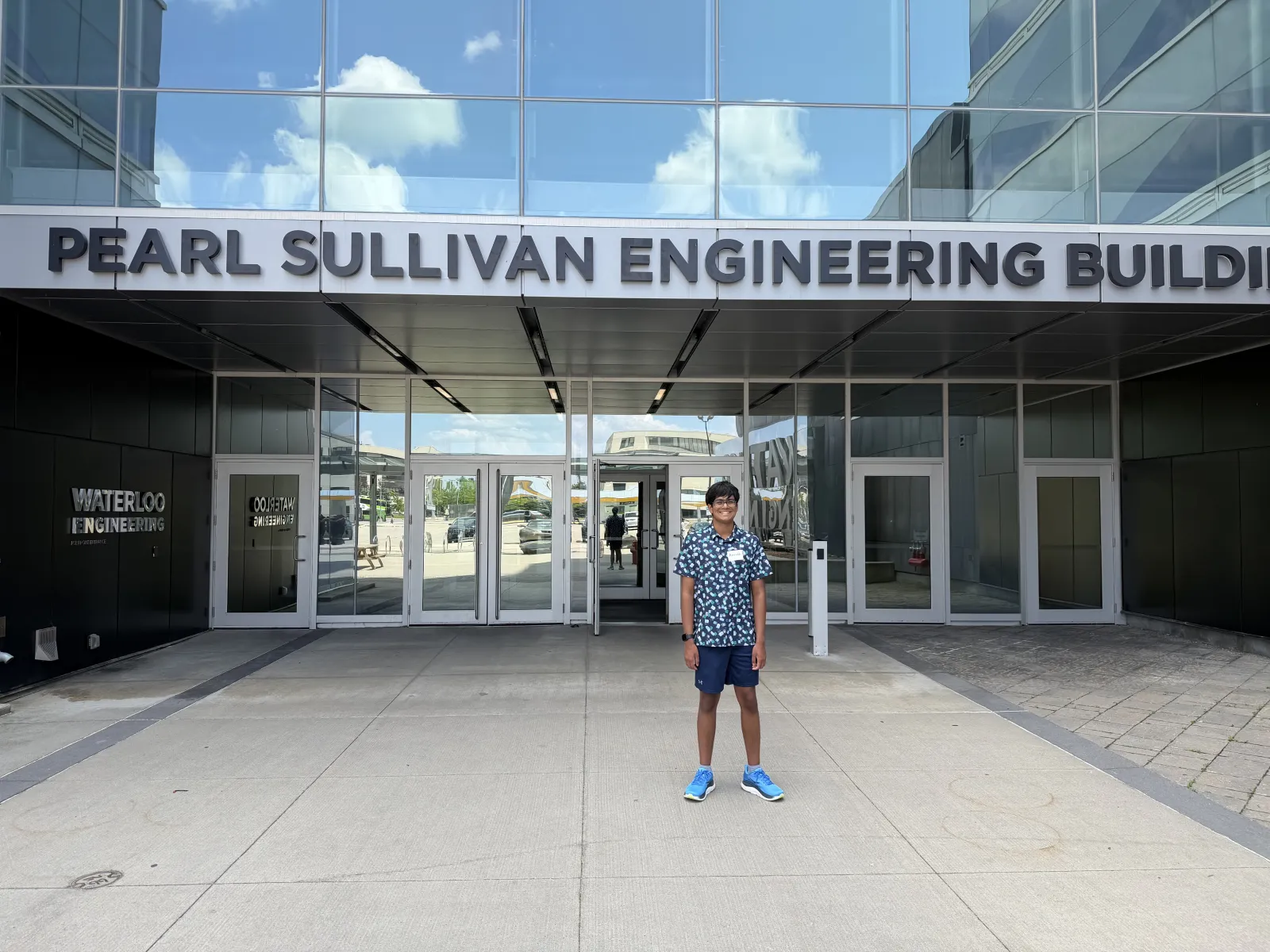
Outside the Pearl Sullivan Engineering Building during a UWaterloo info session visit
If you're standing where I was three years ago, wondering whether any of it will amount to something, my answer is yes, it does. No single club, competition, or project guarantees some incredible outcome, but each one teaches you something, introduces you to someone new, or nudges you toward an opportunity you never saw coming. There wasn't ever one defining moment for me. It was an accumulation of hundreds of small ones, each one quietly opening the door to the next, in a way I could only see clearly by looking back at all of it together. More than anything else, I hope this post reminds me, years from now, to never stop saying yes to the next opportunity.