
When our Tech Club first heard about a chance to compete in a real cybersecurity competition, we never imagined ourselves racing against other schools in a high-stakes hacking challenge. The Lockheed Martin CYBERQUEST Competition, held in-person across Canada, the U.S., and Australia, is an annual cybersecurity event for high school students. The nearest Lockheed Martin office from our school was just a short distance away in Dartmouth, Nova Scotia.
The competition consisted of Capture the Flag (CTF) challenges, which are exercises that involve finding a specific text string within a given problem. For example, a problem may involve investigating a website's source code to find a specific string, such as Y0U_F01ND_M3. Teams that gain the most points out of solving multiple of these challenges in the three-hour competition win 1st place, while others place in the top 3.
Each high school team consisted of 3-5 members, so we decided on bringing four other passionate Tech Club members and myself to this competition. Categories of challenges spanned from web-based attacks, Cryptography, Social Engineering, and more. Our team was not fully aware of these concepts, so we spent the next few weeks preparing for the competition, which will be hosted in the Dartmouth office on March 29, 2025. We registered our team as Bay View High School SharkBytes.
We knew we had a lot to learn before the big day, so we dove into weeks of preparation.
Preparation
Our team wasn't quite sure how to prepare for such an event, especially when it was our first time learning about the broad field of cybersecurity. We eventually stumbled on a platform that prepares you for CTF competitions, called PicoCTF. PicoCTF offered problems of varied difficulty and a broad selection of categories, which was perfect for preparing for the competition.
Our team tried to solve one challenge a day leading up to the competition. We made it an essential objective to especially focus on problems that involve technical areas that we were unfamiliar with, so we can expand our skillsets while focusing less on what we already knew.
I led a workshop for all Tech Club members on PicoCTF and how CTF challenges work, as I found it to be the perfect time to introduce cybersecurity as a career possibility for all Tech Club members.
Want to see more of our club's activities, projects, and updates? Follow us on Instagram at @bvhstechclub to stay connected and support our cause!
Competition day

Image credit: Lockheed Martin, 2025. Accessed via Lockheed Martin
The day of the competition rolled around, and we were all excited to enter the office of Lockheed Martin and learn the art of cybersecurity. We entered an area of the building and encountered other teams there from high schools around Halifax. The rules of the competition were explained to us. Here's a quick summary:
- Challenges ranged in difficulty and point value.
- Teams could spend points for hints.
- Web usage was allowed, except for posting on forums to find answers.
- Generative AI was also allowed, but copying and pasting the challenge prompt into the AI was not allowed.
The competition commenced and we got straight to cracking the various cybersecurity problems presented to us.
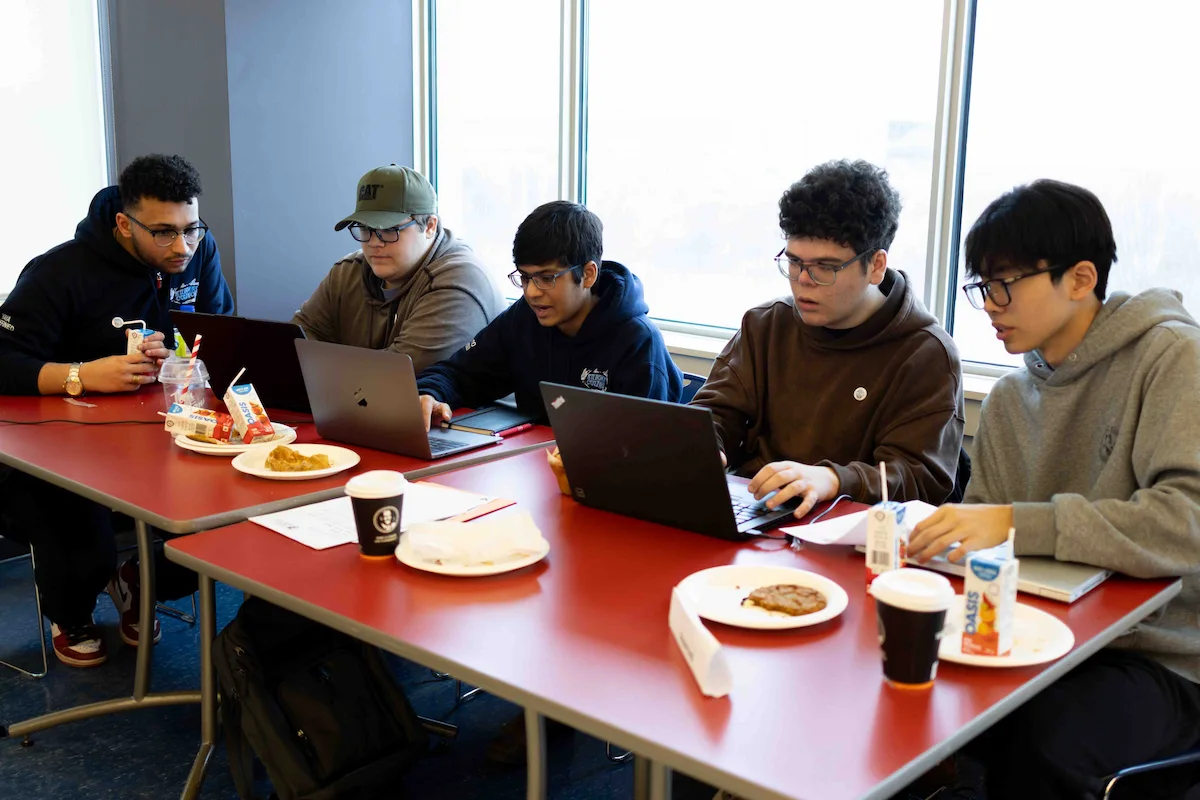
Image credit: Lockheed Martin, 2025. Accessed via Lockheed Martin
We tackled problems concerning Forensics, General Trivia Questions, Operating Systems, and more. Our team worked well, as each of us tackled a separate problem in an effort to gain the most points possible. We decided to tackle the easier, low-point problems first to accumulate points quickly, then moved on to the harder problems. I personally tackled packet analysis through Wireshark, phishing, and web-based problems.
It was very competitive, as all three teams were at one point leading one another, but only ever so slightly. There were moments when just one problem made the difference between first and third place. At one point, all five of us came together to tackle a set of tricky trivia questions. We struggled at first, but the solution only emerged after everyone threw in their ideas. That moment was a reminder that the best breakthroughs come from teamwork, not individual effort. The competition felt tense yet very friendly, with all the participants typing away at their computers.
After a very close competition, our team was thrilled to earn third place. We celebrated our achievement with a pizza party, proudly received medals and a trophy, and enjoyed the moment together.
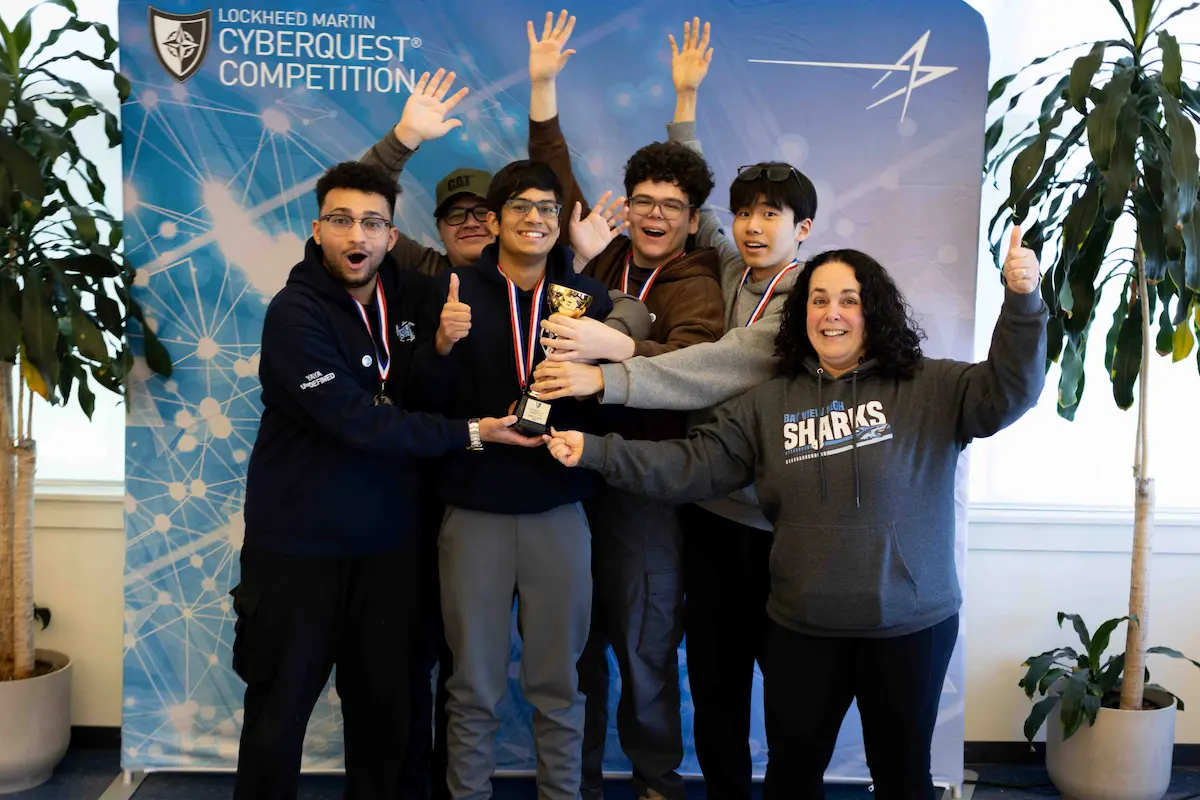
Image credit: Lockheed Martin, 2025. Accessed via Lockheed Martin
Takeaways
This competition taught us a variety of tools and techniques. We learned tools such as
- Wireshark - lets you see and analyze the data moving across a network.
- Burp Suite - A toolkit for finding security flaws in websites.
- CyberChef - nicknamed the "cyber Swiss Army knife," it helps decode and transform encrypted text or data.
- Metasploit - A framework for safely testing vulnerabilities in systems to understand how attackers might break in.
- Kali Linux - A special operating system loaded with cybersecurity tools used by professionals.
Due to this being our first team competition, I learned many soft skills, such as leadership, communication, and delegating tasks to my team in real time during a contentious competition such as this.
Impact and What's Next
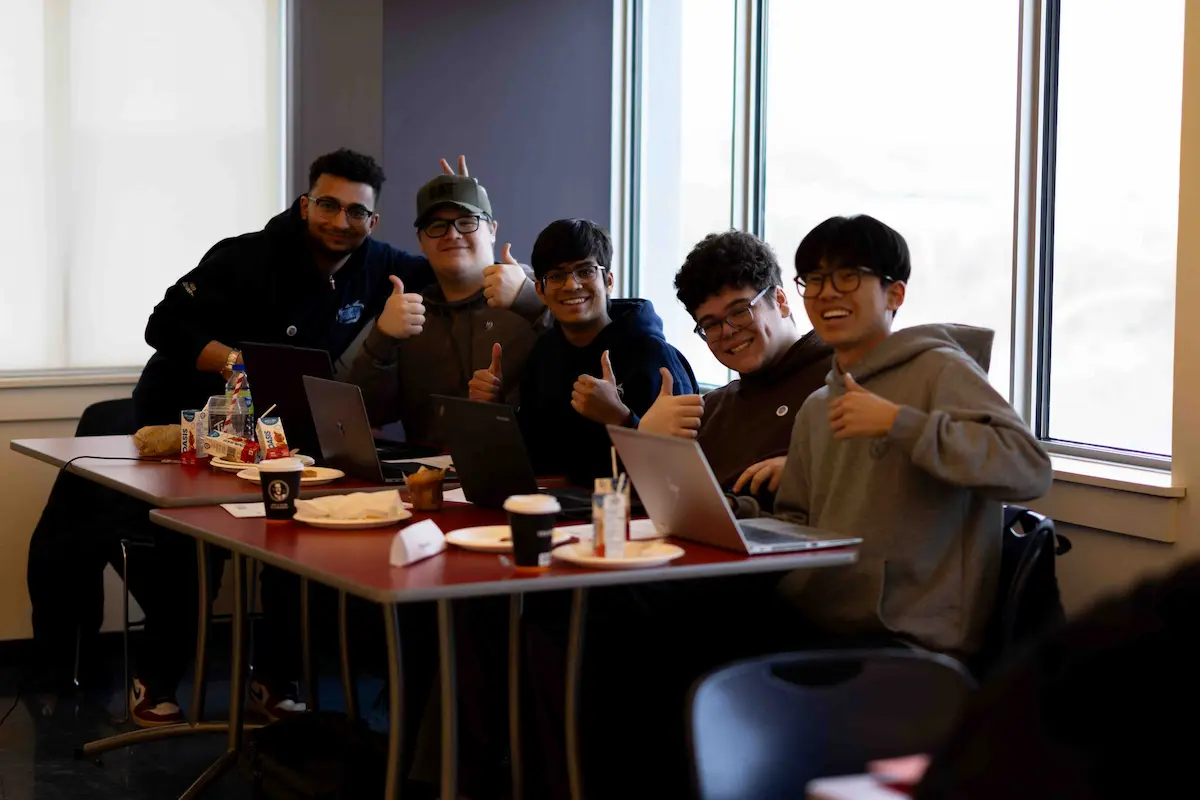
Image credit: Lockheed Martin, 2025. Accessed via Lockheed Martin
This experience reshaped how I see cybersecurity. Before CyberQuest, I thought of it as a niche field for experts. Now, I realize it touches everything, from protecting personal data on social media to safeguarding national infrastructure.
With businesses, governments, and even schools relying so heavily on technology, the need for cybersecurity professionals is only going to grow.
For me, what started as a school competition has now sparked a genuine interest in a career path that impacts almost every part of modern life.
If you've ever been curious about cybersecurity, even if it seems intimidating, dive in. Competitions like CyberQuest prove that with teamwork, creativity, and persistence, anyone can start building these skills. You don't need to be an expert; you just need curiosity and a willingness to learn.
For us, what began as a club project turned into an unforgettable experience, and possibly even a career path. Who knows? You first challenge might spark the same for you.
Looking ahead, I'm excited to continue this journey with my team as we set our sights on the CyberPatriot National Youth Cyber Defense Competition, another incredible opportunity to put our skills to the test and grow together as cybersecurity defenders!