
Shad Canada logo
I had been meaning to write this blog post for a while, but it wasn’t until winter break that I finally sat down to do it, so I apologize for the delay.
In the summer of 2025, I attended Shad at the University of New Brunswick, a STEAM and entrepreneurship program for Canadian high school students in grades 10-11. On paper, it sounds generic, almost interchangeable with dozens of other summer programs. But that description completely misses the point.
Shad was not just a program. It was a month where time felt distorted. Days were long, nights were longer, and somehow the entire experience disappeared far too quickly. It was a stretch of late nights, uncomfortable challenges, constant learning, and people who pushed me to think harder, work faster, and believe more confidently in my own ideas. Looking back now, it was the longest and shortest month of my life, and one that quietly reshaped how I see learning, collaboration, and myself.
What is Shad?
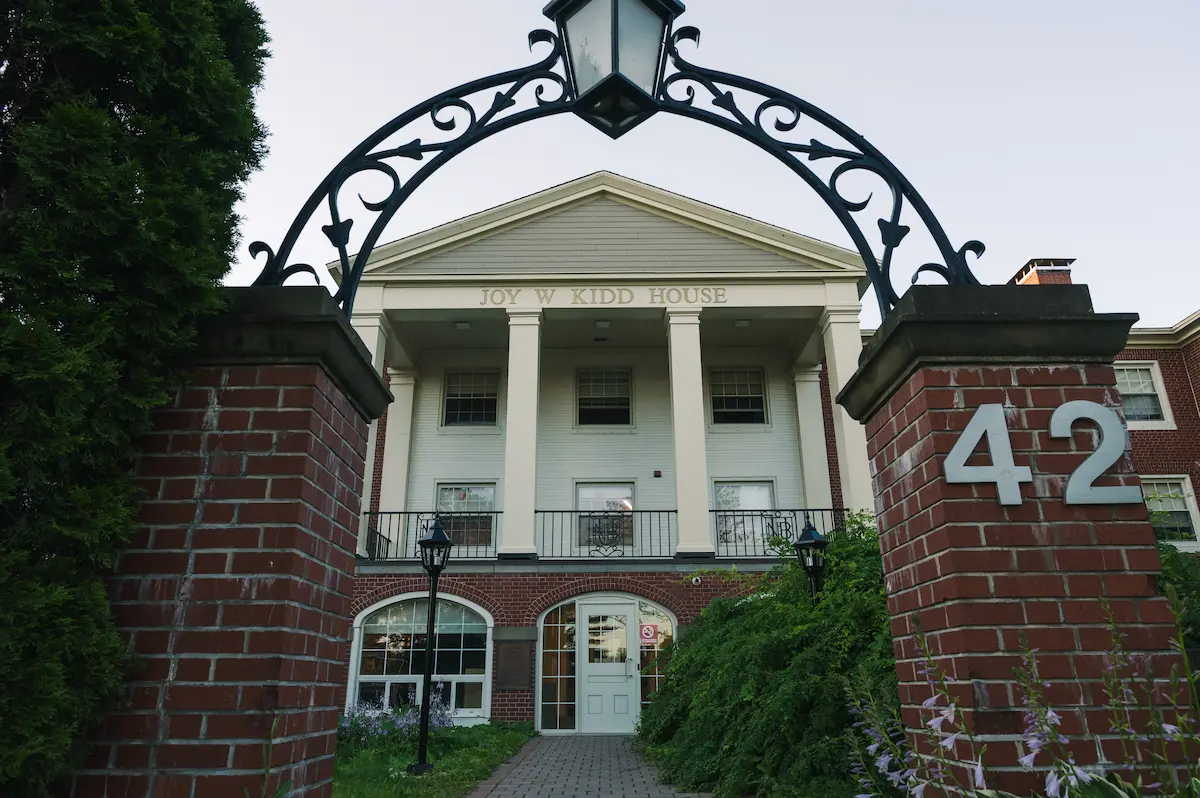
Joy W. Kidd House: our residence for the month
Shad is a month-long STEAM and entrepreneurship program for Canadian high school students that runs on university campuses across the country. Fundamentally, Shad is about bringing together curious, motivated students and pushing them outside their comfort zones through hands-on problem solving and collaboration.
Throughout the program, students work in teams to tackle real-world design challenges, attend lectures and workshops led by professors and industry professionals, and develop ideas under tight timelines. Days are long and fast-paced, often blending technical work, creative thinking, and presentation skills into a single project.
What makes Shad different from a typical summer program is its intensity and community. You are constantly surrounded by people who are as driven and curious as you are, which creates an environment where learning happens rapidly; and where you quickly realize how much more capable you are than you initially thought.
What I didn’t realize before arriving was how immersive this environment would be. When you spend every day surrounded by people who are just as curious and driven as you are, growth becomes unavoidable. You start to raise your own standards without being asked, not because you feel pressured, but because the people around you inspire you to do better.
This sounds fun... How do I Participate?
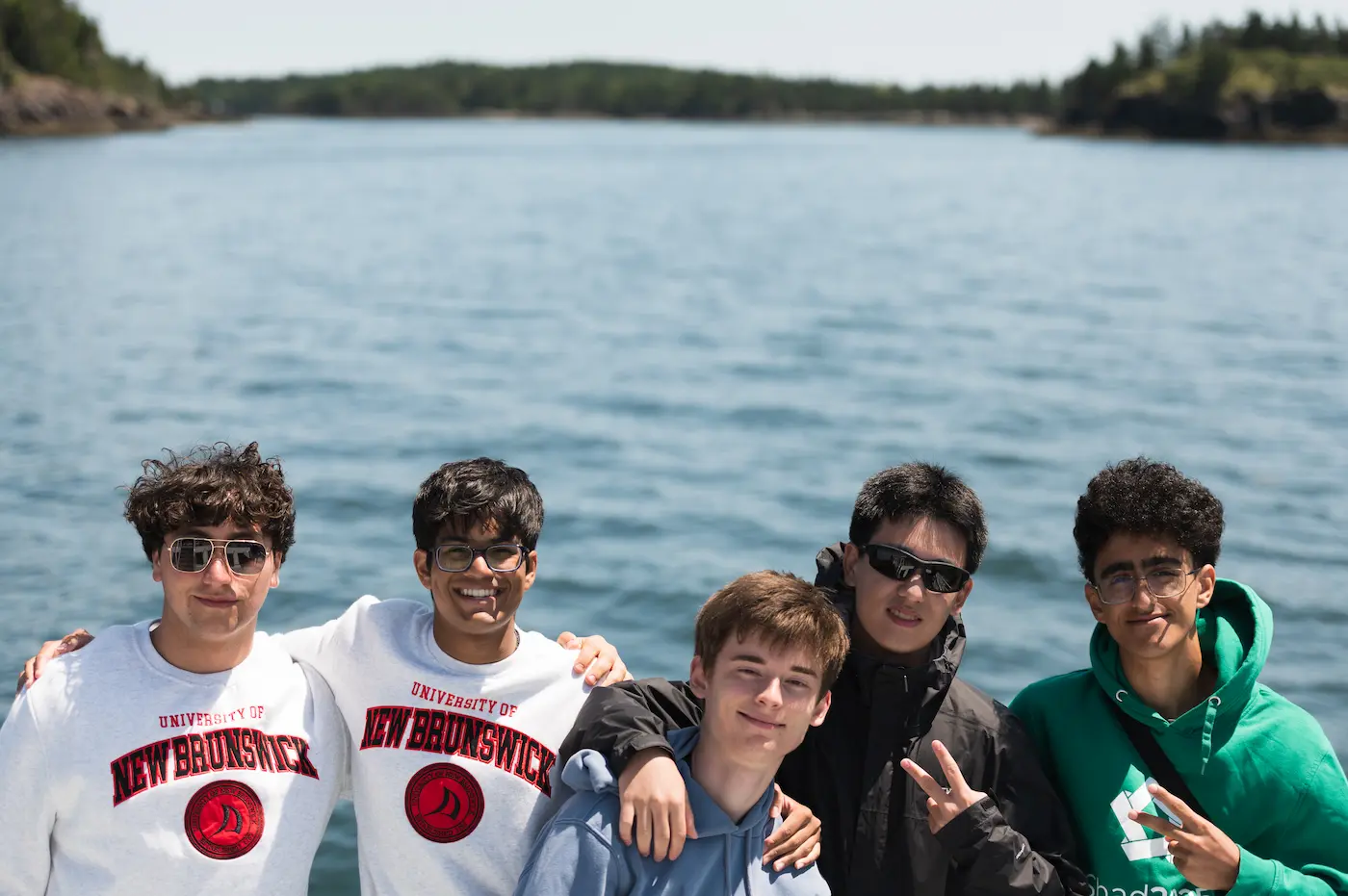
Whale watching at St. Andrews, New Brunswick
If this sort of thing excites you, there is an application process that can be found on Shad's website. The application typically opens around September and closes in January, as of the Shad 2026 application cycle.
The application consists of basic personal information, several essay questions, and your academic history. It is not particularly long, but it does require you to slow down and think intentionally about your motivations for applying and the experiences that have shaped you. Looking back, completing the Shad application actually prepared me well for the structure and reflection required in university applications. I often receive questions about the essays and academics in particular, so it is worth breaking those down.
In terms of the essay questions, Shad is not looking for applicants who have accomplished extraordinary or unrealistic feats by the time they are fifteen. Instead, they are looking for students who are curious about the world around them and who demonstrate drive, creativity, and a sense of community. These qualities can be shown in many different ways. This could be through leadership in a school club, involvement in theatre or the arts, volunteering at summer camps, or any experience where you took initiative and learned something meaningful. My biggest piece of advice is to directly connect your experiences to the essay prompts so Shad can clearly see how those moments shaped who you are today.
For academics, you are required to submit a report card containing your grades from the previous academic year. Shad does not have strict grade cutoffs. They are mainly looking to see whether you are academically prepared for the pace of the program. In my opinion, your essays and the personality you convey through them matter far more than perfect grades. Focus on telling your story honestly rather than trying to impress through numbers alone.
After being accepted, you rank your preferred university placements and Shad does its best to match students with their top choices.
In hindsight, the application felt less like a test and more like an invitation to reflect. Shad was not asking who I wanted to become, but who I already was and why that mattered. That mindset carried into the program itself. The students who thrived were not the ones with the most impressive achievements on paper, but the ones who were open to learning, questioning, and growing alongside others.
For me, I was placed at the University of New Brunswick in Fredericton from June 29 to July 25. Since New Brunswick is relatively close to my hometown of Halifax, Nova Scotia, the commute was much easier compared to the journeys some others made, though once we arrived, we were all equally far from home in the ways that mattered.
First Week
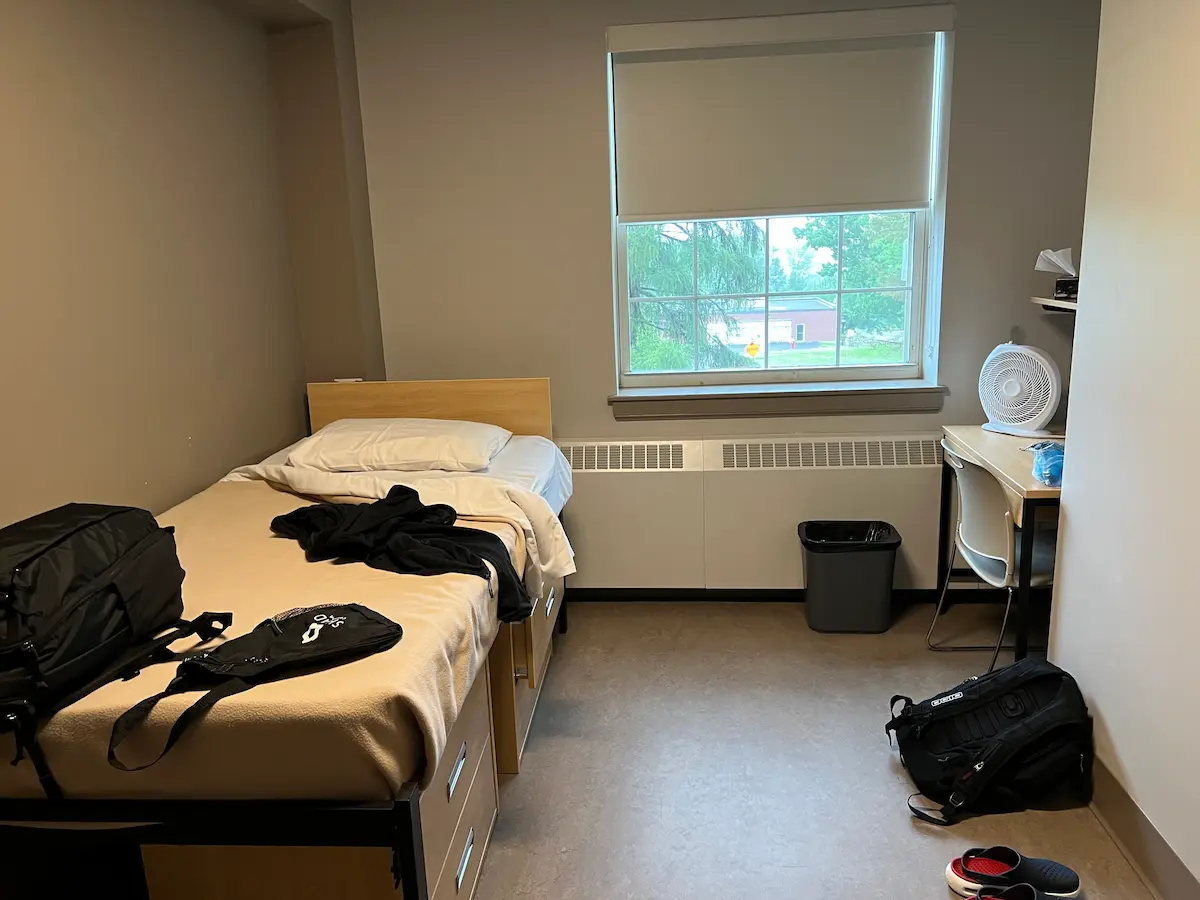
My dorm room for the month
The first week was awkward in the way all beginnings are. Conversations revolved around names, hometowns, and polite small talk, but beneath that surface was a shared uncertainty. Everyone was trying to figure out where they fit, how much of themselves to show, and whether they truly belonged in a room full of unfamiliar faces.
That week mattered more than I realized at the time. It quietly set the tone for everything that followed. The simple decisions to talk to someone new, to sit beside people you did not yet know, and to lean into discomfort made the difference between simply attending Shad and fully experiencing it.
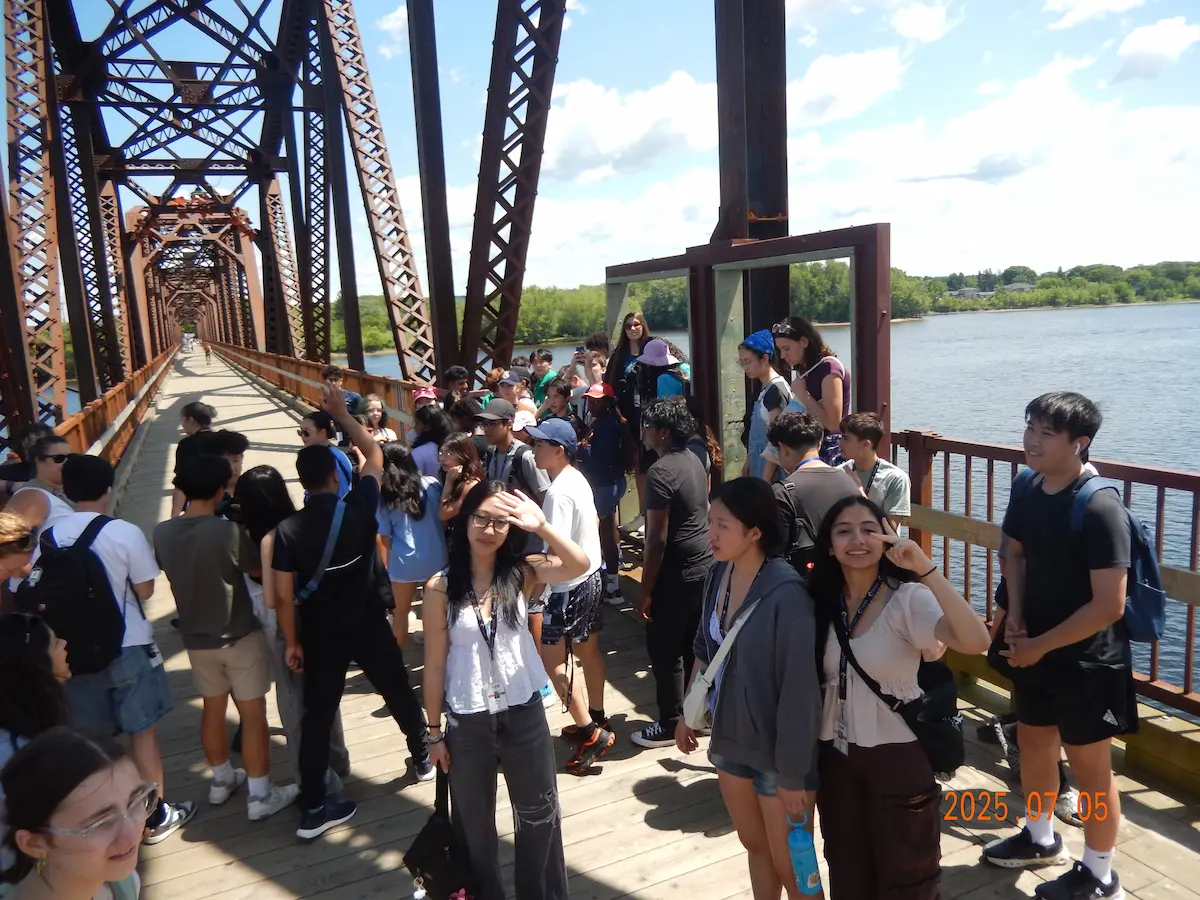
Exploring the Bill Thorpe Walking Bridge
Our campus was made up of 52 Shads, along with Program Assistants and Program Directors. The Program Directors coordinated the structure of each day, while the Program Assistants worked closely with us to guide activities, support discussions, and keep everything running smoothly. As a participant, I spent far more time with my PAs than with the PDs, and they quickly became some of the most familiar faces on campus.
Most of my fellow Shads were far from home, with many flying into Fredericton from across the country. A large portion of the group came from Ontario, particularly the Greater Toronto Area, but there were also students from the Prairies and Atlantic Canada. Despite our different backgrounds, we were all navigating the same unfamiliar environment together.
We were divided into house groups, smaller communities within the larger group that often participated in activities and trips together. I was placed in the Blueberries house group, which quickly became a space of comfort, laughter, and support. Each day began with a loosely structured schedule that hinted at the busy hours ahead, but much of what made those days meaningful came from the moments in between, the conversations, shared nerves, and the growing sense that this unfamiliar place was slowly becoming home.
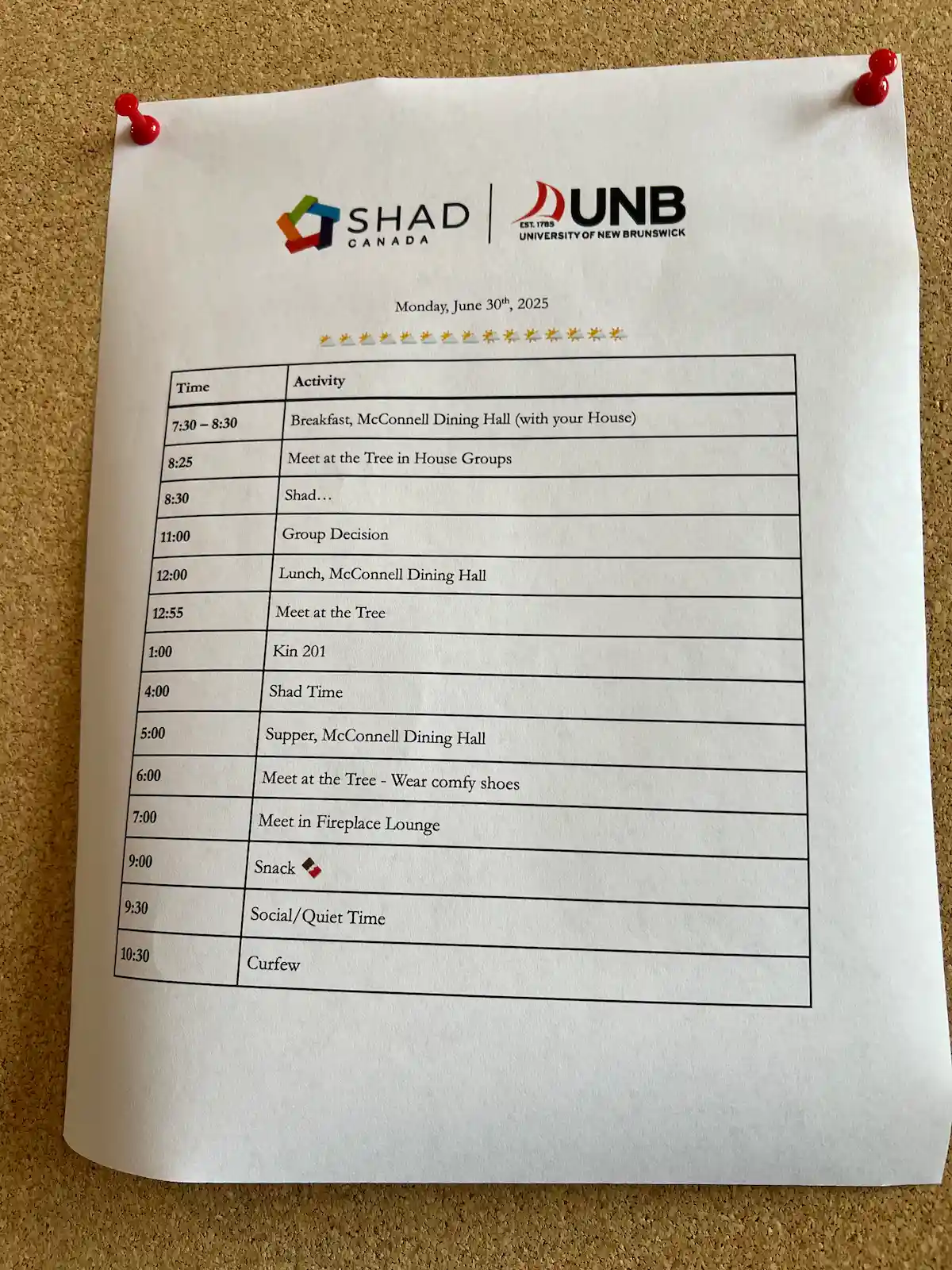
Our schedule for June 30, 2025
Most of the week was spent participating in team building activities and games that were designed to help us connect with one another on a deeper level. These moments, though sometimes lighthearted or awkward at first, laid the foundation for the friendships and collaboration that defined the rest of the program. Our days quickly settled into a rhythm of lectures, labs, shared meals, recreational activities, and quiet social time before our mandated curfew, creating a structure that felt both intense and strangely comforting.
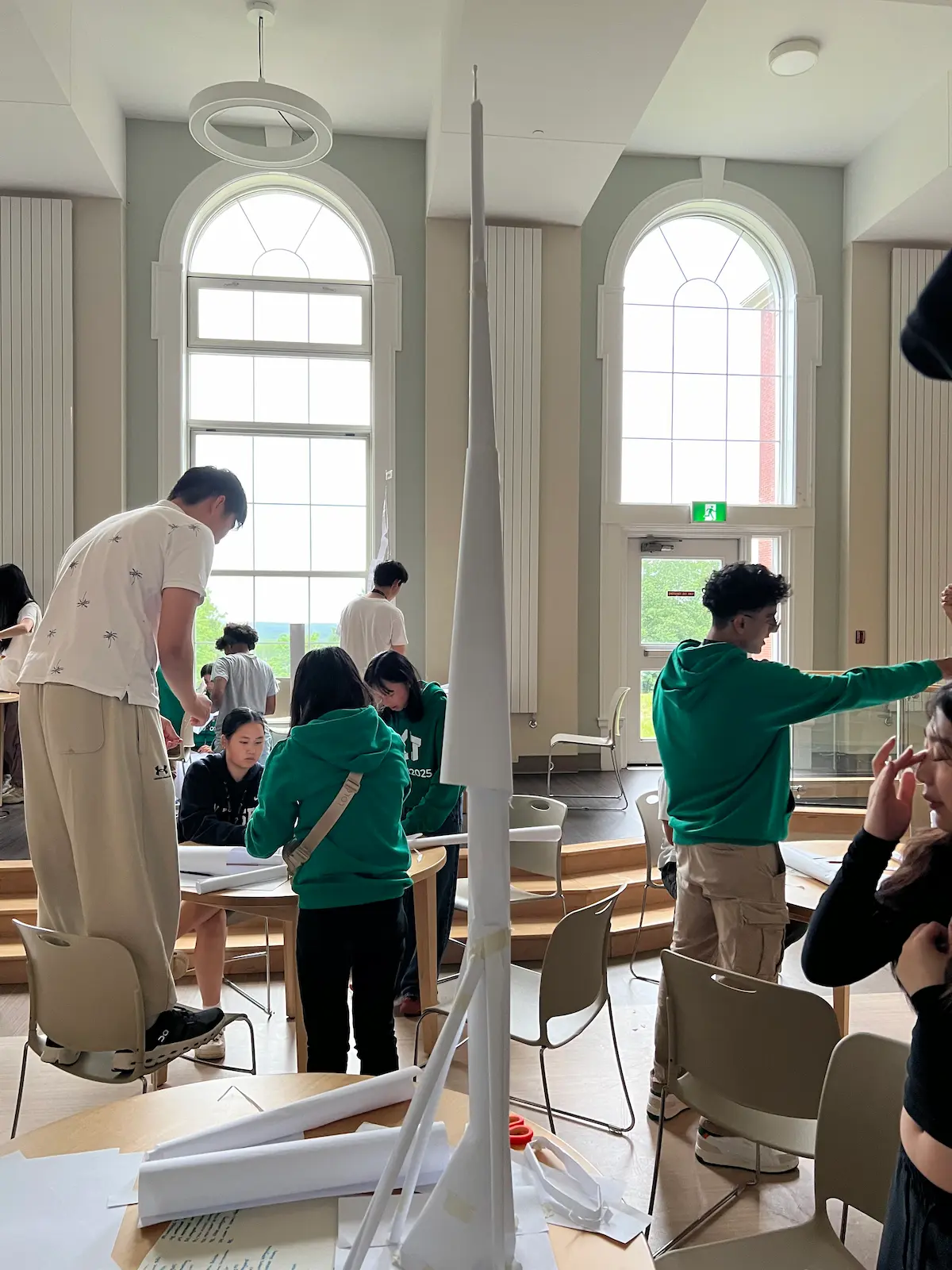
The Paper Tower Challenge: The team with the tallest paper tower wins the competition
Part of the Shad experience involved crafting our very own meals in the mess hall, sometimes in a classy manner, though I cannot speak for everyone. Assembling food quickly became both a necessity and a shared ritual, where creativity and chaos often went hand in hand. If you want a glimpse into the kinds of meals that emerged, including the occasional "Meatballs and Jello" combination, I highly recommend checking out the Shad UNB Food Reviews Instagram account!
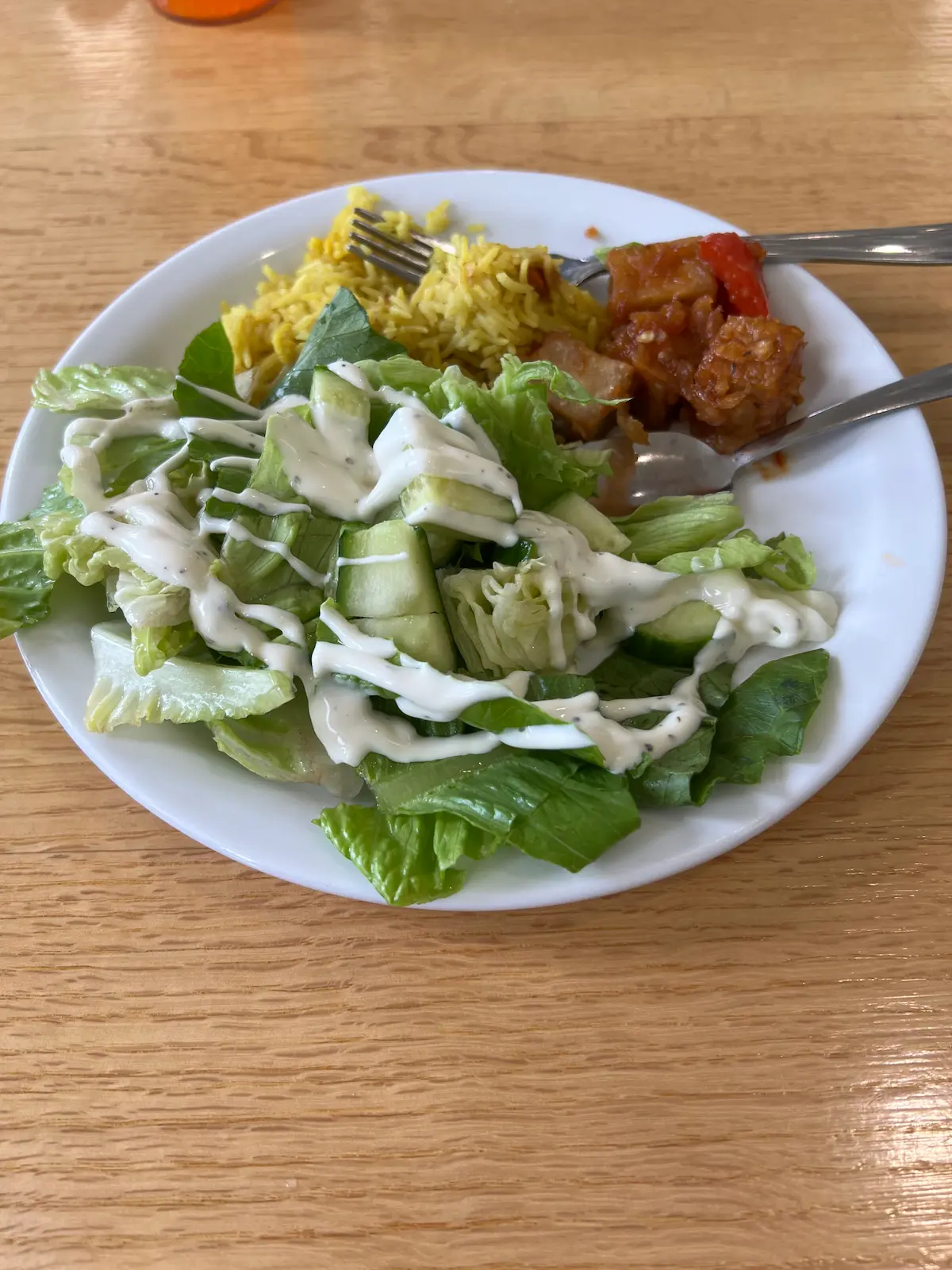
Delicious food at the McConnell Dining Hall
We were also introduced to the Design & Entrepreneurship (DE) project, a month long, team-based challenge where students work together to tackle some of the most complex problems facing Canadian society. The project emphasizes human centred design, iteration, and entrepreneurship, pushing teams to move from broad problem spaces to tangible, well justified solutions under tight timelines. Each year, all Shad campuses work on the same overarching challenge, allowing ideas to emerge from a shared national problem. The project culminates in a pitch style competition, where teams present their solutions to judges and compete for prizes. For Shad 2025, the problem statement was: How might we design innovative and sustainable transportation solutions that meet the needs of people in Canada? More on that later.
Trips & Learning
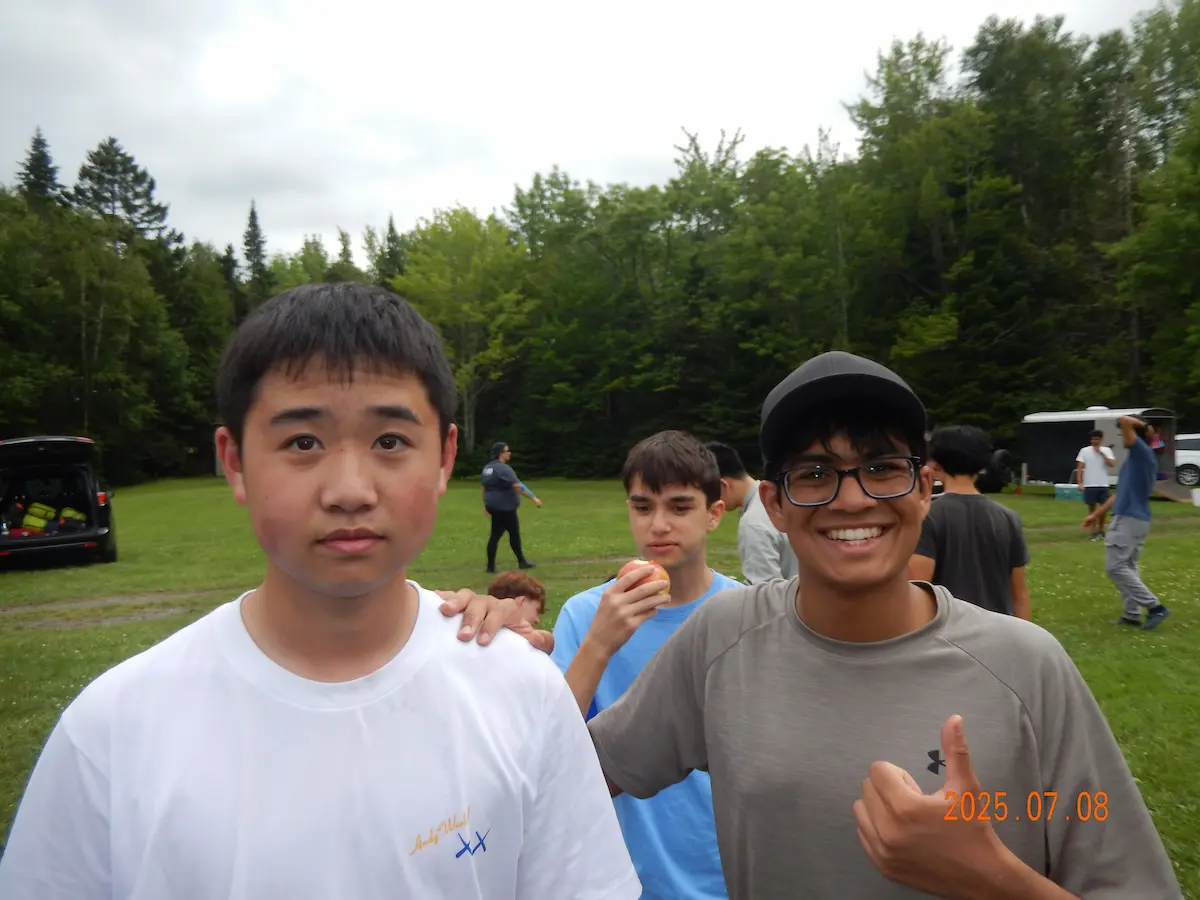
Camping at Mactaquac Provincial Park
Part of the Shad experience involves embarking on trips around the surrounding region and campus area, giving us a chance to learn outside of classrooms and labs.
On our first trip, we visited the Point Lepreau Nuclear Generating Station, the only nuclear power plant in Atlantic Canada. While we were not allowed to take photos, the visit offered a rare look into how nuclear power plants operate and the extensive security measures required to protect such critical infrastructure. These trips are carefully planned in advance, giving us access to places that are otherwise difficult to visit.
Our second trip took us to Mactaquac Provincial Park for a camping experience. Camping is a tradition shared across many Shad campuses, and it quickly became one of the most memorable parts of the program. It was equal parts chaotic and fun, and I would definitely recommend bringing any treasured camping supplies, including power banks.
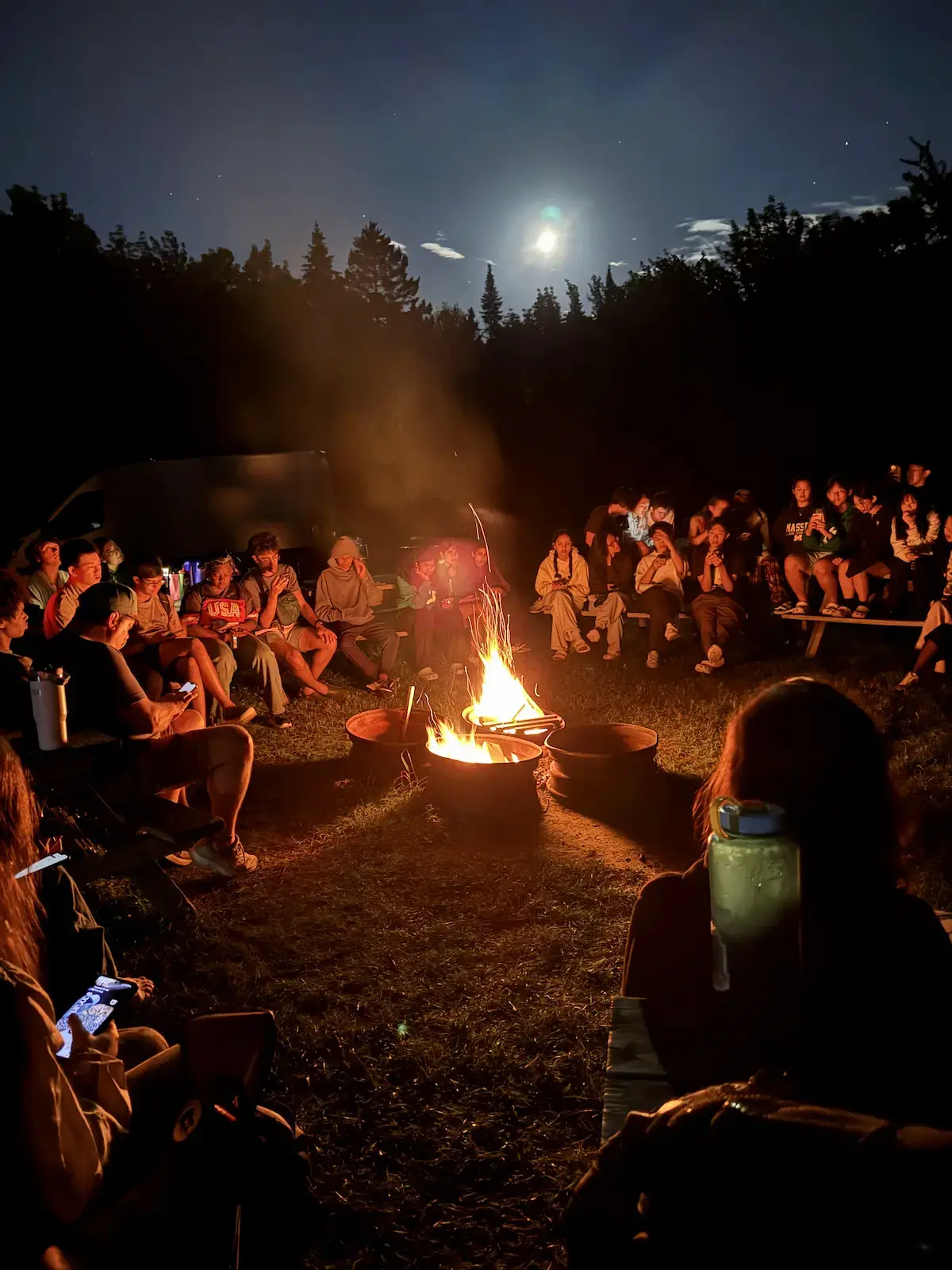
A warm campfire
This was my first time camping, and I could not have imagined a better way to experience it than alongside people who, in such a short time, had begun to feel like a community. It was a space where learning and connection happened just as naturally outside the program as within it.
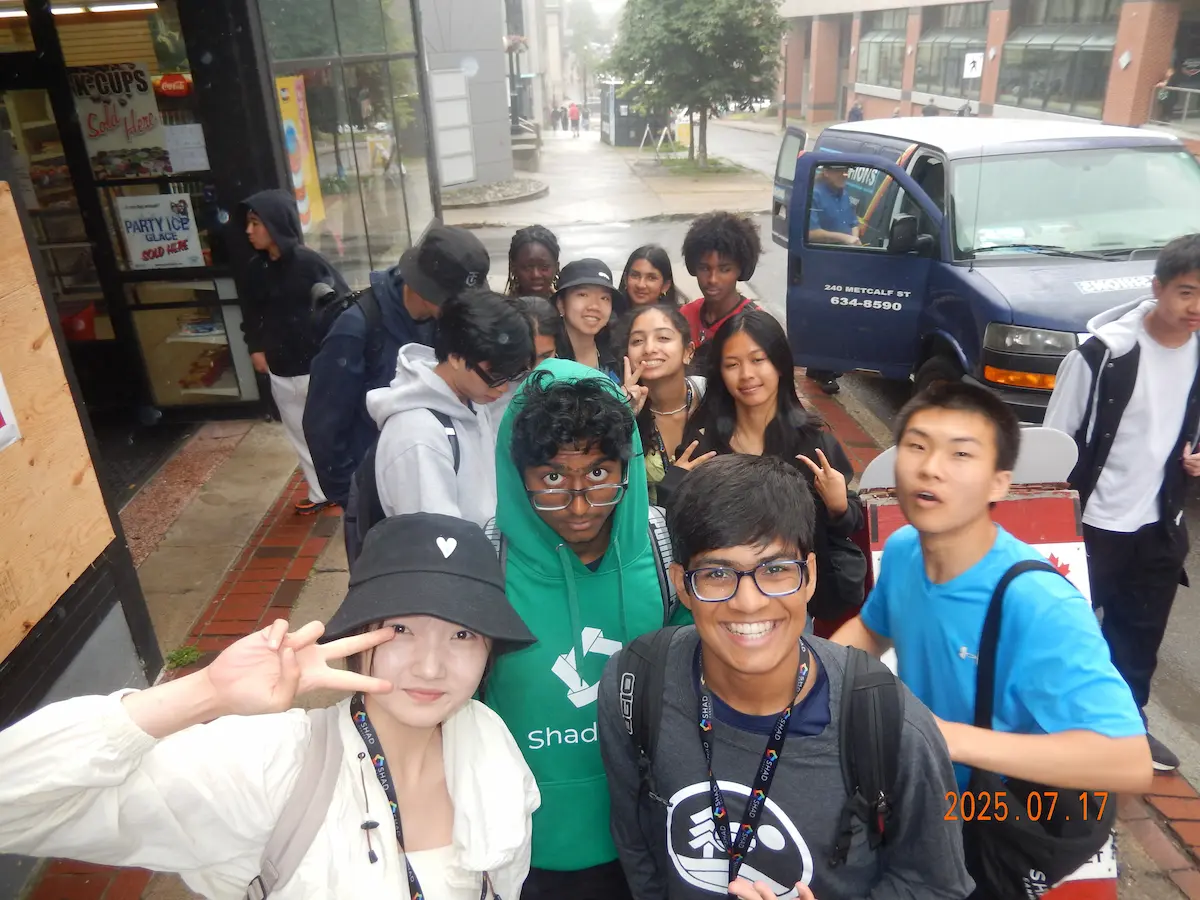
Exploring Saint John, New Brunswick
On our third trip, we travelled south to Saint John, New Brunswick. The goal of the trip was to explore the local markets and to tour the Port of Saint John with its CEO, Craig Estabrooks. The experience offered valuable insight into the complex processes that keep a major port operating smoothly, especially one of the largest ports in the Atlantic provinces.
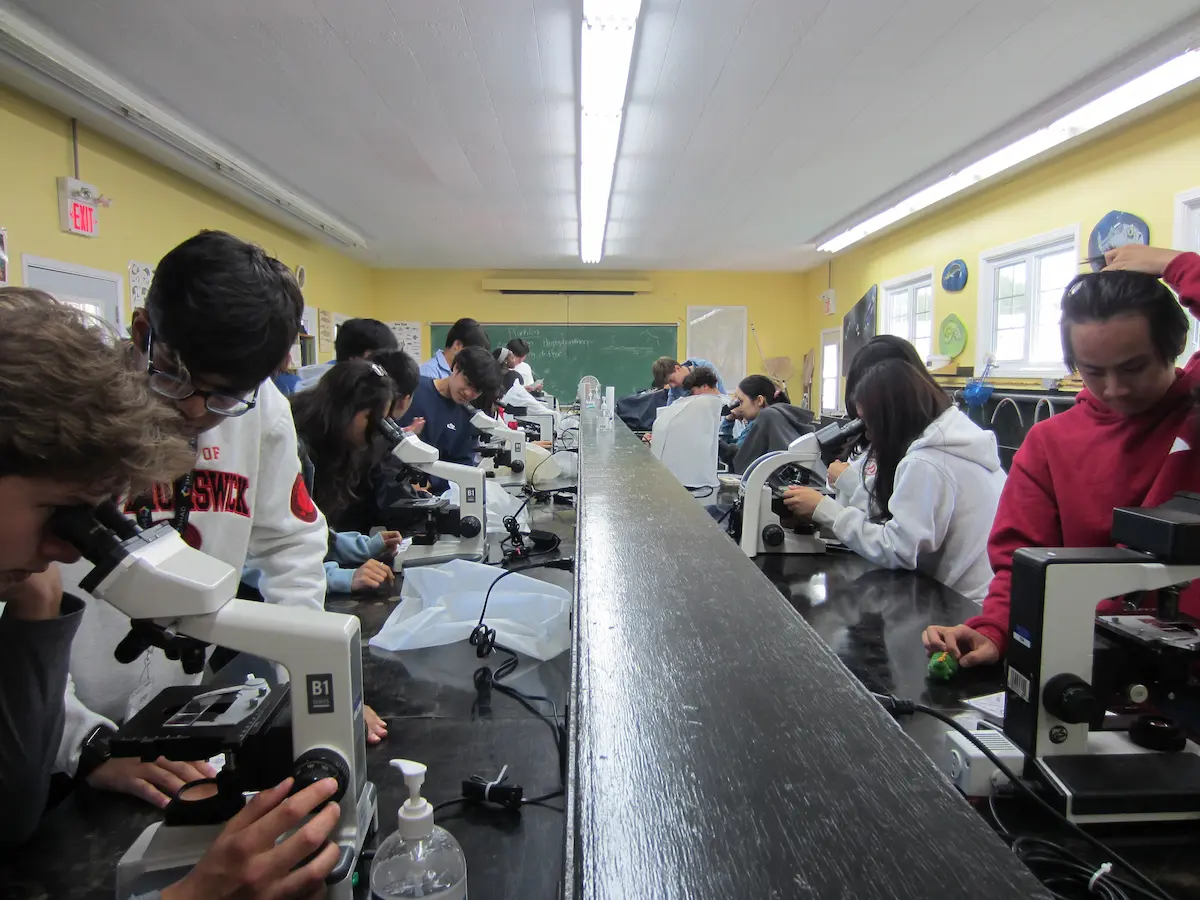
Examining microorganisms at the Huntsman Marine Science Centre
On our fourth and final trip, we visited St. Andrews, New Brunswick, a northern town famous for its whales. Our group explored the Huntsman Marine Science Centre, where we conducted a lab using microscopes to analyze microorganisms in the sea. One of the most exciting parts of the trip was whale watching, though I unfortunately have no photos of the whales. Even so, the journey on the ocean offered breathtaking views that made the experience unforgettable.
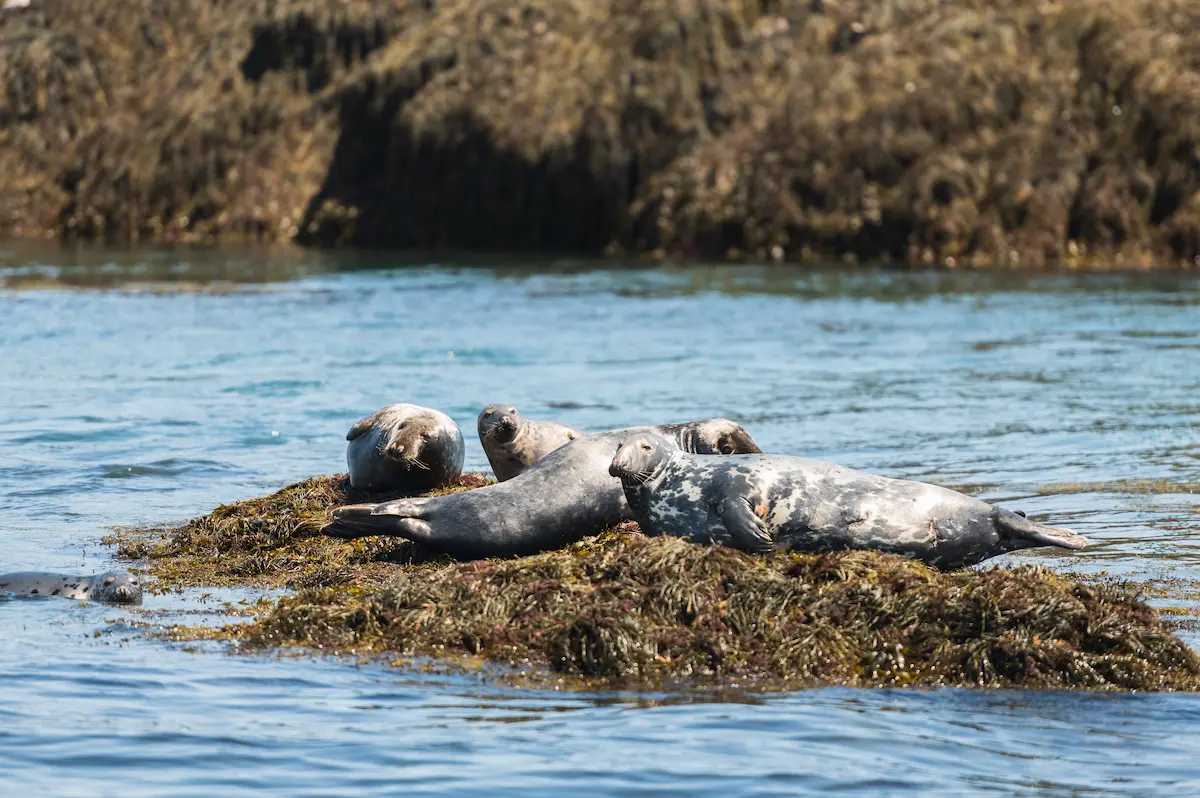
Seals
Alongside these trips, the lectures at Shad were another crucial part of learning. They were more than just presentations; they were opportunities to see the world from perspectives I had never considered. The lecture that stood out for me was delivered by the Nuclear Waste Management Organization on transporting nuclear waste safely and responsibly. It was fascinating to see the depth of planning, technology, and care required to manage something so complex and high-stakes. Beyond the technical details, it was a lesson in responsibility, ethics, and the impact of engineering decisions on communities.
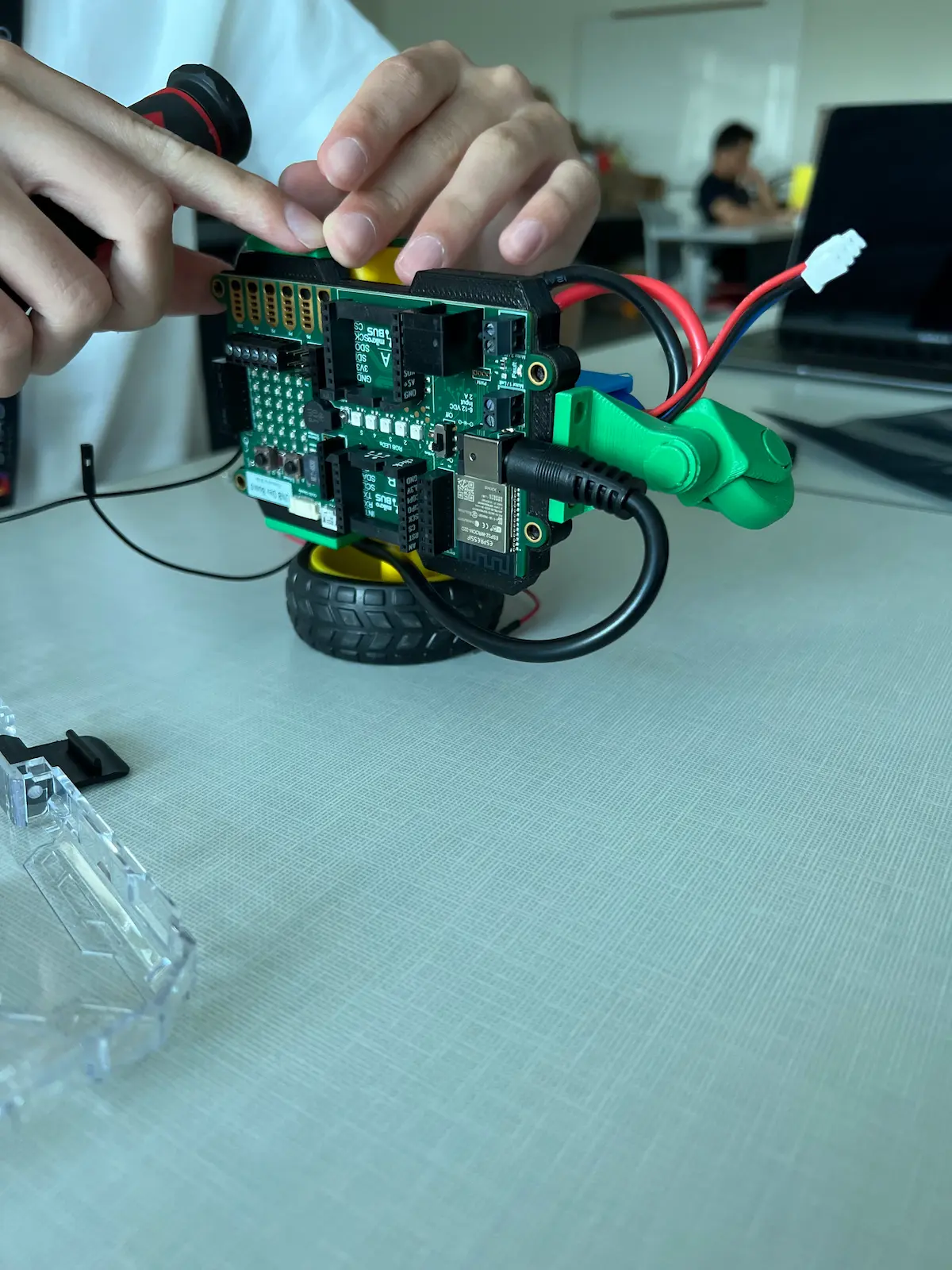
Building a robotic vehicle
Other lectures on entrepreneurship, sustainable design, and human-centred problem solving inspired us to think critically about our own projects. What made these sessions meaningful was not just the content, but the conversations they sparked, whether in the hallways, over meals, or during late-night discussions with peers. They reminded me that learning at Shad happens everywhere, in lectures, projects, trips, and even casual moments.
Overall, the trips and lectures gave us the chance to step outside the structure of campus life and experience Shad from different perspectives. They allowed us to explore new environments, connect more deeply with one another, and momentarily slow down in the midst of an otherwise fast-paced program. Some of the most meaningful moments at Shad did not come from scheduled activities alone, but from shared experiences and reflections that brought us closer together.
Design & Entrepreneurship Project
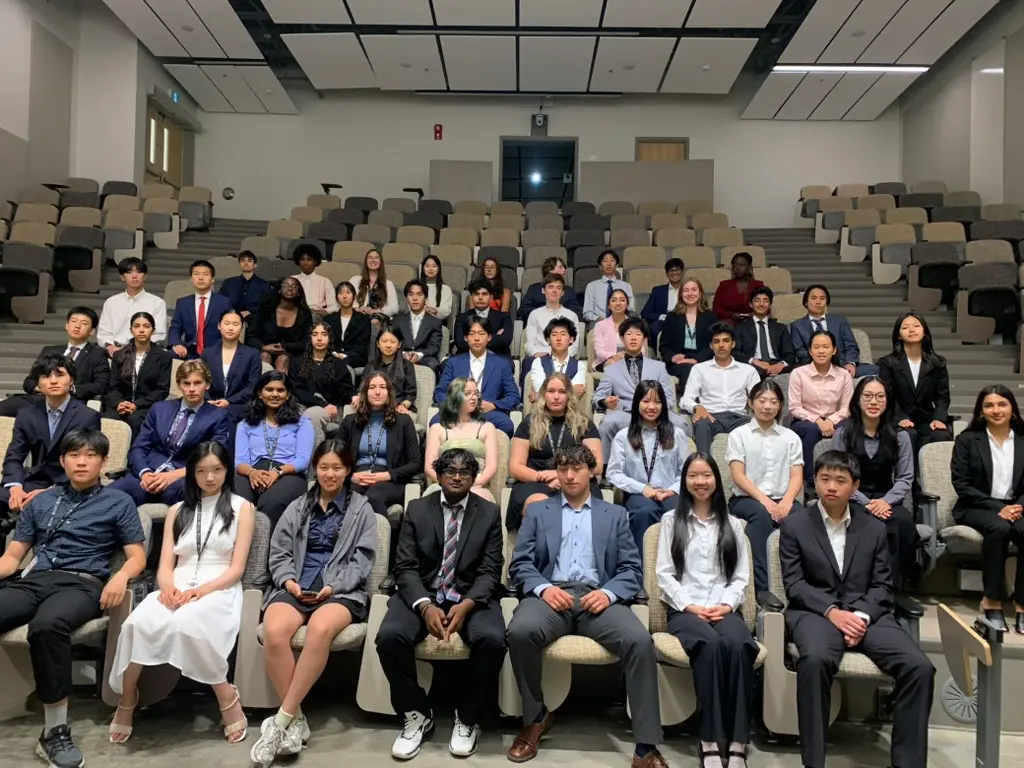
The Shad UNB 2025 Design & Entrepreneurship cohort
A couple of sections ago, I mentioned a fun component of Shad called the Design & Entrepreneurship (DE) project. At first, it didn’t feel like the main focus, but by the second and third weeks, it became a central part of our experience. All 52 of us were divided into groups of 4-5 and given a broad topic within the larger problem statement to explore.
Our group was tasked with addressing the social stigma around using public transportation. This was an issue I was already familiar with, as public transit in Halifax has often been viewed as inconvenient or undesirable. Unsure where to start, we reached out to Canadians across the country with a simple survey to better understand the challenges.
Analyzing the responses, we identified several recurring issues: limited access to buses, inconsistent schedules, and concerns about hygiene. Our group decided to tackle the hygiene aspect, aiming to develop a solution that would make buses cleaner, more appealing, and more trusted by riders in Halifax.
Throughout the process, we were trained on entrepreneurship principles by staff from the J. Herbert Smith Centre for Technology Management and Entrepreneurship, which helped us structure our ideas, consider real-world feasibility, and think critically about turning a concept into an actionable solution.
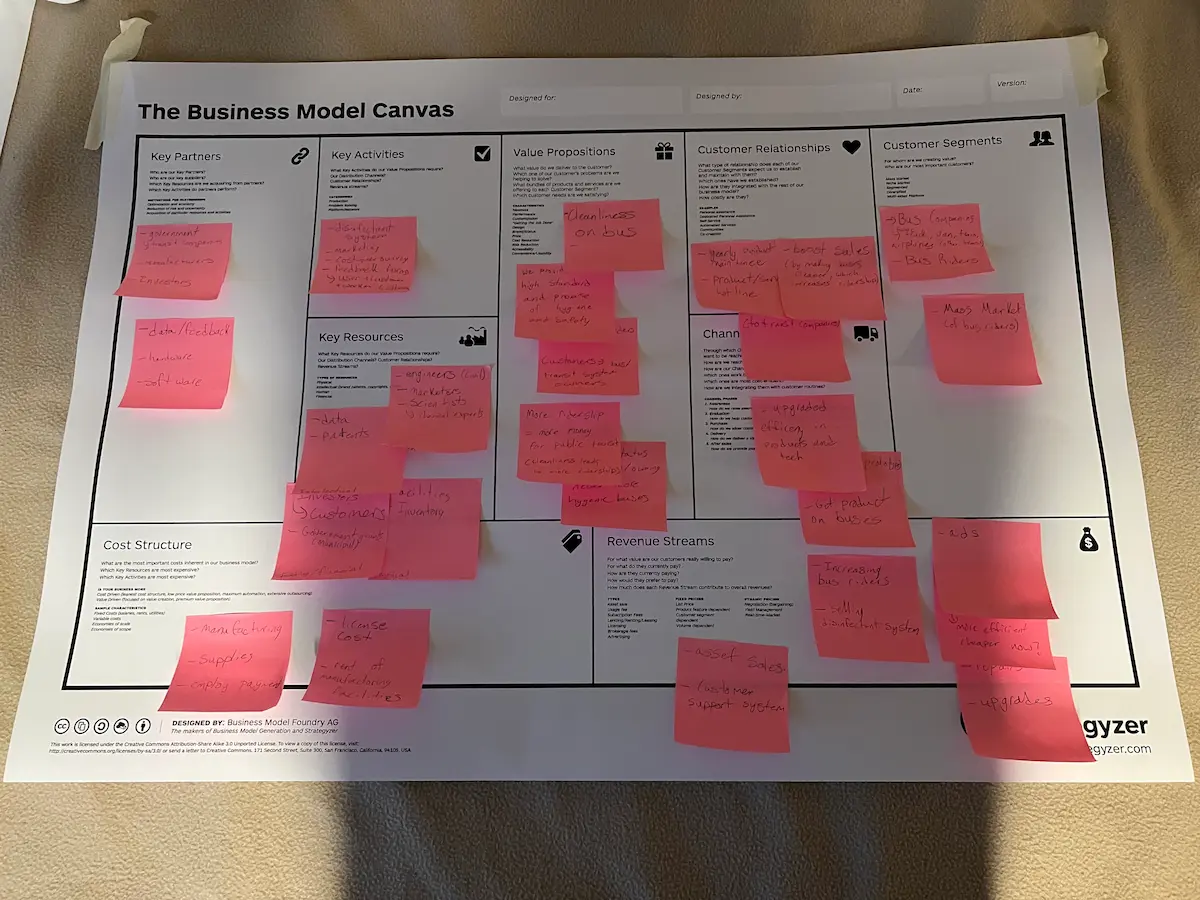
A Business Model Canvas
After understanding the issue we needed to solve, we had to develop a Business Model Canvas. A Business Model Canvas is essentially a way to think through whether an idea could exist in the real world. Instead of focusing only on the solution itself, it forces you to consider who the idea is for, what problem it solves, and how it could realistically be implemented and sustained. At Shad, we used it to move beyond just having an interesting concept and start thinking about practicality; costs, partnerships, and how people would actually interact with what we were designing. It helped turn abstract ideas into something more grounded and intentional.

The HyRide logo
After crafting our business model, we established our company, HyRide. HyRide is a public transit hygiene solution designed to make buses cleaner, more reliable, and more appealing to riders. The company installs an efficient disinfectant misting system on buses that sanitizes interiors in under a minute between routes and performs deeper overnight cleaning, reducing delays caused by manual cleaning while improving overall cleanliness. By pairing this system with added hygiene features (such as trash bins and hand sanitizer dispensers) and a strong public-facing marketing campaign, HyRide aims to change public perception of buses from unhygienic to a smart, safe, and convenient transportation choice. Ultimately, HyRide helps transit agencies increase ridership, reduce delays, and rebuild trust in public transit.
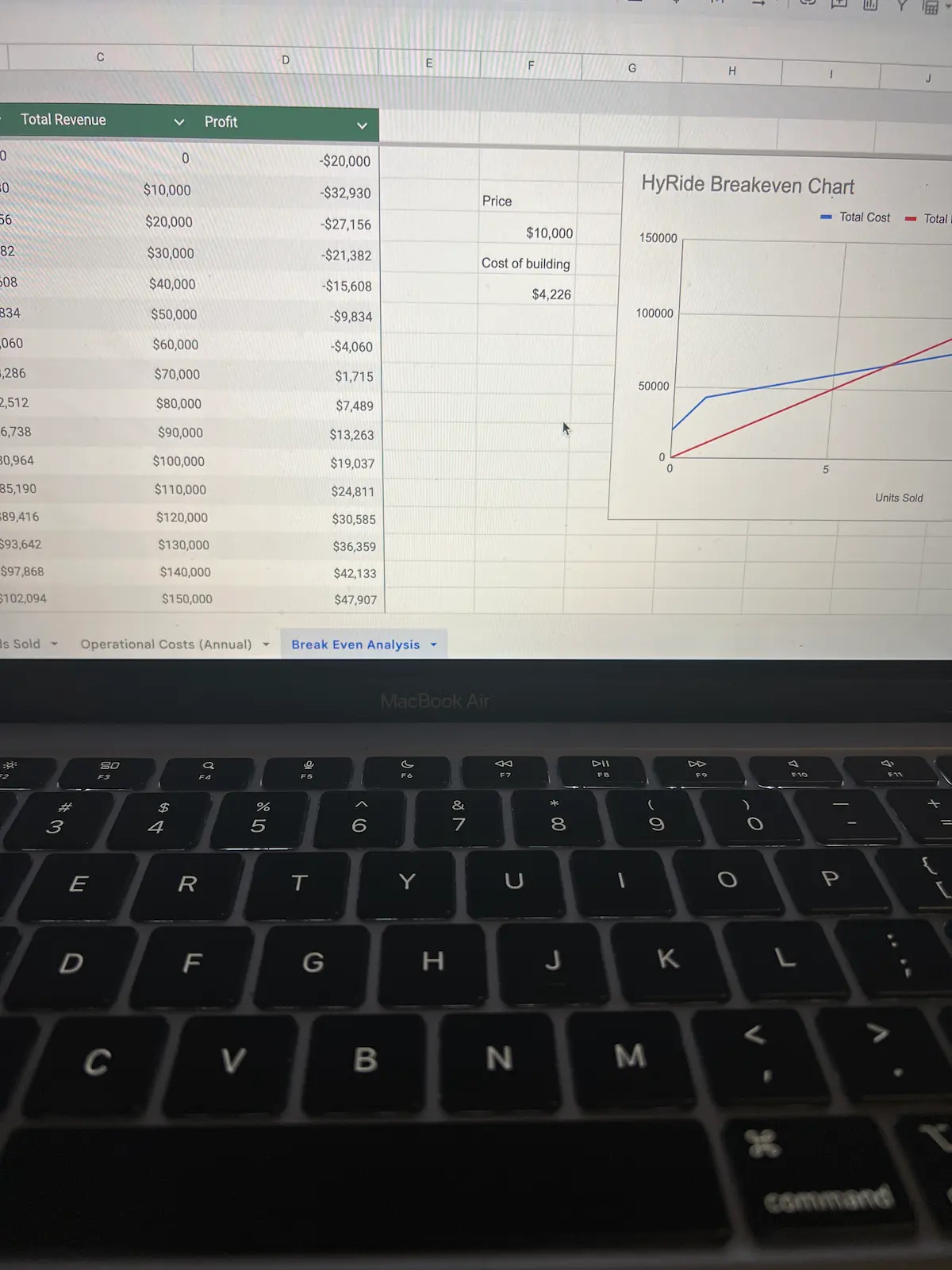
A slight glimpse into the complicated world of finance
My role within the organization is the Chief Financial Officer (CFO). Taking on the role of CFO forced me into unfamiliar territory. I was suddenly responsible for decisions that affected the entire team, often without feeling fully confident in the numbers I was working with. There were moments of frustration, confusion, and doubt, especially late at night when the calculations refused to make sense. But working through that uncertainty taught me more than getting the right answer ever could. It showed me that leadership often means staying engaged even when you don’t feel prepared.
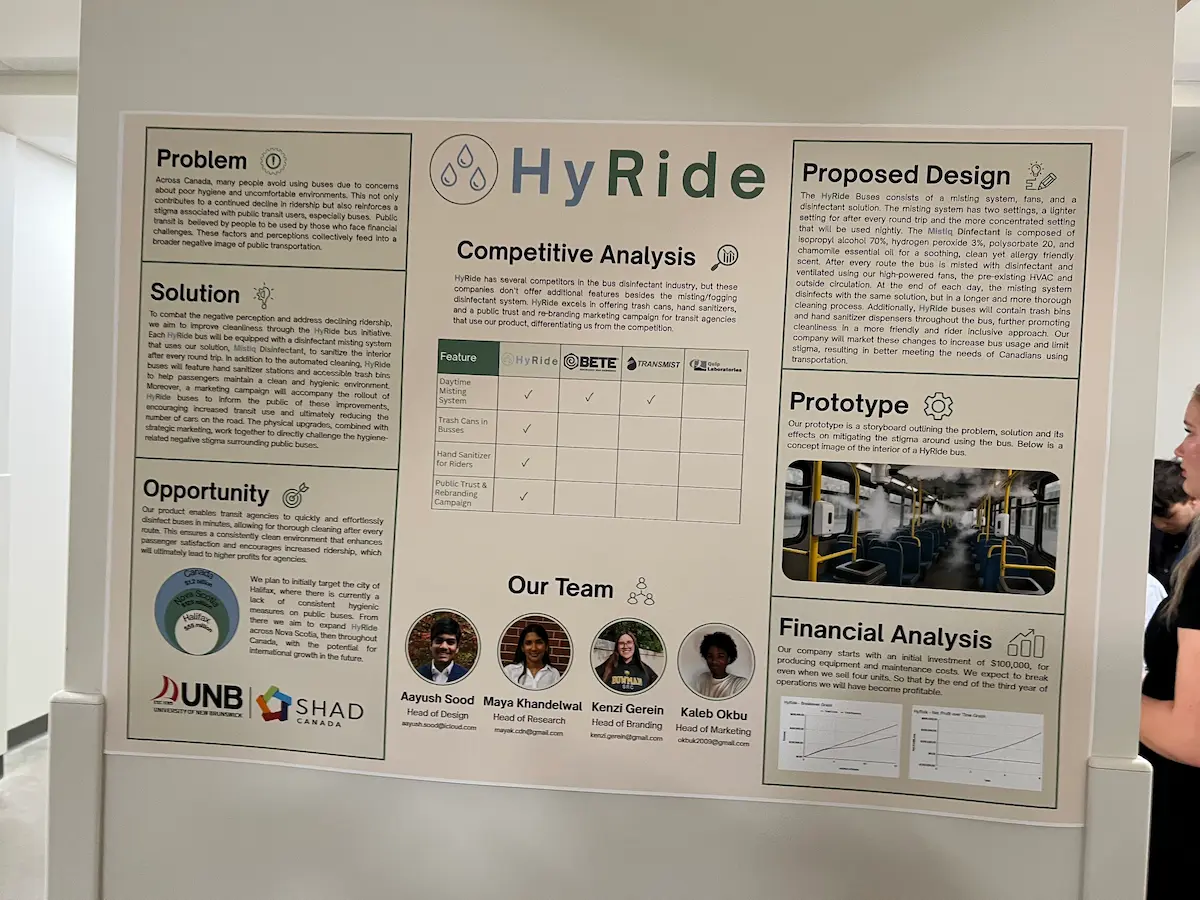
The HyRide project proposal
The day of the pitch competition arrived, and most teams, including ours, were nervous about what lay ahead. The competition had two stages. First, we presented our team poster to a panel of judges, delivering a concise elevator pitch of our product. Then came the main pitch presentation, where we showcased our solution to another set of judges as well as our Shad cohort.
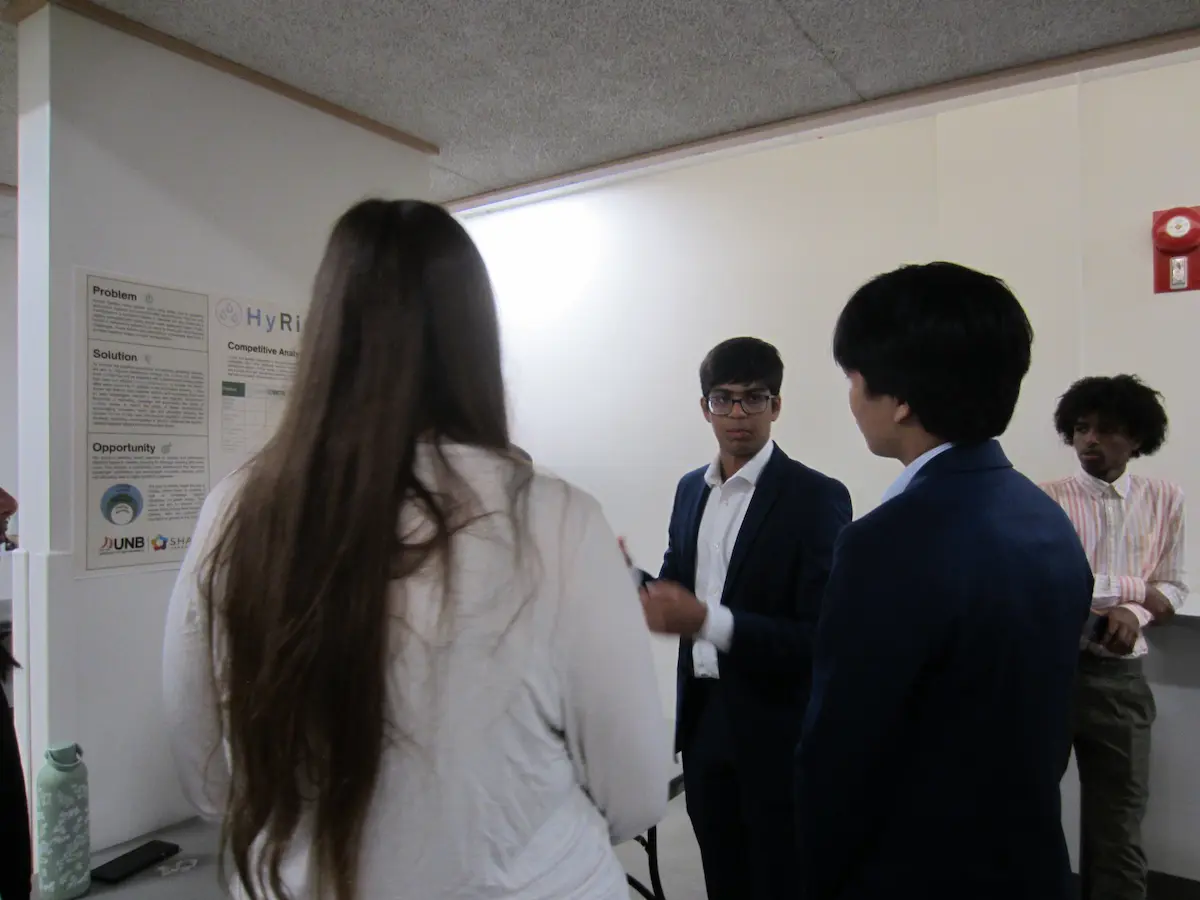
Our DE group pitching HyRide to judges
Our team delivered a concise and compelling elevator pitch to the judges, who seemed genuinely interested in our product. After the first stage, we moved to the auditorium to present to our peers and judges, showcasing the months of hard work, collaboration, and iteration that had gone into our project.
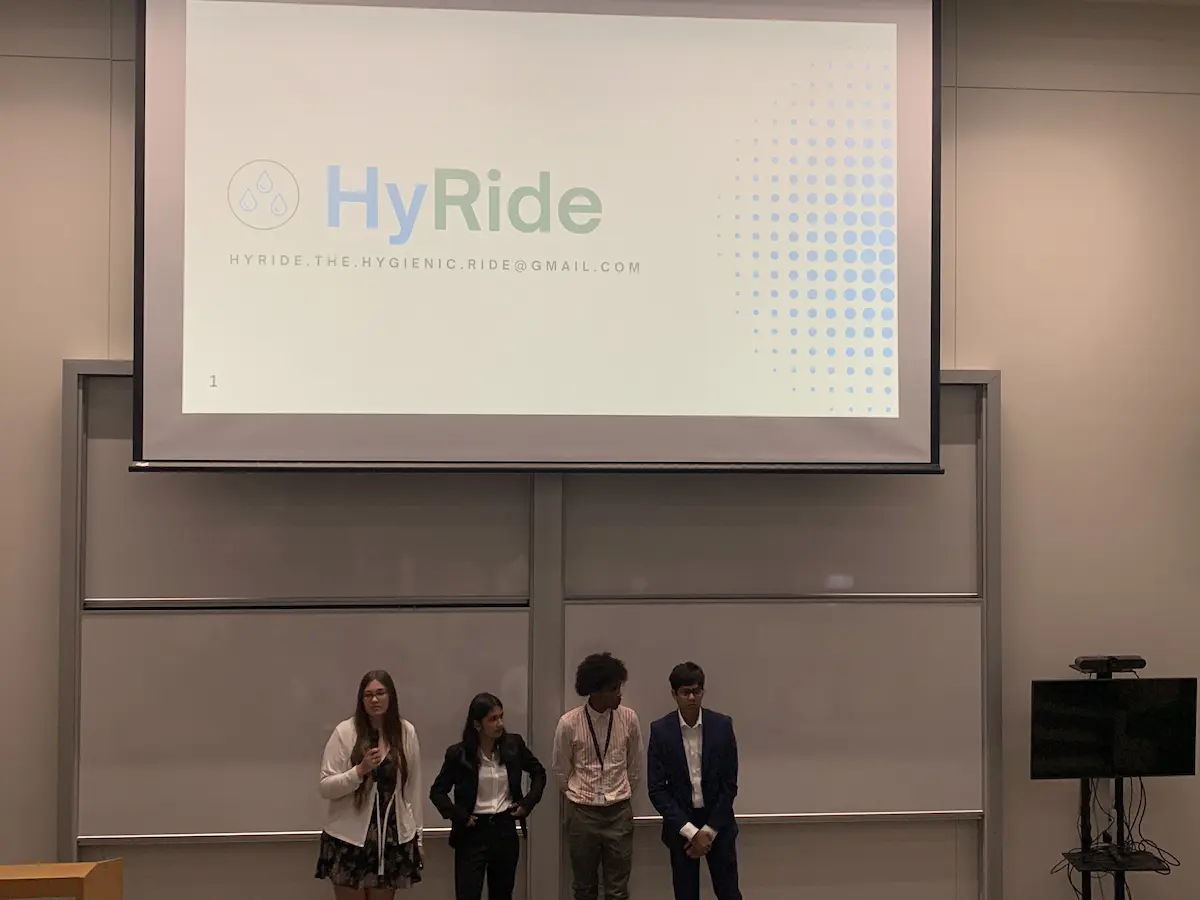
The HyRide presentation
Each presentation lasted at most five minutes, followed by a Q&A session with the judges. Standing on stage, I didn’t feel polished or confident. I noticed every stumble, every word I wished I had phrased differently. Yet, watching my teammates present with clarity and conviction reminded me that success isn’t always about individual performance. Sometimes it’s about trusting those beside you and knowing when to step back and let the team shine.
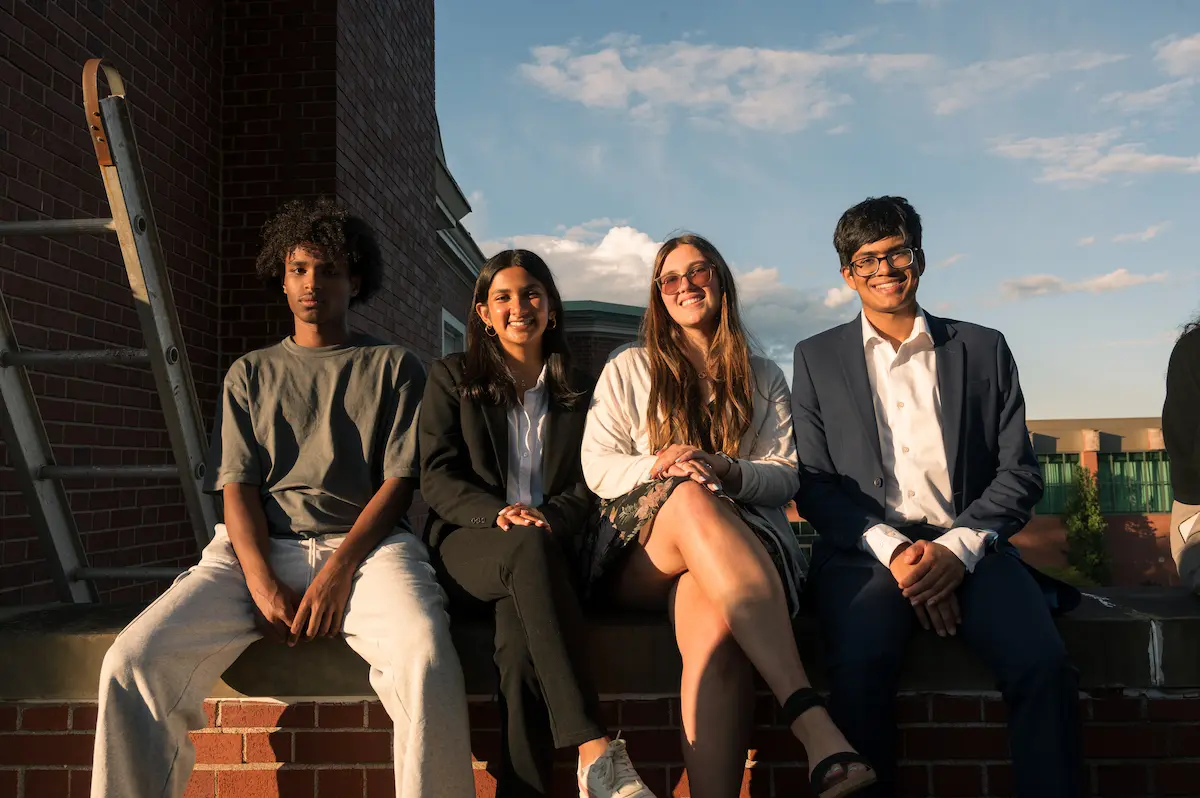
Our wonderful DE group
Overall, the DE project taught me that good ideas are rarely fully formed at the start. They grow through iteration, disagreement, and pressure, often improving only after being challenged by others. More than anything, it showed me how much stronger ideas become when you stop trying to solve a problem alone.
The Final Week
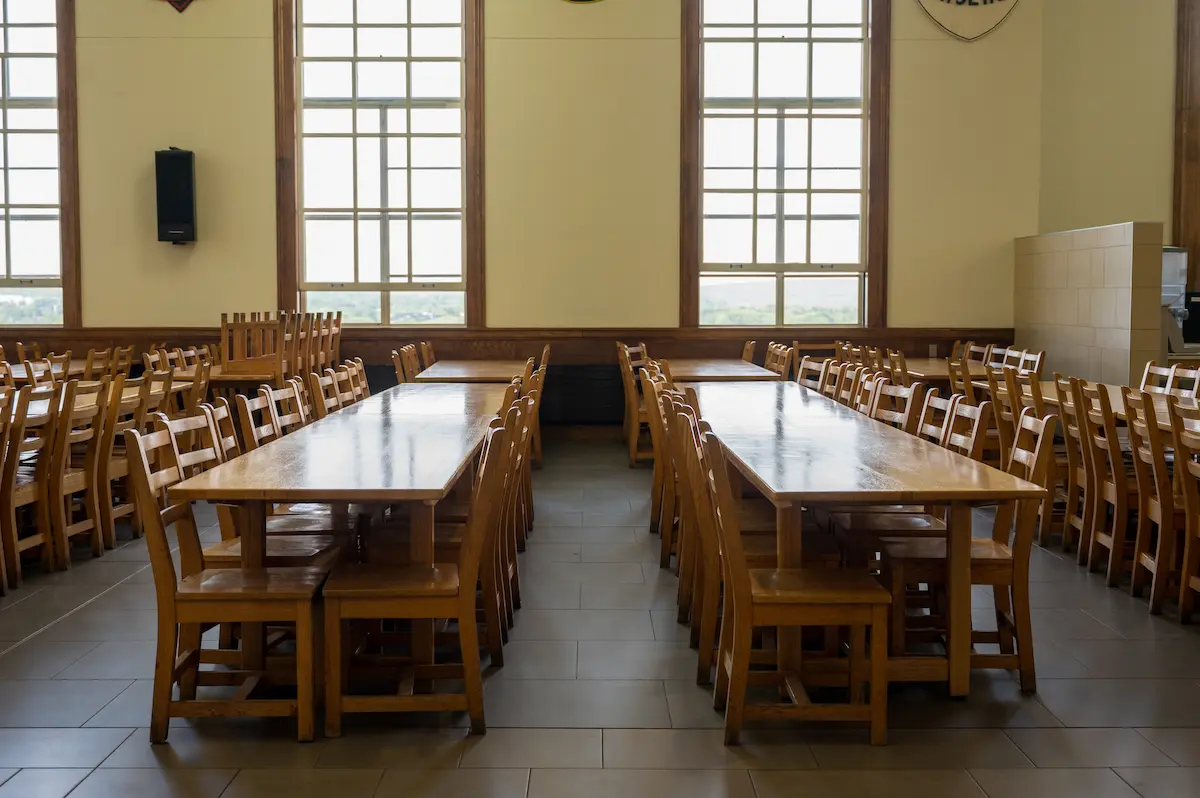
The once-filled seats of McConnell Dining Hall that now sit empty
The final week moved at a pace that felt unfair. Every moment carried weight, knowing it was limited. Conversations felt more intentional; laughter came easier, and goodbyes began forming long before anyone actually left.
I made it a goal to truly spend time with every person in the cohort and get to know them as deeply as I could. I realized that I hadn’t connected with everyone as much as I wanted, and I was determined not to let the final week pass without fully engaging with my community.
Sometime during the final week, in between presentations and quiet moments that felt heavier than the days before, I learned that I had been elected valedictorian by my peers. The news didn’t feel triumphant as much as it felt grounding; a reminder of the people and shared experiences that had shaped the month.
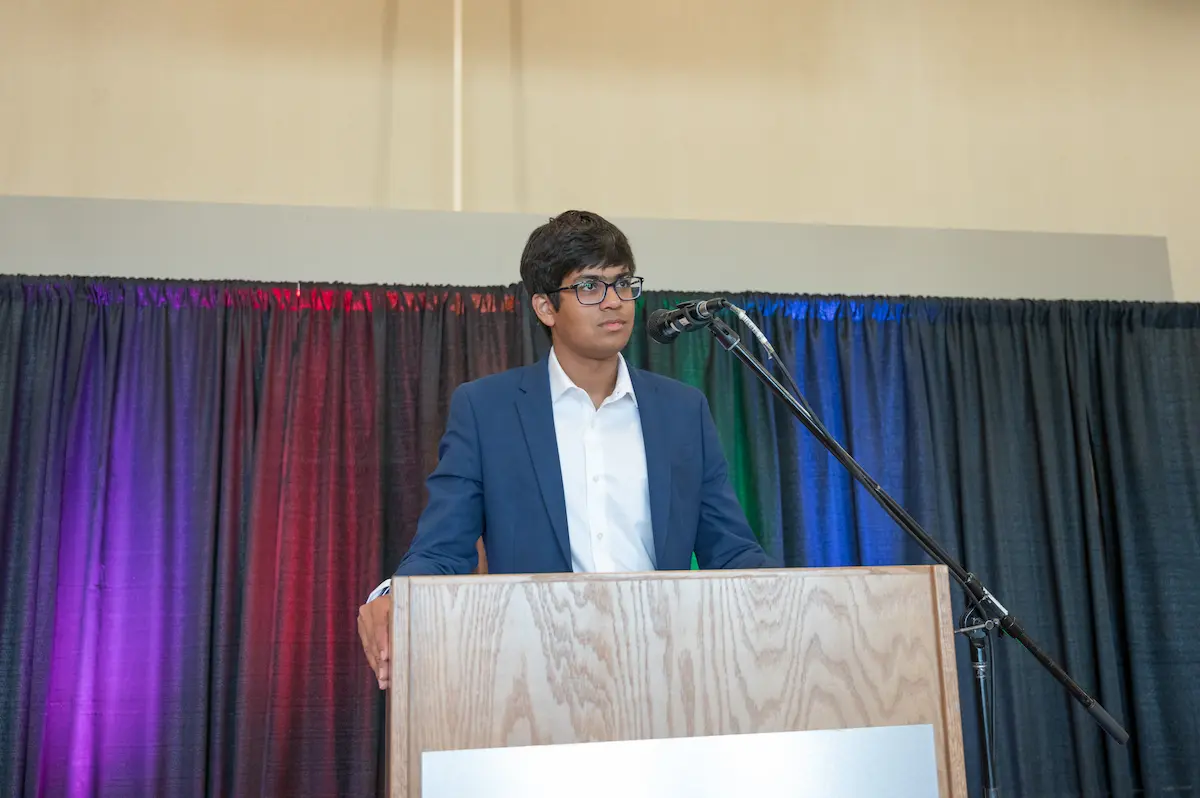
Me delivering a valedictorian speech
To celebrate our time at Shad, a banquet was hosted by the staff of Shad, even inviting our parents to observe. Part of my role as valedictorian was to deliver a culminating speech outlining our journey and the future ahead.
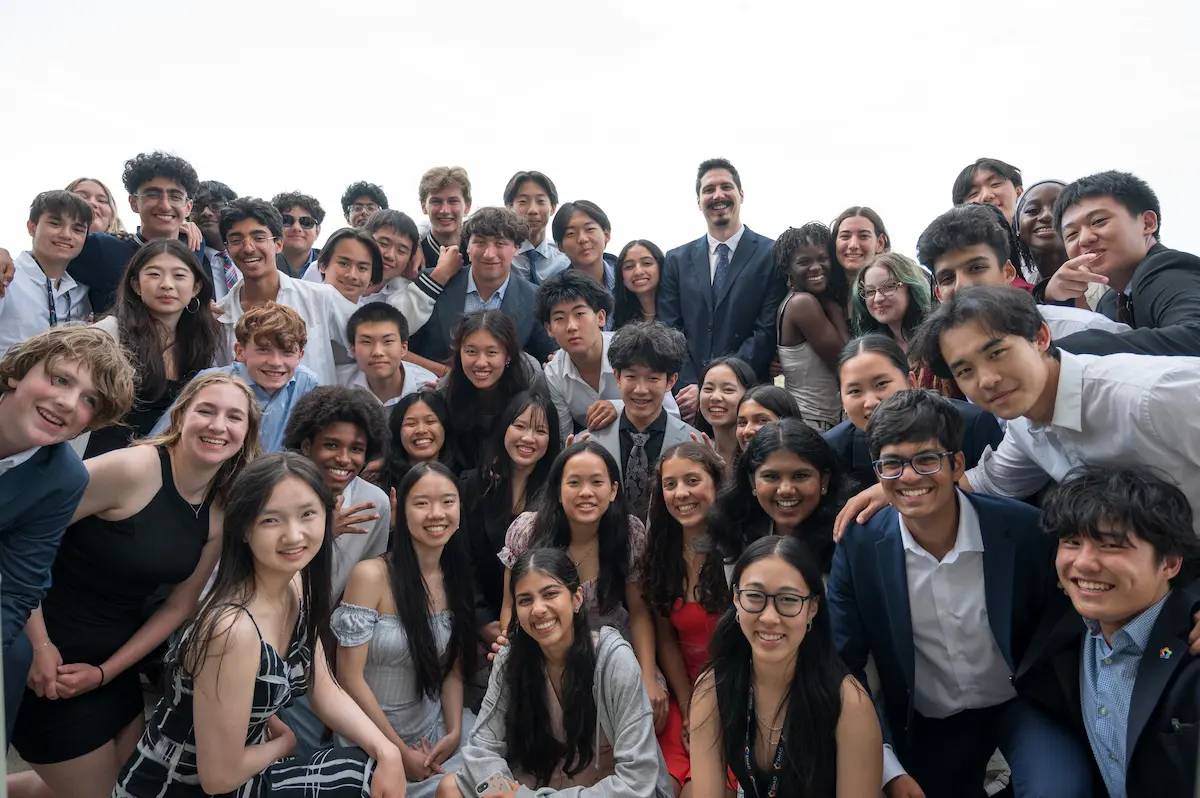
The final picture of the Shad UNB 2025 cohort
At the end, we returned to our rooms and began packing our bags, quietly realizing that the month we had been living so fully was coming to an end. On our final night, we stayed up late signing each other’s monthbooks, filling pages with inside jokes, memories, and promises to keep in touch. The next morning came too quickly. Those with early flights were bussed away, one by one, while a few of us stayed back on campus, lingering longer than necessary. The goodbyes were harder than I expected; brief hugs, quiet words, and the shared understanding that something meaningful was ending, even though its impact would last far beyond that morning.
The People
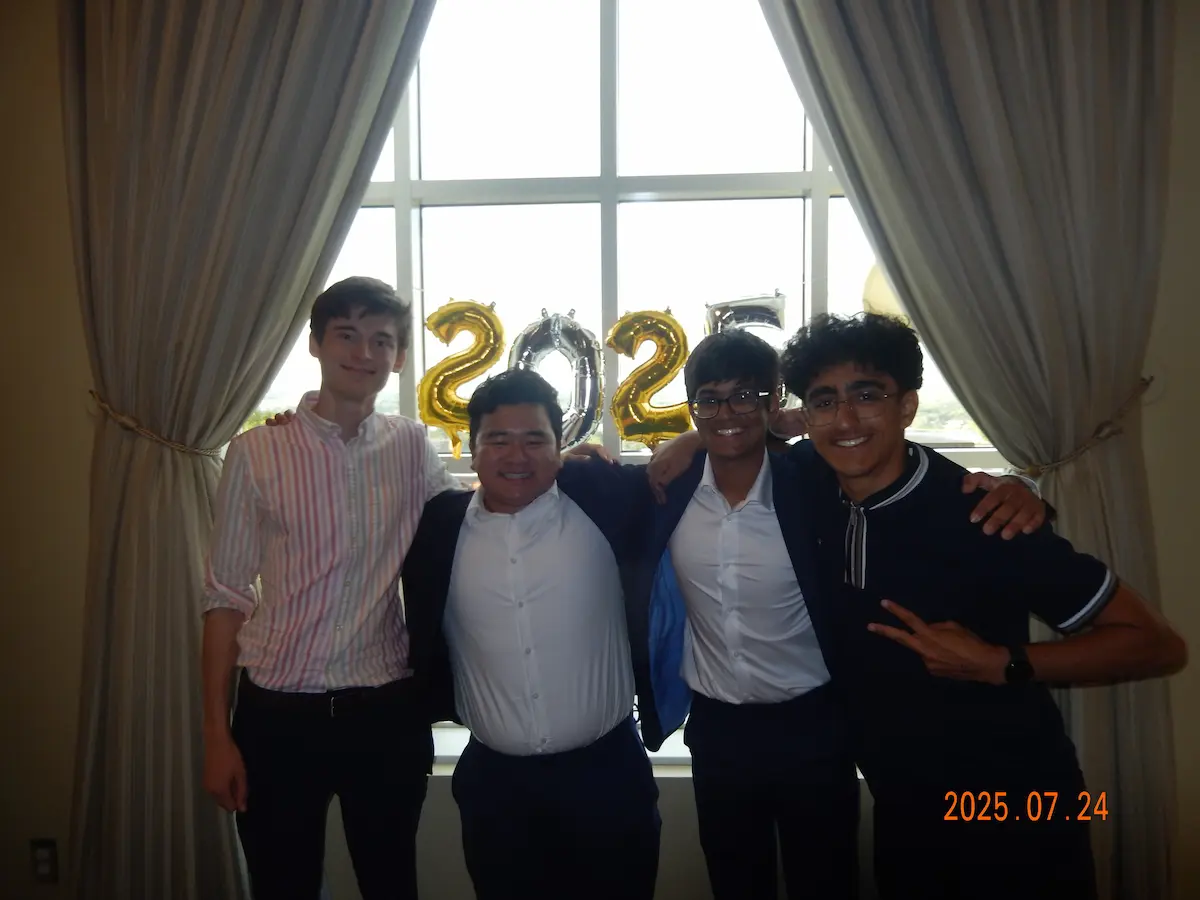
A group picture at the Banquet
When I think back on Shad, the first thing that comes to mind isn’t a lecture, a project deadline, or even a trip; it’s the people. I arrived on campus carrying a suitcase and a lot of uncertainty, surrounded by faces I didn’t recognize and names I couldn’t yet place. Within days, those strangers became the constant presence of my month: the people I learned with, struggled alongside, laughed with, and eventually couldn’t imagine leaving behind.
What made the people at Shad special wasn’t just how accomplished or driven they were, but how open they chose to be. Everyone showed up as themselves, curious, passionate, and unafraid to care deeply. Conversations rarely stayed on the surface. It was normal to talk about ambitions, fears, and values late into the night, sitting on residence floors or walking across campus long after we were supposed to be asleep. Being in an environment where curiosity was celebrated made vulnerability feel natural.
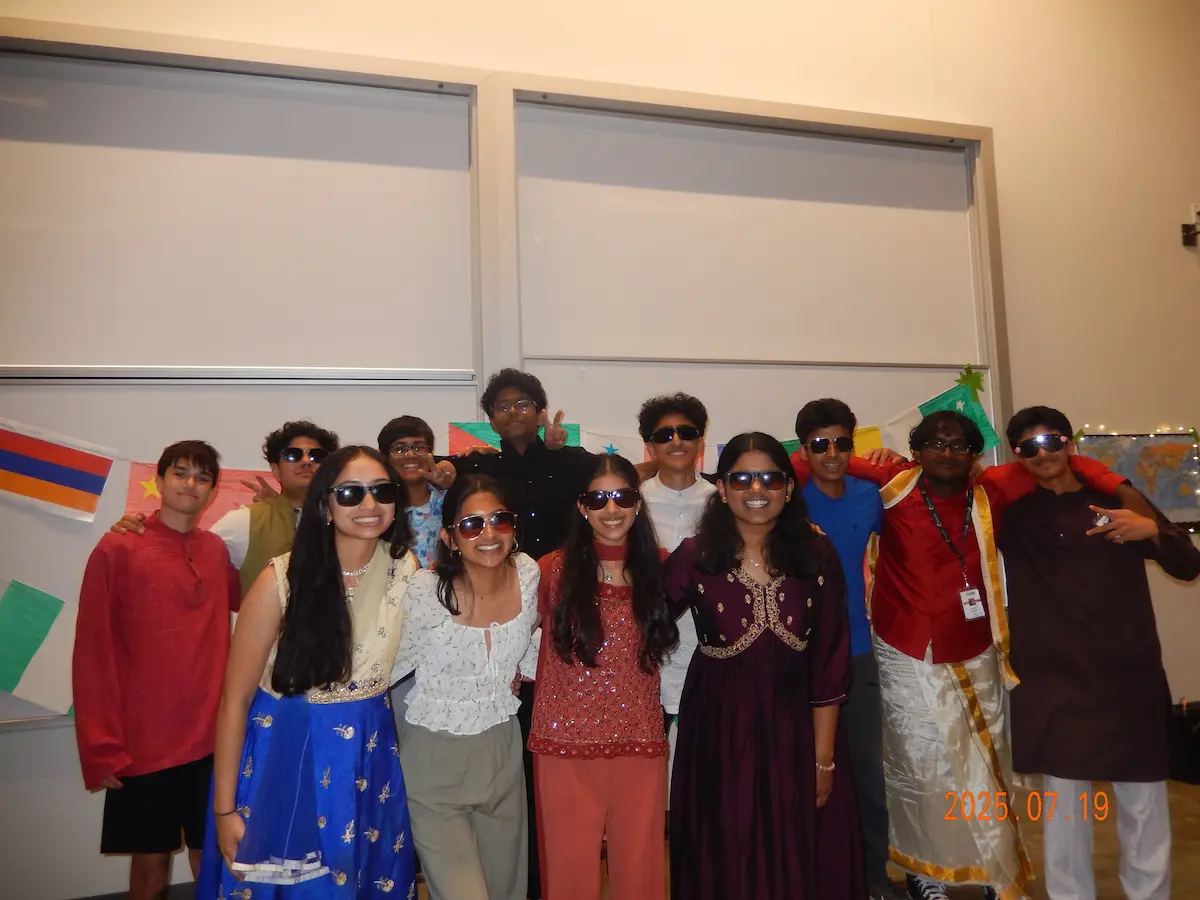
A group picture at the Multicultural Night
I also want to give a huge shoutout to our Program Directors, Katie and Kamryn, and Staff Team, Declan, Billy, Zoë, Anshika, Regan, Avani, Ryan, Tanya, Matt, and Fasih. They were the guiding hands behind the scenes, organizing activities, answering questions, and keeping everything running smoothly. More than that, they made the campus feel welcoming and safe, offered advice and encouragement at every step, and created an environment where we felt empowered to explore, fail, and grow. Their support was crucial in shaping the month into the incredible experience it became.
There was a quiet kind of support woven into everyday moments. People stayed behind to help teammates refine ideas, explained concepts without judgment, and checked in on one another when the pace of the program became overwhelming. During the DE project especially, I saw how collaboration could coexist with intensity and how competition never overshadowed empathy. We pushed each other to be better, not out of pressure, but out of belief in one another.
As the weeks passed, routines formed. Certain people became the ones you always sat next to, the ones you walked back to residence with, the ones you looked for in a crowded room. Inside jokes accumulated, group chats filled up, and shared exhaustion turned into shared pride. Somewhere along the way, Shad stopped feeling like a program and started feeling like a community.
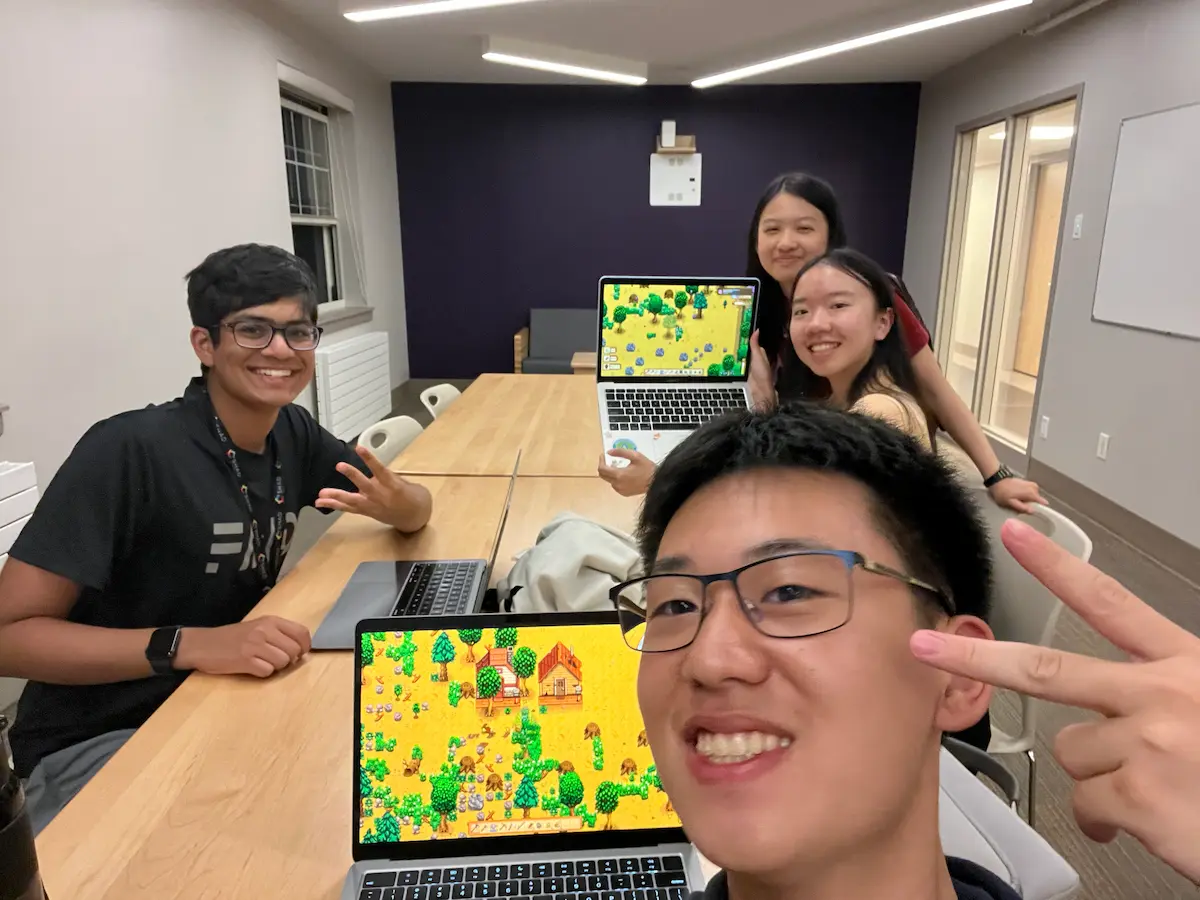
A group of us playing Stardew Valley
Saying goodbye was far harder than I had anticipated. It was difficult to accept that the people who had become such a central part of my life in just a month would soon be scattered across the country again. Yet, there was also comfort in knowing that these connections weren’t defined by proximity, but by the experiences we shared and the growth we witnessed in one another.
Shad brought together people who challenged the way I think, reminded me why I love learning, and showed me the power of being surrounded by those who care deeply, not just about success, but about each other.
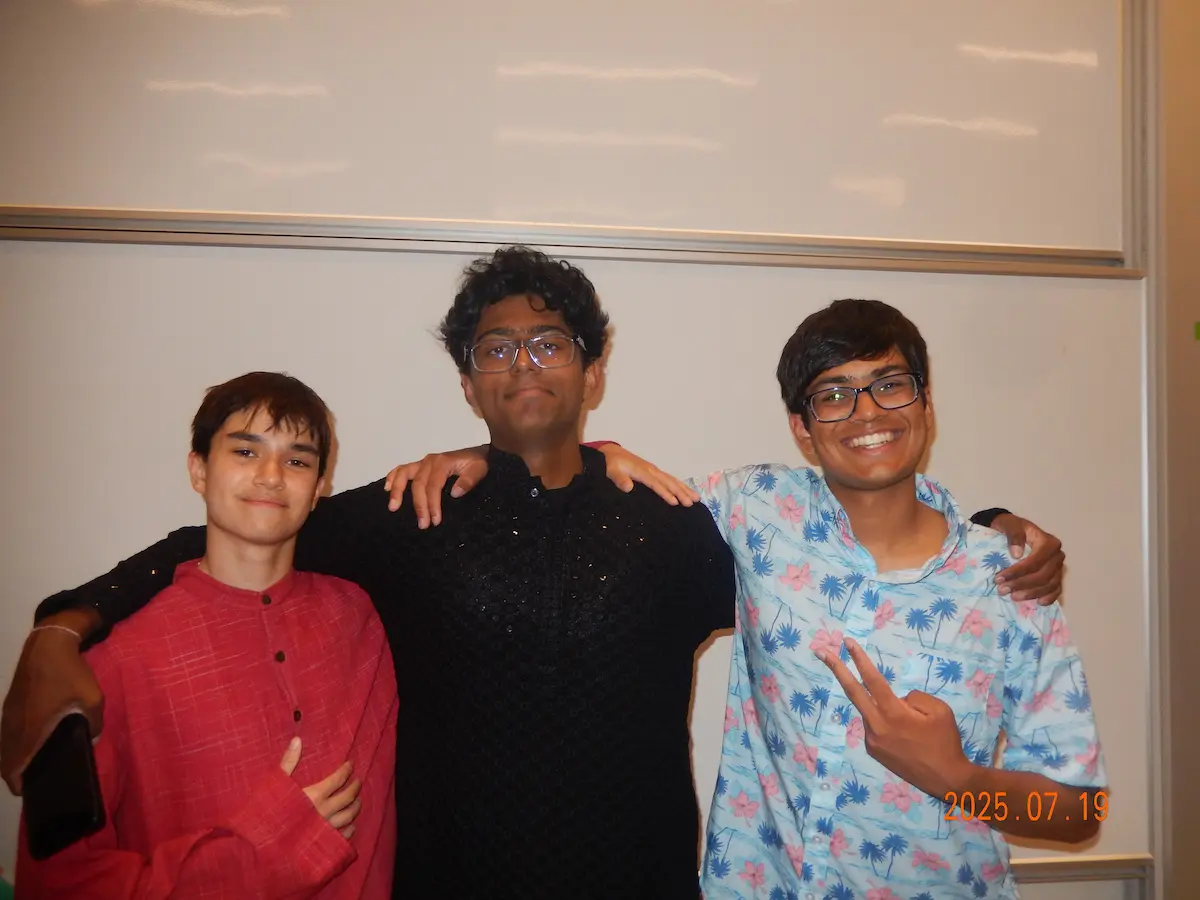
A group picture at the Multicultural Night
Long after the details of lectures and projects blur together, it’s these people I will remember most. They are the reason Shad feels less like a month I attended and more like a chapter I lived.
Living on Campus
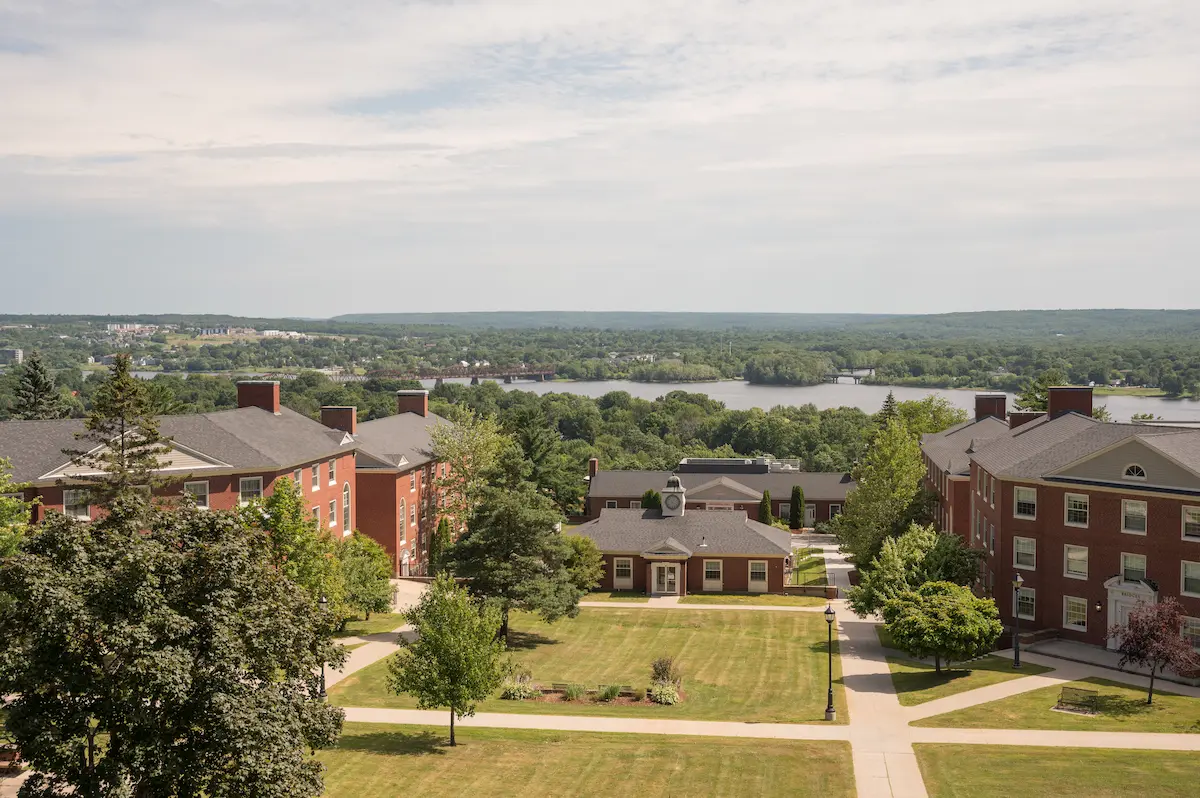
The campus of the University of New Brunswick
Living on campus for a month was an entirely new experience, and one that surprised me in how much it changed my perspective. From unpacking my suitcase in a small dorm room to navigating shared bathrooms and common spaces, it was my first taste of independence on this scale. Simple routines like cooking breakfast in the mess hall, walking across campus to lectures, or staying up late with friends took on a new significance when you were responsible for managing your own time and space.
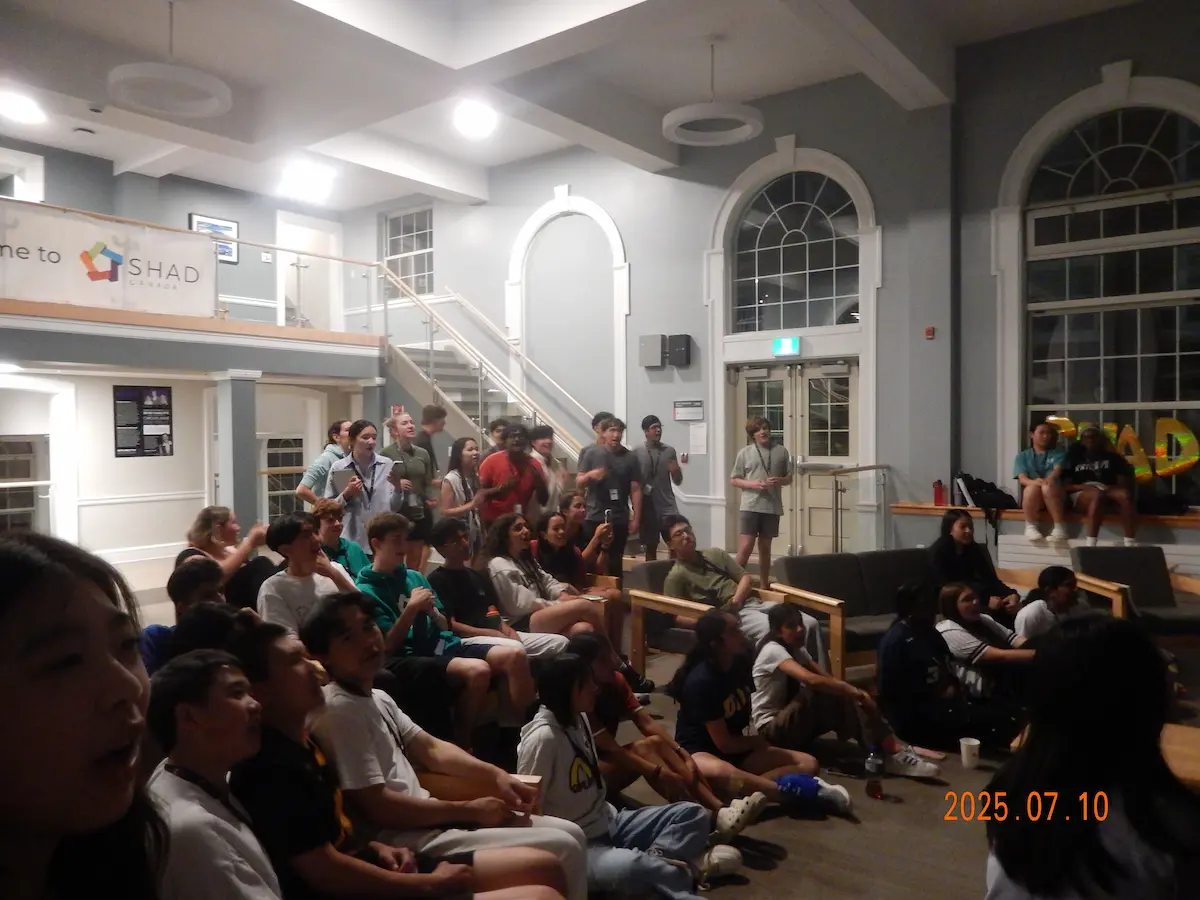
Our group singing at our frequent Karaoke Nights
There was something special about sharing a floor with a group of people you were just getting to know. Late-night conversations, quiet study sessions, and the small moments in between classes gave life to the friendships that would define the month. Living together forced us to navigate disagreements, coordinate schedules, and celebrate little wins, from making a meal together to solving a tough DE project challenge.
Even the mundane parts, like laundry or tidying a shared room, became moments of reflection. They reminded me that independence isn’t just about freedom; it’s about responsibility, respect, and learning to take care of yourself while being part of a community.
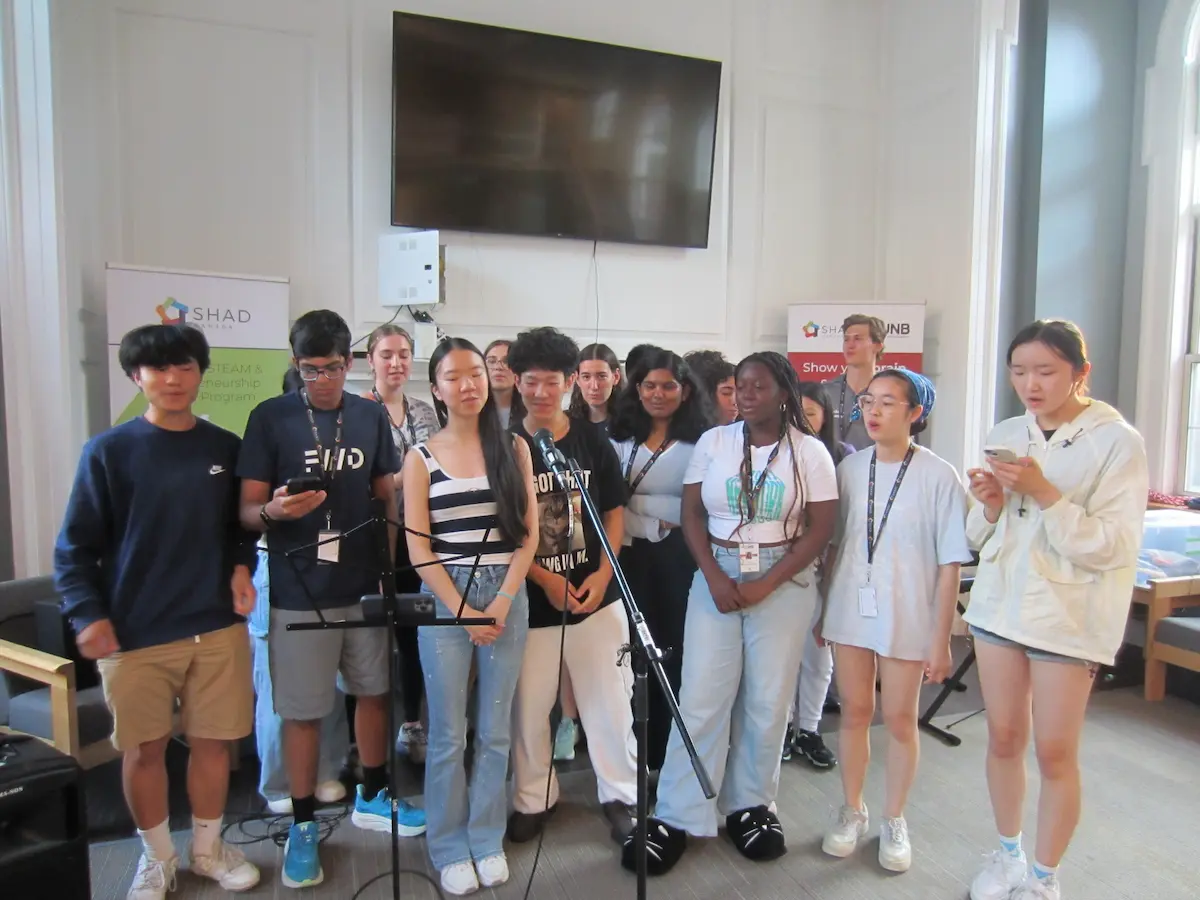
Our group singing at our Coffee House
By the end of the month, campus life no longer felt like a temporary experience. It felt like a small, self-contained world where I had grown into routines, relationships, and habits that I might not have discovered otherwise. Living on campus taught me that independence is not just about doing things on your own, but about learning how to connect, collaborate, and coexist with others in meaningful ways.
Reflection & Takeaways
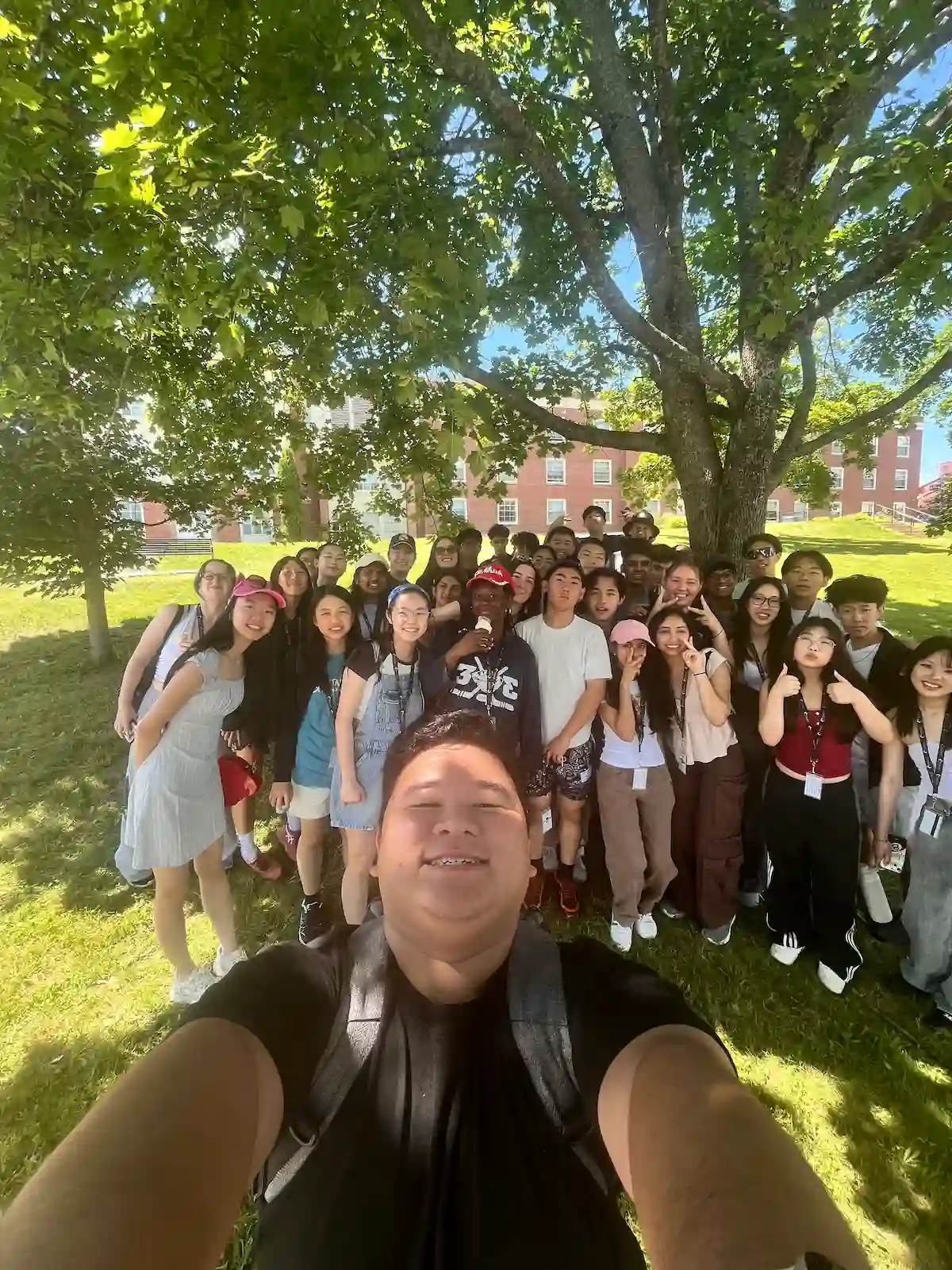
A picture of our group at our tree, the central area for all meetings
This reflection cannot fully capture everything that unfolded throughout the month. For a closer look at our day-to-day experiences and activities, I encourage you to visit the Shad UNB Instagram account.
Looking back, Shad was far more than a summer program; it was a month that challenged me in ways I didn’t expect and taught me lessons I will carry long after. It pushed me to step out of my comfort zone, to try things I wasn’t sure I could do, and to trust in my own abilities while relying on the people around me.
One of the biggest takeaways was how much growth comes from collaboration. The DE project, late-night discussions, and even small daily interactions reminded me that ideas become stronger when they are shared, challenged, and refined alongside others. I learned that leadership is not about having all the answers, but about listening, contributing, and helping others shine.
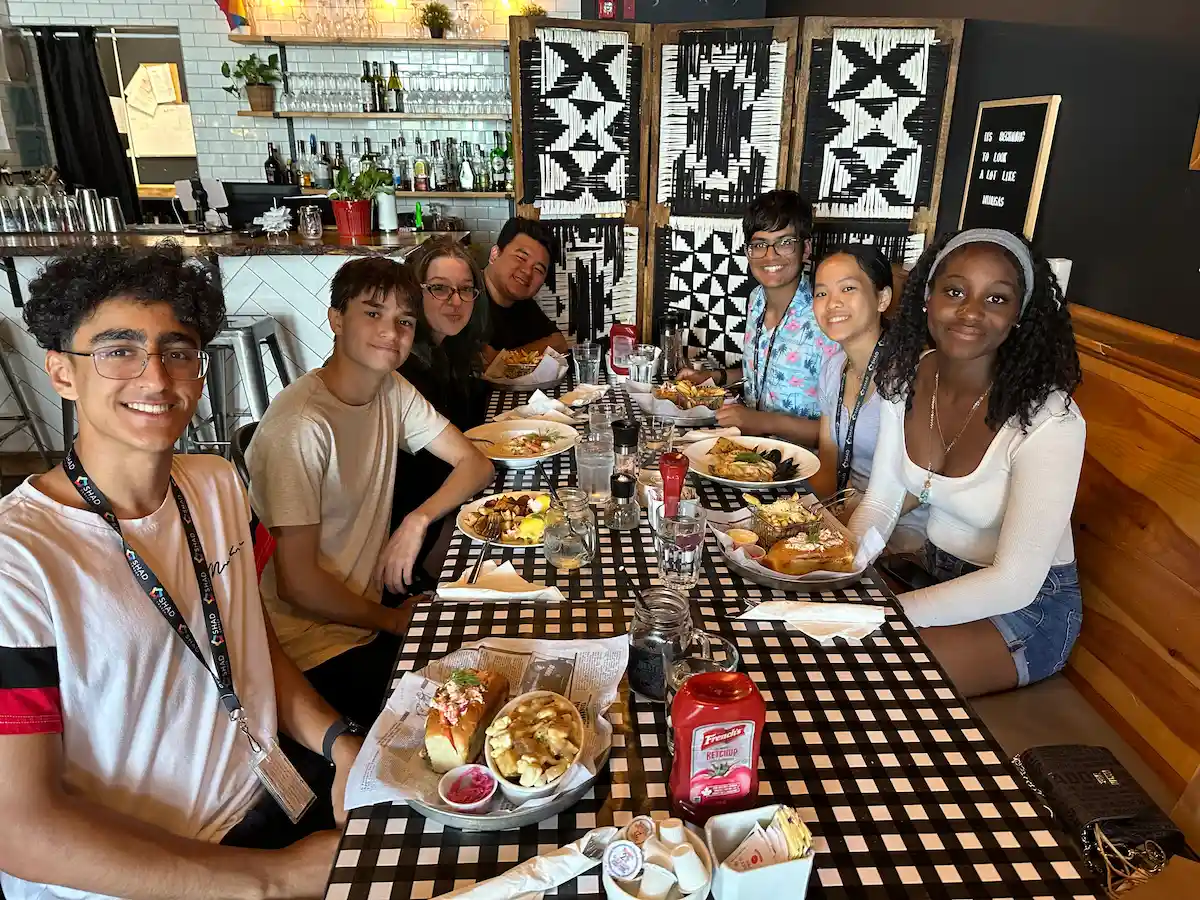
Delicious lunch at Claudine's Eatery in Fredericton, New Brunswick
Shad also taught me about resilience and adaptability. The pace was intense, mistakes were inevitable, and not every plan worked perfectly, but that is where the real learning happened. I realized that failure is not a setback but an opportunity to iterate, improve, and see problems from a new perspective.
Beyond skills and knowledge, Shad left me with a renewed sense of curiosity and a deeper appreciation for community. The people I met, the late-night conversations, the shared struggles, and even the quiet moments alone all shaped the way I think, collaborate, and approach challenges today.
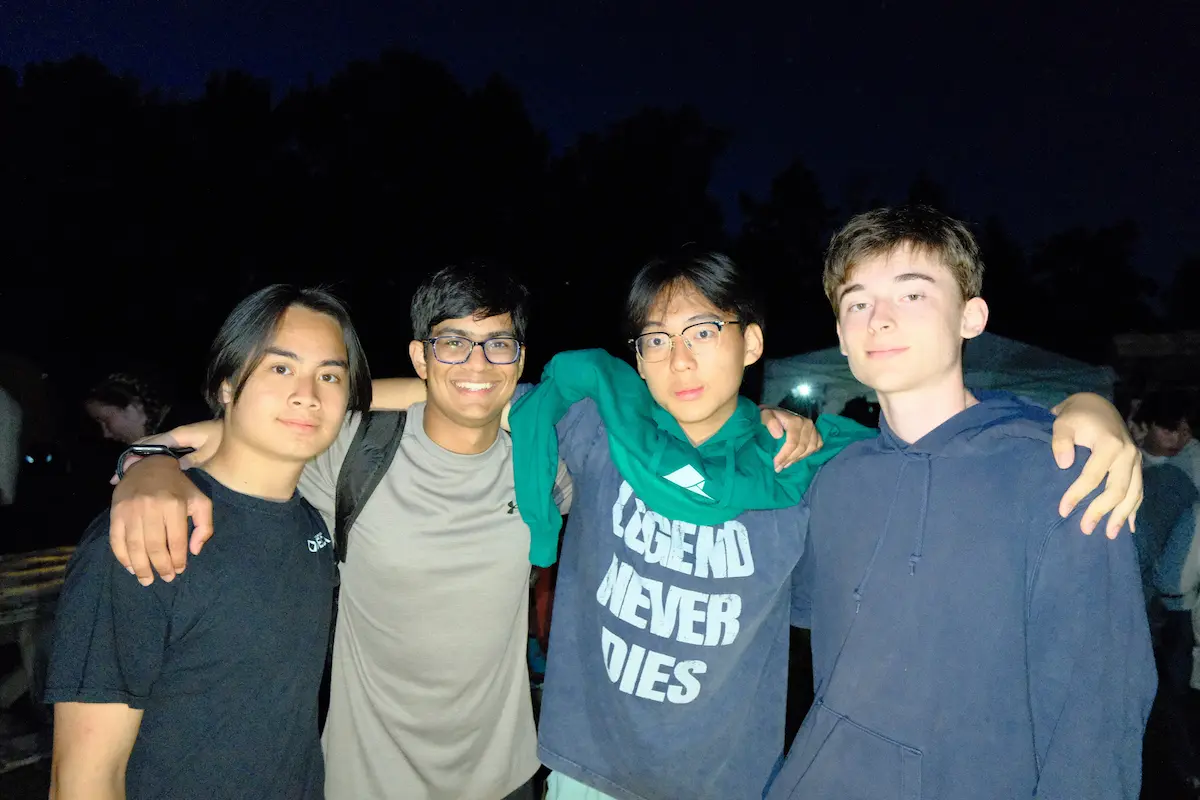
A group picture at Mactaquac Provincial Park
Shad did not give me all the answers. Instead, it gave me better questions, stronger habits, and a deeper appreciation for learning alongside others. It reminded me that growth is rarely comfortable, but it is always worth leaning into. A month may seem short on paper, but sometimes that is all it takes to change the way you move forward.
For those inspired by the impact Shad can have, there is also the opportunity to become a Shad Ambassador, helping spread the word and bring this experience to students in local high schools. I am grateful to have taken on this role myself and look forward to sharing what Shad made possible for me.
Advice for Future Shads
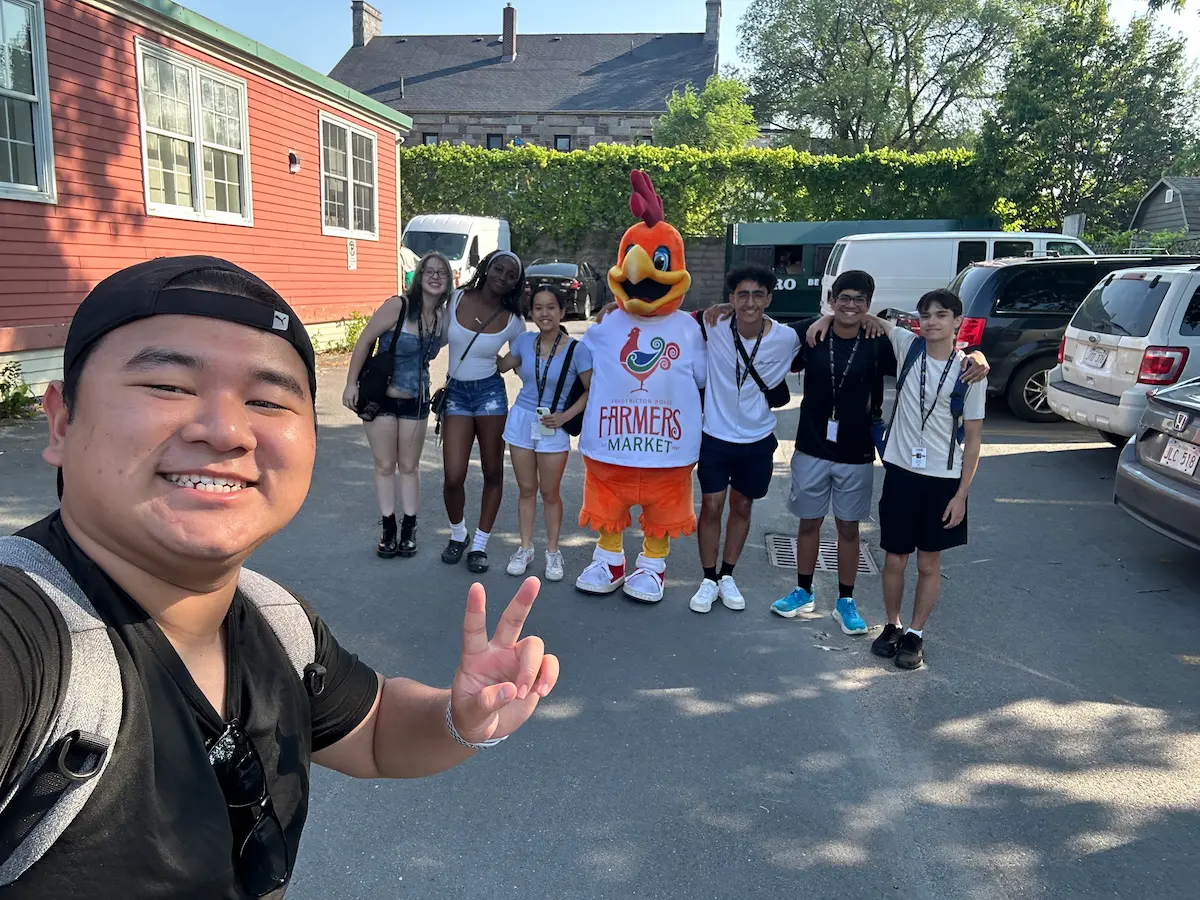
A group picture at Fredericton Boyce Farmers Market
If I could give advice to future Shad participants, it is simple: Shad is what you make of it. The program will only be as meaningful as the energy, curiosity, and effort you bring. Step out of your comfort zone, ask questions, explore new ideas, and dive into every experience, big or small.
If you have any questions about Shad or want to hear more about my experience, feel free to connect with me on Instagram. I’m always happy to chat and help however I can.
For those who are on the fence about applying, I would say this: the program can feel intimidating at first, but the people, the experiences, and the challenges make it worth it. You will meet students from all over the country who are curious, driven, and welcoming. Even if you are unsure about whether you "fit in," you will quickly find a place in the community and discover strengths in yourself that you didn’t know were there.
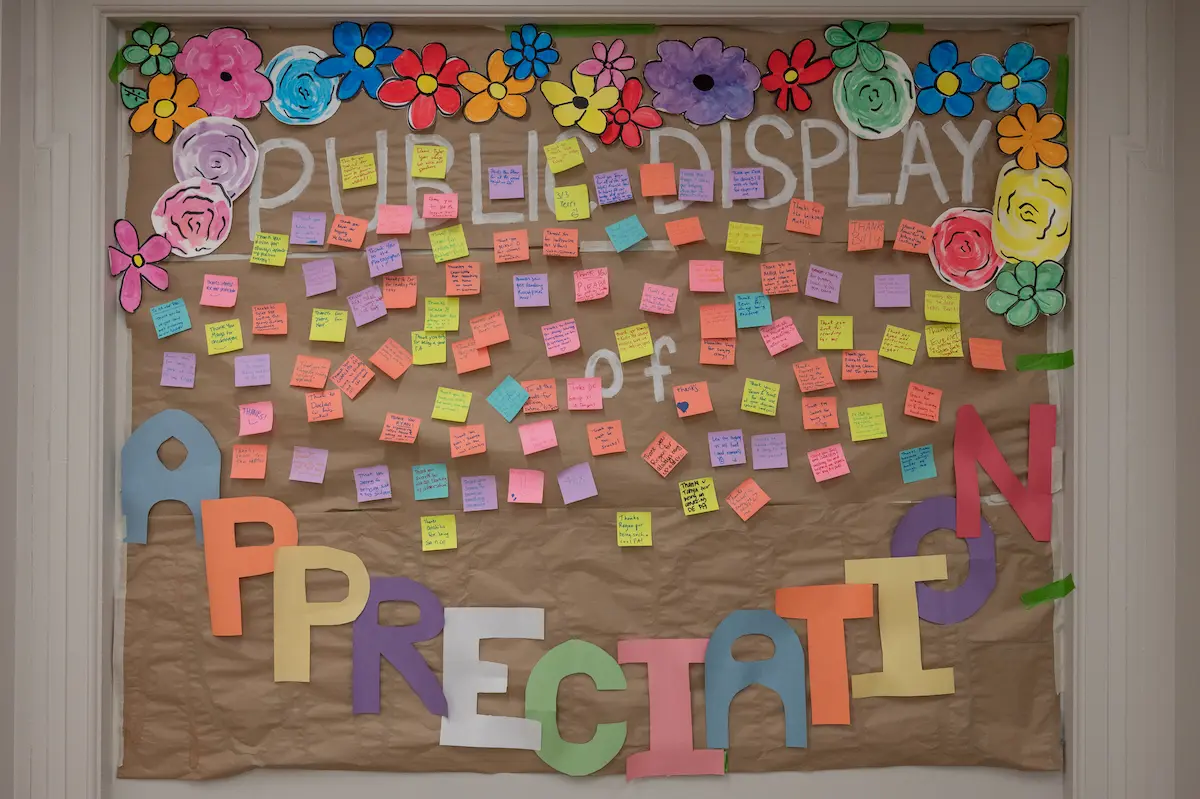
Our Public Display of Appreciation board
Finally, take moments to reflect. Pause, think about what you are learning, and appreciate how far you have come. The lessons, memories, and friendships you take away will last long after the month ends. At the end of the day, the experience is yours to shape, and the more you put into it, the more you will get out of it.
Shad is what you make of it. The opportunities are there, but it’s your willingness to engage, reflect, and care that turns the experience into something meaningful.
Photo Credits
A huge thank you to all the photographers who helped bring this blog to life, including Cameron Chung, Jason Lin, Piraba Nathan and others. The moments they captured are more than just pictures. They preserve memories, emotions, and the energy of an incredible month. Without these images, the story of Shad would not feel as vivid, personal, or alive.